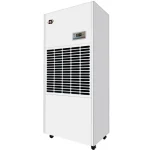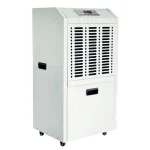
Crawl Space Dehumidifiers for Commercial Buildings

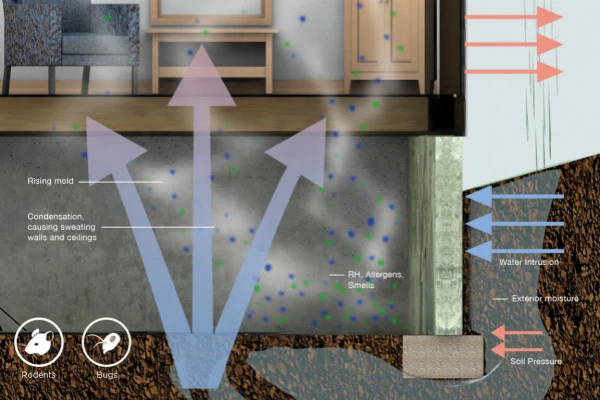
In humid climates, passive crawl space vents pull moisture in, not out — and up to half of a building’s first-floor air is drawn from the space beneath it. An unmanaged crawl space is a building-wide air-quality and structural problem, not a basement afterthought. We design crawl space dehumidification for general contractors, property managers, and HVAC specifiers — and for the dehumidification brands that private-label our units into 35+ countries.

Common Crawl Space Moisture Problems

If your facilities team, your claims log, or a failed inspection keeps pointing back to the crawl space, the cause is almost always uncontrolled humidity. Crawl space moisture migrates upward for months before anyone sees a stain. These are the failure modes we design against.

Stack-Effect Air Contamination

Up to half of a building's first-floor air is pulled from the crawl space below — mold spores, soil gases, and humidity included. We size for the load the stack effect actually moves, not just the volume on a drawing — so your tenants breathe conditioned air.
Structural Rot & Metal Corrosion

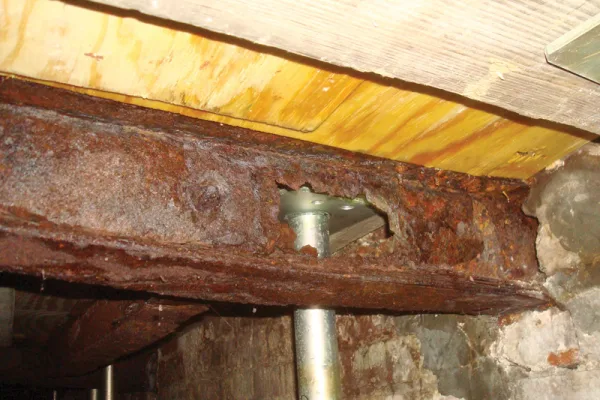
Rising soil moisture condenses on joists and ductwork, pushing wood past the rot threshold and corroding bare metal. We hold the assembly below that threshold year-round — so your framing and HVAC reach their design life.
Mold Growth Above 60% RH

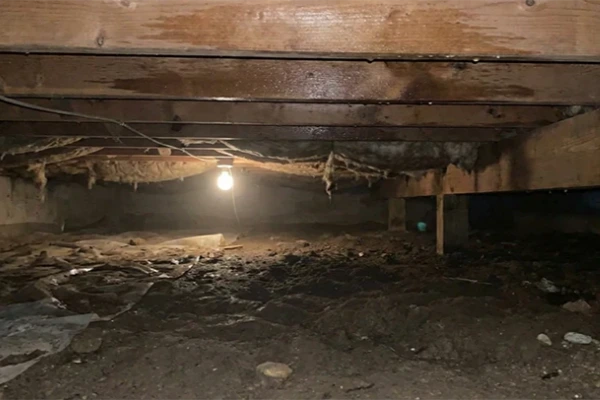
Mold establishes wherever RH stays above 60% — and most commercial-property policies now exclude long-term humidity damage. We maintain 45–55% RH, sustained, not averaged — so your property avoids the uninsured remediation bill and the litigation that follows.
HVAC Overload & Energy Cost

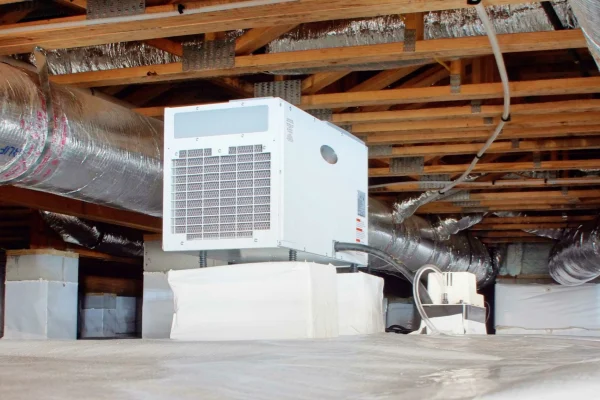
An unconditioned crawl space feeds latent moisture upward, so the main HVAC short-cycles fighting it. We remove that load at the source, not at the air handler — so your HVAC runs on its design duty cycle, typically cutting conditioning cost by around 15% (EPA/DOE).
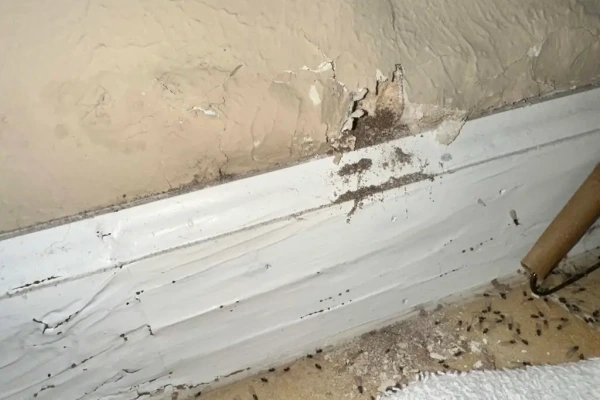
Pest & Termite Attraction

Subterranean termites, spiders, and cave crickets seek the standing humidity of a damp crawl space for the water and shelter it provides. We design for a uniformly dry envelope, not just a lower average reading — so your pest-control spend shrinks instead of recurring every season.
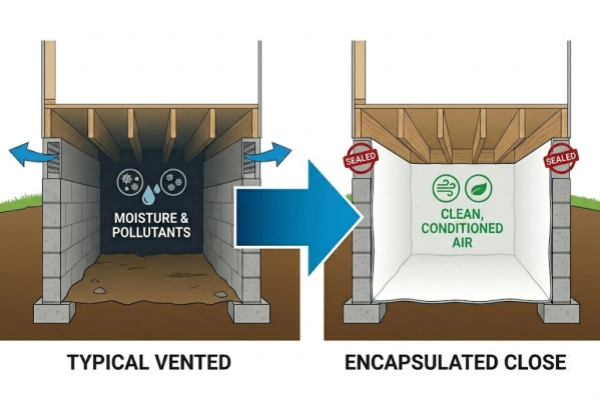
Code Inspection & Transaction Risk

A vented-to-closed conversion triggers inspection in a growing list of jurisdictions, and hidden mold found in diligence can derail a sale. We can certify units to UL/ETL for your market, not leave you with generic equipment that stalls approval — so your project starts from a credential inspectors recognize.

Crawl Space Code Compliance

Building codes have moved toward closed, conditioned crawl spaces, and increasingly name mechanical dehumidification as an accepted moisture-control method. For GCs and specifiers, getting this right separates a clean inspection from a stalled project.

What IRC §408.3 Typically Requires

In commercial buildings, exhaust fans and borrowed HVAC air rarely hold a large foundation envelope and can disrupt the pressure balance of the floors above. A permanently installed dehumidifier — one of the active methods §408.3 accepts — is usually the most reliable option at that scale, so your project keeps a clean compliance path without unbalancing the building above.

Regional Framework
North Carolina
Section R409.5 of the state residential code lists a permanently installed dehumidifier (with condensate pump or drain) as a preferred vapor-control method.
Oregon
The state residential code restricts naturally vented crawl spaces in many new builds.
United States
National guidance from ASHRAE and the Environmental Protection Agency converges on a 45–55% RH target.
UL/ETL Listing — Required by Code Officials

We offer UL/ETL certification on request — configured to your target market and model — so the units on your project can carry the credential inspectors look for. Final compliance is always determined by your local AHJ, since adopted IRC editions and state amendments vary by jurisdiction.

Crawl Space Solutions by Building Type — Setpoints & Specifications

Setpoints, mounting, and control logic change with the building above the crawl space. These are the ranges we design to most often.

Multi-Unit Residential
Target RH 45–55%
Damp crawl spaces under occupied units mean musty-odor and air-quality complaints upstairs — and habitability exposure for owners. We specify quiet, continuous-drainage units that won't transmit through the floor.
Hospital Utility Tunnels
Target RH 30–60%
Long, low tunnels condense readily, and tunnel air pulled into HVAC intakes can carry spores toward vulnerable patients. We specify continuous-drainage, Modbus-ready units — so your facilities team logs conditions centrally and passes survey.
Assisted-Living & Municipal
Target RH 45–55%
Vulnerable occupants, thin maintenance staffing: the unit has to run unattended for months and report its own status. We specify maintenance-light units with remote status read-out — so your team manages by exception, not by inspection.
Modular & Prefab Foundations
Target RH 45–55%
Off-site chassis set on pier foundations are exposed to ground moisture and prone to warping. We supply low-profile units that builders spec as standard equipment, not an upgrade — so your structural warranty stays valid.
Commercial Encapsulation Retrofit
Target RH 45–55%
Even a sealed crawl space pulls residual vapor through the concrete. Encapsulation without active dehumidification is half a system, not a finished one — and qualifying work may earn a federal energy tax credit we help you document.
Light-Industrial Subfloor
Target RH 45–60%
Light-Industrial Subfloor — Target RH 45–60% Larger footprints let air stagnate in the corners farthest from any vent. We specify higher-airflow units placed to clear dead zones, not just to hit an average reading — so the whole subfloor stays dry.

Recommended Models for Crawl Space Applications

For most crawl space projects, our low-temperature refrigerant series is the primary recommendation — because the space is unheated and standard units ice over in winter. Sub-scenarios below cover mounting constraints and large utility-tunnel volumes.

Primary Recommendation
Low-Temperature Refrigerant Series

60–480 L/day · operation from 0–5°C with hot-gas auto defrost · 24/7 continuous drainage

Why this is our default for crawl spaces:
Low-clearance crawl spaces

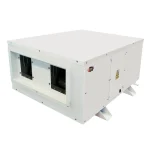
Ceiling-Mounted Ducted

Commercial Dehumidifiers
When to choose:

clearance below ~1.2 m, or where the unit must be concealed

Zero floor footprint · ducted airflow · discreet installation

See ceiling-mounted range →
Restoration & temporary projects

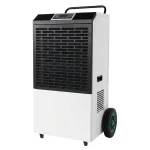
Portable Industrial with Pump

High-Temperature Series Dehumidifiers
When to choose:

water-damage restoration, drying-out before encapsulation, or temporary control during construction

Compact footprint · built-in condensate pump · roto-molded housing

See portable range →
SUB-SCENARIO: COLD CHAIN & REFRIGERATED

Industrial Refrigerant

Low-Temperature Series Dehumidifiers
When to choose:

high-volume hospital utility tunnels or large commercial subfloors

Up to 2400 L/day · high airflow · Modbus-ready (select models)

See industrial range →


Across the range: epoxy-coated coils, hot-gas auto defrost, continuous drainage with condensate pump, Modbus-ready on select industrial models, 60 Hz / 50 Hz builds for your regional grid, and UL/ETL listing. Standard warranty: 1 year on the full unit, 3 years on the compressor.

How to Size a Dehumidifier for Your Crawl Space

Sizing a crawl space is never just volume × coefficient. The same footprint behaves differently sealed versus vented, and the winter low decides whether a standard unit will even run. These are the inputs our engineers ask for.

1
Inputs We Need
  • Footprint & clearance height (m³) — clearance below ~1.2 m points to ceiling-mounted
  • Encapsulation status — sealed or vented (this changes the calculation, not just the number)
  • Current & target RH — most crawl spaces target 45–55%
  • Winter low temperature — decides standard versus low-temperature series
  • Power supply — voltage / phase / 60 Hz or 50 Hz
2
How We Calculate
For a sealed envelope we work from volume × a moisture-load coefficient, then apply multipliers for unsealed sections, high soil-contact area, and aggressive RH targets. A vented space is treated as an open load until it's encapsulated — we'll usually recommend sealing first, because dehumidifying an actively vented crawl space is fighting the weather.
3
What We Deliver (within 24 hours)
Recommended capacity & unit count
Mounting recommendation
Drainage strategy & layout
Voltage / frequency configuration
Lead time & pricing tier

How We Scoped a Multifamily Crawl Space Retrofit

Sanitized engineering consultation. Customer details anonymized. Shared as an engineering reference, not a performance guarantee.

Brief from Client
Building
3-building garden-apartment complex
Crawl space
~600 m² total, ~0.9 m clearance
Problem
Musty-odor complaints on first-floor units; one failed transfer inspection
Current RH
72–80% seasonal
Target RH
45–55%
Constraints
Low clearance, occupied buildings, noise-sensitive
Our Evaluation & Recommendation
01
Target Validation — Confirmed 45–55% is the correct band for biological control under occupied space, per EPA moisture guidance — not over-specified.
02
Capacity Calculation — Volume × moisture-load coefficient across the three envelopes, with a multiplier for the unsealed sections found on site.
03
Equipment Selection — Specified ceiling-mounted ducted units for the 0.9 m clearance rather than floor units that wouldn't fit — and low-noise operation to avoid transmitting into occupied first floors.
04
Compliance & Add-Ons — Paired with a ground vapor barrier to meet IRC §408.3, and continuous-drainage pumps so maintenance never enters the space.
05
Outcome — The proposal showed a complete assessment flow — scope, sizing, compliance, serviceability — that we apply to every crawl space RFQ. This is how we evaluate, not just what we sell.

Built for Building Professionals & Dehumidification Brands — Not End Consumers

Our customers are general contractors and HVAC specifiers spec’ing crawl space dehumidification for commercial and multi-family projects, property managers protecting buildings they operate, and brands private-labeling our units into their own lines. Everything here is structured around how those buyers actually procure.

Factory-Direct

ISO-certified manufacturing for OEM/ODM, so you can validate quality on a sample order before committing to container volumes.

Engineered Customization, Not Cosmetic

Voltage, phase, frequency, regional plugs, epoxy coil coatings, Modbus on select models, branded panels and packaging. We modify what your project needs, not sticker placement over a standard unit.

Certified, and Certifiable to Your Market

CE, RoHS, ISO 9001 in place today; UL/ETL certification available on request, configured to your target market and model. Named credentials and a clear path, not a "fully certified" claim.

Reliability by Design

Reverse-cycle defrost via a four-way reversing valve for low-temperature duty, epoxy-coated coils for corrosive foundation air, branded compressors rated for continuous operation. Standard warranty: 1 year unit, 3 years compressor.

Request Engineering Quote

Share your crawl space conditions. Our engineering team responds within 24 hours with a capacity recommendation, model specification, and indicative pricing — no obligation, no sales pressure, no spam. NDA signed on request.

Questions From Procurement & Engineering

What RH should a crawl space maintain?

 Most crawl spaces target 45–55% RH and should not stay above 60% for sustained periods — the threshold where mold and wood-rot fungi establish. EPA and building-science guidance both point to this range.

A standard refrigerant unit ices over and stops at low temperatures. Our low-temperature series operates from 0–5°C and uses a four-way reversing valve for automatic reverse-cycle defrost — briefly reversing refrigerant flow to clear frost from the evaporator — so the unit keeps running through the cold months.

Yes. UL/ETL certification is available on request, configured to your target market and model. Final compliance on any project is determined by your local AHJ, since adopted IRC editions and amendments vary by jurisdiction — the certification gives your submittal a credential inspectors recognize. Tell us your market and model and we’ll confirm the path and lead time.

Crawl space air carries sulfides and soil off-gassing that corrode bare copper and aluminum. Our evaporator and condenser coils are epoxy-coated to resist that attack and hold heat-exchange efficiency over the unit’s life.

Yes. Continuous drainage with a built-in condensate pump lets the unit run for months without anyone entering the crawl space to empty a tank.

 Select industrial models are Modbus-ready for centralized monitoring of runtime and humidity. We confirm support per model before production.

Get a Free Engineering Assessment for Your Crawl Space

Share your warehouse conditions. Our engineering team responds within 24 hours with capacity recommendation, model specification, and indicative pricing — no obligation, no sales pressure, no spam.

Contact Information

Phone & WhatsApp

+86-571-8805-3366
+86-153-0581-0157

Address

Zhengtai Road, Chongwen Street, Weifang, Shandong, China

Business Hours

Business Hours Monday - Friday: 9:00 AM - 6:00 PM (CST)
24/7 Emergency Support Available

Response Guarantee

✓ Engineers respond within 24 hours
✓ No spam, no sales calls
✓ NDA signed on request
✓ Free of charge, no commitment

Get Your Free Quote

By submitting this form, you agree to receive communications from RW Machine. We respect your privacy and will never share your information.

Continue Your Specification Process

Technical references, product details, and case material for your evaluation.

Industrial Dehumidifiers

168–2400 L/day. High-capacity warehouse dehumidification for logistics hubs, cold storage, and large-format distribution centres.

See industrial dehumidifier range →

Basement Dehumidifiers

Commercial-grade units for adjoining basements and underfloor damp zones — the same corrosion-protected build crawl space and restoration contractors deploy on whole-property encapsulation jobs.

See basement dehumidifier range →

Ceiling-Mounted Units

Overhead-mounted warehouse dehumidifiers for low-clearance facilities — no floor footprint, no obstruction to racking or forklift access.

See ceiling-mounted dehumidifier range →

Desiccant Dehumidifiers

For cold-climate or unheated crawl spaces where refrigerant units lose capacity near freezing, desiccant models sustain low RH at low temperatures — specified when target humidity or ambient temperature falls below the refrigerant range.

See desiccant dehumidifier range →

Technical Articles

How to choose and size a dehumidifier for crawl spaces and basements, RH targets for underfloor zones, and how to stop coil freeze-up in cold, unheated installations.

Read crawl space & basement moisture guides →

Download Center

Product datasheets, compliance certificates (CE · RoHS · ISO 9001), and third-party test reports for your specification file.

Download product datasheets & certificates →

Contact Us Today, Get Reply Tomorrow

Your information will be kept strictly confidential.

Ruiwang employees and clients at a trade show.

Our team would be happy to meet you and learn all about your business, requirements and expectations.