Indoor pool
Electronics
Construction
Pharmaceutical
Water damage
Rinwang supplies refrigerant and rotary desiccant dehumidification equipment for warehouses, factories, cold storage, drying rooms, and process environments. Select the technology, operating-temperature range, installation format, airflow, drainage, electrical supply, and control interface around the actual project conditions.
These categories use different classification dimensions. Refrigerant and desiccant describe the drying technology; low-temperature and high-temperature describe the operating condition; portable and ceiling-mounted describe the installation format; explosion-proof describes a safety configuration. Start with the site condition, then compare models within the appropriate route.

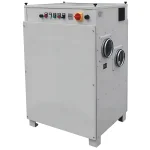
Process airflow: 320–3,000 m³/h
Moisture removal: 2.5–19 kg/h at 20°C/60% RH
Operating range: −10 to +50°C

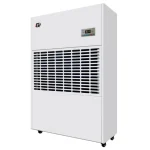
Capacity: 60–158 L/day at 30°C/80% RH
Airflow: 850–1,400 m³/h
Operating range: 5–38°C

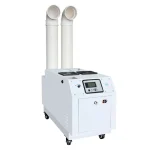
Capacity: 20–488 L/day at 30°C/80% RH
Airflow: 250–5,600 m³/h
Operating range: 5–38°C

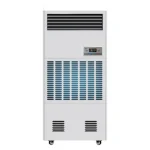
Capacity: 168–480 L/day at 30°C/80% RH
Airflow: 2,000–5,600 m³/h
Operating range: 2–38°C

Capacity: 168–480 L/day at 30°C/80% RH
Airflow: 2,000–5,600 m³/h
Operating range: 5–60°C

Capacity: 168–480 L/day at 30°C/80% RH
Airflow: 2,000–5,600 m³/h
Operating range: 5–38°C
Available project options include voltage and frequency, plug type, filters, casters, condensate drainage, duct connections, RS485/Modbus, remote displays, cabinet finishes, and private-label branding. Availability varies by model, order quantity, and project requirements and must be confirmed during technical review.
Critical parts use anti-corrosion materials/coatings to resist salt spray and chemical exposure, extending service life in marine docks and chemical plants under harsh conditions.
Choose a large tank or external drain hose for continuous discharge, reducing manual emptying. Square or round adapters fit ducts; ceiling-mounted or floor-standing installs stay simple.
Automatic defrost prevents icing in winter or low temperatures, keeping the evaporator efficient and dehumidification continuous, while reducing manual maintenance and improving performance in cold environments.
A high-accuracy sensor and smart controller monitor in real time; set a target RH and the unit automatically starts/stops or modulates power to maintain stable humidity.
An upgraded centrifugal fan provides higher airflow and wider coverage for rapid, even distribution—balancing humidity across corners and accelerating dehumidification in large spaces.
Wi-Fi and mobile app control. Monitor status, adjust settings, and schedule on/off from anywhere—keep warehouse humidity on target and integrate with your facility’s IoT.
Custom housing colors and your brand logo on the cabinet for OEM/private-label orders, so units arrive ready to sell under your own brand.
Special voltages, plug types, filters, casters, drain kits, RS485/Modbus, remote display. Tell us your requirements; we configure units to match your site.
The equipment route changes with the stored material, operating temperature, moisture source, target RH or dew point, airflow path, and installation constraints. Use the application cards to review the site conditions before comparing individual models.


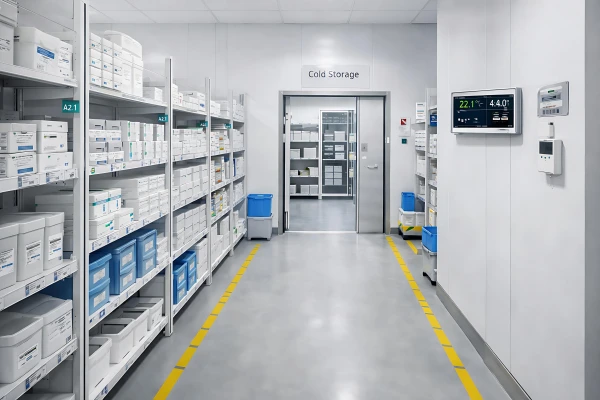

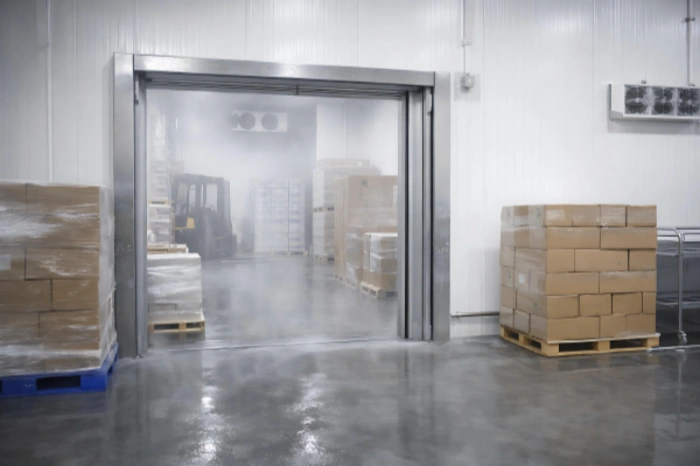

We’ve successfully provided moisture control solutions for diverse applications. Our engineering team can design a custom solution for your specific requirements.
Our industrial dehumidifiers are engineered for large-scale applications, offering high-capacity moisture removal. Each model is rigorously tested under standard conditions of 30°C and 80% relative humidity, ensuring reliable performance across various industrial settings. Designed to operate continuously, these dehumidifiers are ideal for warehouses, factories, greenhouses, and more.
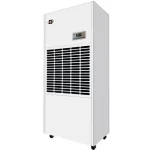
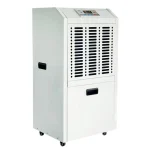
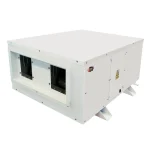
| Specification | RW-4881 | RWDD-4881 | RW-2481 | RWDD-2481 |
|---|---|---|---|---|
| Capacity | 488L/D | 488L/D | 248L/D | 248L/D |
| Voltage/Frequency | 380V/50Hz | 380V/50Hz | 380V/50Hz | 380V/50Hz |
| Apply Area | 800-1000m² | 600-1000m² | 350-450m² | 300-450m² |
| Power Consumption | 5.6KW | 5.6KW | 3.0KW | 3.0KW |
| Airflow Volume | 5600m³/h | 5600m³/h | 2800m³/h | 2800m³/h |
| Airflow Volume (CFM) | 3296 CFM | 3296 CFM | 1648 CFM | 1648 CFM |
| Work Temperature | 5°C-38°C | 5°C-38°C | 5°C-38°C | 5-38°C |
| Control Humidity | 10%-95% | 10%-95% | 10%-95% | 10%-95% |
| Refrigerant | R410a/R32 | R410a/R32 | R410a/R32 | R410a/R32 |
| Weight | 165kg | 160kg | 102kg | 87kg |
| Size | 1170*445*1770mm | 1320*910*700mm | 760*470*1620mm | 1110*940*500mm |
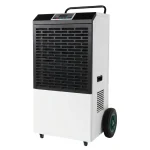
| Model | RW-6001E | RW-7281E | RW-9681E | RW-12001E |
|---|---|---|---|---|
| Capacity (30°C, RH80%) | 25kg/h | 30kg/h | 40kg/h | 50kg/h |
| Capacity (26.7°C, 60%RH) | 15kg/h | 18kg/h | 24kg/h | 30kg/h |
| Voltage/Frequency | 380V/50Hz | 380V/50Hz | 380V/50Hz | 380V/50Hz |
| Apply Area | 1000-1200㎡ | 1000-1500㎡ | 1800㎡ & below | 2000㎡ & below |
| Power | 10kw | 15kw | 18kw | 25kw |
| Fan | 6000m³/h | 8000m³/h | 12000m³/h | 15000m³/h |
| Fan (CFM) | 3532 CFM | 4709 CFM | 7063 CFM | 8828 CFM |
| Work Temperature | 5°C-38°C | 5°C-38°C | 5°C-38°C | 5°C-38°C |
| Control Humidity | 10%-95% | 10%-95% | 10%-95% | 10%-95% |
| Refrigerant | R410a/R32 | R410a/R32 | R410a/R32 | R410a/R32 |
| Weight | 170kg | 210kg | 380kg | 400kg |
| Size | 1170×445×1770mm | 1170×445×1770mm | 1550×720×1950mm | 1550×720×1950mm |
Use capacity, airflow, operating range, and installation requirements together when comparing models. Suggested coverage areas are reference information, not a substitute for a moisture-load review. A controller’s humidity-setting range is not a guarantee that every setpoint can be maintained under all site conditions.
Airflow should be matched to how your space is used, how air is distributed, and how the dehumidifier is installed. The right airflow helps humid air reach the unit and dry air reach the areas that need humidity control.
Warehouses, workshops and production areas need enough air circulation to reduce humidity differences across the space. High racks, partitions and long air paths can all affect how evenly dry air is distributed.
When a dehumidifier is connected to ducts, filters, elbows or multiple air outlets, the fan must overcome added resistance. In these systems, airflow should be checked together with external static pressure.
For dry rooms, process drying and other low-humidity applications, airflow is matched to the required dry-air volume and target RH or dew point. Desiccant systems also require separate process and regeneration airflow.
There is no single airflow value that fits every industrial dehumidification project. We match airflow together with room volume, moisture load, target humidity, installation method and dehumidification capacity.
Founded in 2021 in Weifang, Shandong, Ruiwang designs and manufactures industrial and commercial dehumidification equipment. Project support includes equipment selection, OEM/ODM configuration, voltage and control customization, technical documentation, and coordination from requirement review through production.


Industrial dehumidifier selection should begin with the operating condition rather than floor area alone. Confirm temperature, current and target RH or dew point, moisture sources, air exchange, required airflow, power, drainage, duct resistance, installation space, and control requirements before comparing models.
Use the normal and worst-case intake temperature to select standard refrigerant, low-temperature refrigerant, high-temperature refrigerant, or desiccant technology.
Published routes: standard 5–38°C, low-temperature 2–38°C, high-temperature 5–60°C, and desiccant −10 to +50°C.
Required input: Minimum, normal, and maximum intake temperature.
State the humidity condition that must be maintained, not only the current room reading. Low-RH or low-dew-point processes may require a desiccant route.
Compare like with like: Capacity changes with entering temperature and RH.
Required input: Current RH, target RH or dew point, and the stored product or process tolerance.
Include outdoor-air infiltration, loading-door activity, ventilation, wet materials, open water, people, and process moisture when describing the load.
Operational data matters: Door frequency and ventilation can change demand even when room volume is unchanged.
Required input: Door dimensions and cycles, ventilation rate, weather conditions, and internal moisture sources.
Capacity removes moisture; airflow carries humid air to the unit and distributes dry air through the controlled zone. Ducts, filters, elbows, and outlets add resistance.
Rating condition: Compare refrigerant capacity at the same temperature and RH, and check external static pressure for ducted systems.
Required input: Room dimensions, rack or partition layout, duct route, filter class, and required air distribution.
Confirm voltage, frequency, phase, available electrical capacity, condensate route, and any remote monitoring or building-control requirements.
Model-specific options: Drain kits, pumps, remote displays, RS485/Modbus, filters, and special electrical configurations vary by model.
Required input: Site power, drain position and lift, control protocol, and alarm requirements.
Choose floor-standing, portable, ceiling-mounted, or ducted installation after checking service access, airflow clearance, corrosion exposure, movement needs, and site restrictions.
Project review required: Hazardous or corrosive environments need their materials, electrical configuration, and local requirements confirmed before quotation.
Required input: Installation drawings, access route, maintenance clearance, environmental exposure, and site safety requirements.
We collect a lot of FAQs from our real clients and please check out our FAQ page. Also, feel free to chat with us via LiveChat (on the right bottom corner), phone call, email, or just simply drop us a line below:
Room size is only part of selection. Industrial spaces can have high moisture load (process humidity, open water sources, frequent door openings, plant irrigation, wet materials). Higher capacity helps reach target RH faster and maintain stability.
Send the room dimensions, temperature range, current and target RH or dew point, moisture sources, ventilation and door activity, power supply, drainage, duct layout, installation limits, and control requirements. We will use these conditions to compare capacity and airflow at the relevant rating point.
Cabinets use smooth, cleanable finishes; coils drain to a sloped drain pan and condensate is routed via trapped drain lines to prevent standing water. Design follows industry guidance that drain pans be sloped ≥ 10 mm/m (1/8 in/ft) toward the outlet to reduce microbial growth.
For corrosive environments (natatoriums, coastal sites), we offer e-coated coils (full-immersion electro-deposition) and 304/316L stainless-steel cabinetry options.
At lower entering air temperature or humidity, latent capacity decreases relative to rating conditions; for cold rooms we use hot-gas (bypass) or reverse-cycle four-way-valve defrost, and electric defrost where appropriate. Defrost entry/exit can be time- and/or temperature-based and is field-adjustable to suit the application.
We rate industrial dehumidifier capacity at 30 °C/80% RH in a controlled psychrometric chamber (still-air). AHAM-style ratings at 26.7 °C/60% RH can be provided for comparison on request.
Yes, we can specify heavy-duty wheels based on unit weight and movement needs. For very heavy machines, we’ll balance mobility with safety (center of gravity, turning radius, and floor conditions).
It can be customized on some models, but outlet relocation is a structural/airflow change. We typically confirm feasibility after reviewing the cabinet layout, fan orientation, and duct connection requirements.
Start with room volume, target RH, temperature range, and moisture sources (evaporation, process, infiltration). If you share these basics, we can recommend capacity and airflow, and match a suitable configuration for your application.
Practical resources for selecting the right industrial dehumidifier, estimating capacity needs, and evaluating long-term operating efficiency.

This guide explains how to choose the right industrial dehumidifier for factories, warehouses, and other humid spaces. It covers the key decision points step by step: choosing refrigerant or desiccant based on temperature, selecting the right installation style, estimating capacity, and deciding on drainage options. It also explains control features, build quality, energy efficiency, maintenance needs, and warranty support, helping buyers match the machine to their site conditions and avoid costly humidity problems.

This guide explains how to choose the right size industrial dehumidifier based on real moisture load, not just room size. It covers why floor area alone can lead to undersizing, how to compare capacity ratings correctly (L/day, kg/h, PPD), and why airflow, temperature, and humidity targets matter. You will also learn practical sizing steps, common mistakes to avoid, and how requirements differ between warehouses, production rooms, and cold storage transition areas.

This article explains how to judge whether an industrial dehumidifier is truly energy efficient. It shows why power draw alone is not enough, and why efficiency should be measured by how much moisture the unit removes per kilowatt-hour. The guide compares refrigerant and desiccant systems, explains how temperature, humidity load, airflow, and sizing affect real performance, and lists the key data buyers should check before comparing models. It also includes practical FAQs about runtime, electricity use, and choosing the right capacity for different projects.
Ready to solve your moisture problems? Our experts will analyze your requirements and recommend the perfect dehumidifier solution within 24 hours.
+86-571-8805-3366
+86-153-0581-0157
Zhengtai Road, Chongwen Street, Weifang, Shandong, China
Business Hours
Monday - Friday: 9:00 AM - 6:00 PM (CST)
24/7 Emergency Support Available
Response Guarantee
✓ Email inquiries: Within 24 hours
✓ Technical questions: Within 48 hours
✓ Urgent issues: Immediate response
By submitting this form, you agree to receive communications from Rinwang. We respect your privacy and will never share your information.
Your information will be kept strictly confidential.
Our team would be happy to meet you and learn all about your business, requirements and expectations.