A loading door opens at a warehouse. Warm, humid air enters, and water starts forming on a cold pipe, even though the room temperature looks normal. What changed? A psychrometric chart can help answer that question without guessing from relative humidity (RH) alone. A psychrometric chart brings temperature and moisture information into one picture. It […]
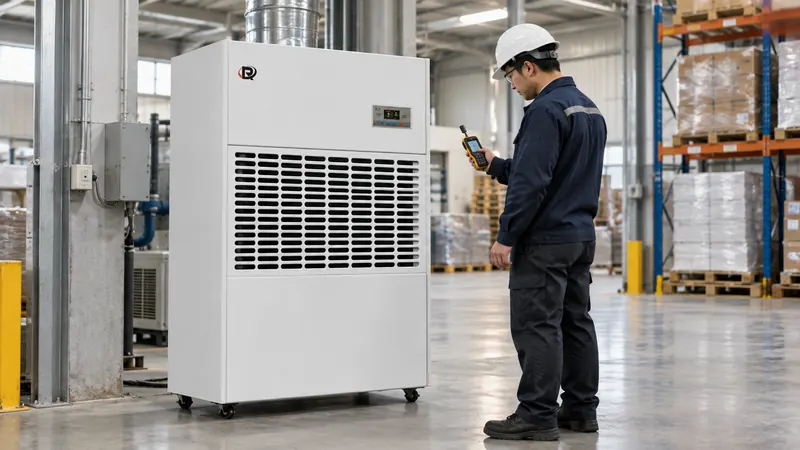
An industrial dehumidifier may run through an entire shift while a storage area remains humid, stop unexpectedly, develop persistent ice, or leak water. These symptoms can point to a component fault, but they can also result from airflow restrictions, control settings, unsuitable inlet conditions, or a change in the site’s moisture load. Treating every symptom […]
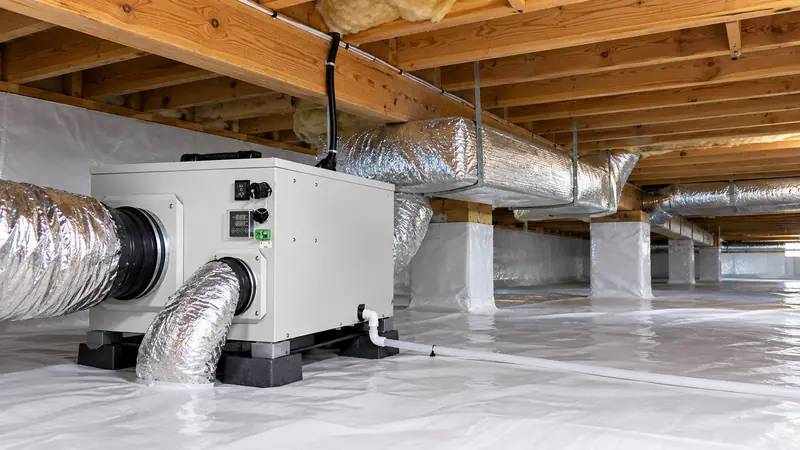
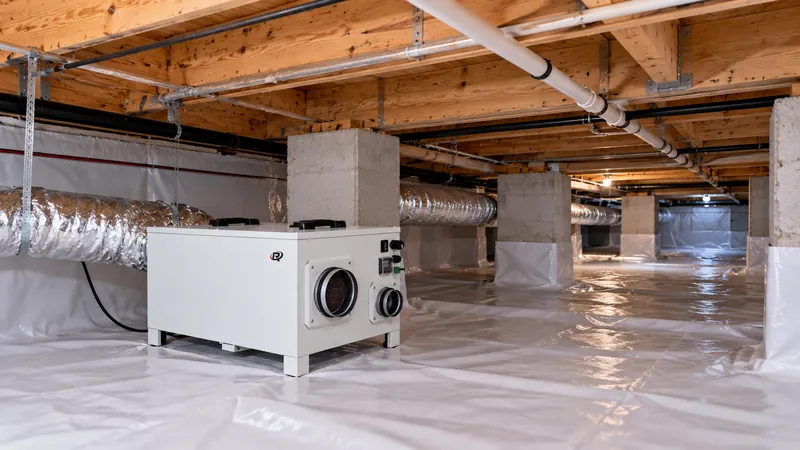
A crawl space may need a dehumidifier when moisture continues to accumulate after leaks, ground moisture and uncontrolled outdoor-air entry have been addressed. If the existing drying strategy cannot maintain acceptable humidity during normal seasonal conditions, dedicated dehumidification becomes a reasonable option. Repeated relative humidity (RH) readings around or above 60% warrant investigation, but they […]
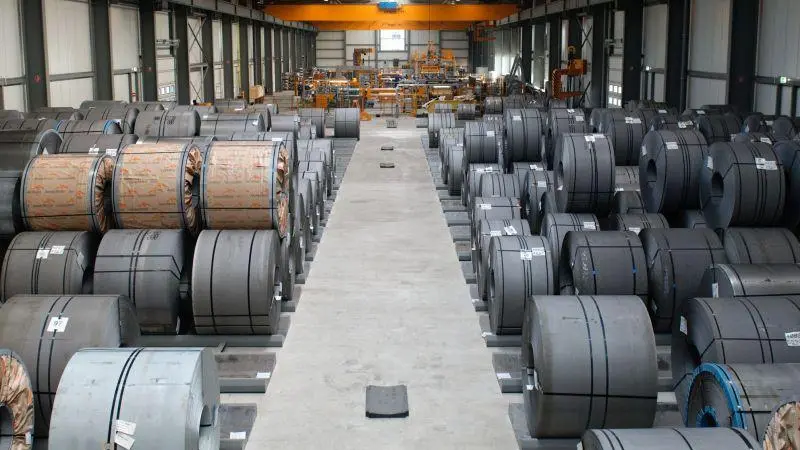
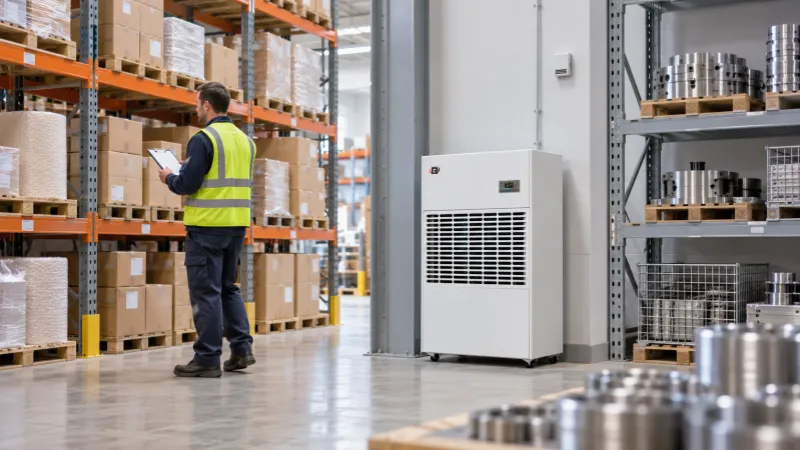
Rust on steel coils, water stains between aluminum sheets, and moisture trapped inside galvanized bundles are common concerns in metal storage facilities. Although these problems may appear similar, they can develop for different reasons, and lowering warehouse humidity is not always the complete solution. Industrial dehumidification can help protect stored metal by controlling airborne moisture […]
An industrial dehumidifier can keep running while room humidity stays above the target even when the machine has not completely failed. The reading may be misleading, the unit may be removing less moisture than expected at the actual operating condition, or it may be drying its process air correctly while moisture enters the space just […]
A crawl space dehumidifier can be correctly sized and still perform poorly after installation. Common problems include short-circuiting airflow, humid pockets behind foundation walls, blocked drains, inaccessible filters, poorly located sensors and equipment operating outside its intended temperature range. For contractors, a successful installation depends on more than placing the unit in the crawl space […]
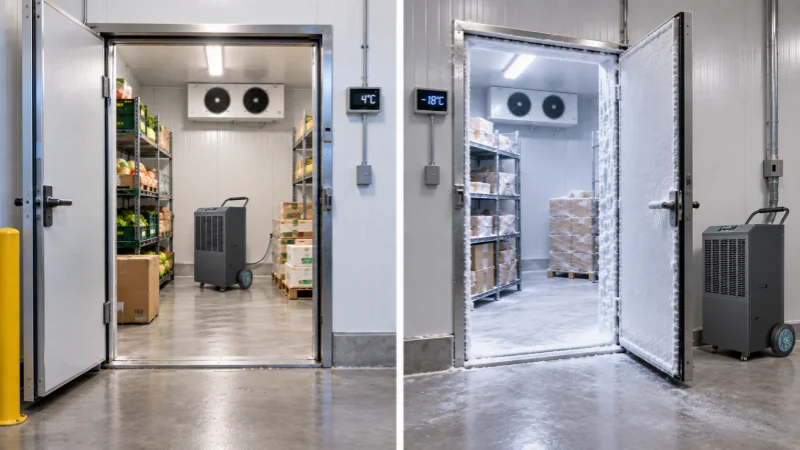
Moisture problems look different in a walk-in cooler and a walk-in freezer. In a cooler, they usually appear as condensation, wet floors, dripping surfaces and damaged packaging. In a freezer, the same incoming moisture becomes frost and ice on evaporators, door frames, floors and products. For many coolers, the equipment can operate inside the room; […]
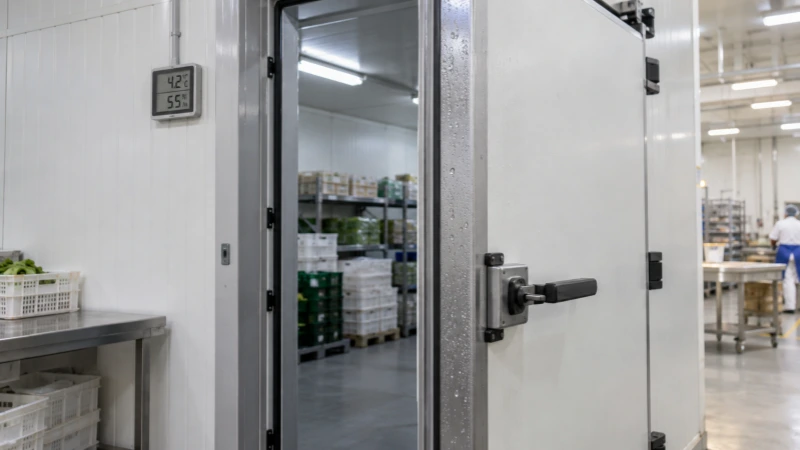
A room can show 55% relative humidity and still have water forming on a cold pipe, door frame or wall panel. The humidity sensor may be working normally. The problem is that relative humidity tells you how humid the air is at its current temperature, but it does not directly tell you whether a colder […]
Relative humidity is the percentage you see on a humidity meter, building controller or dehumidifier display. It looks like a simple number, but it is easy to misunderstand because the percentage changes with temperature. A room may show a lower RH after the heating is turned on even though no water has actually been removed, […]