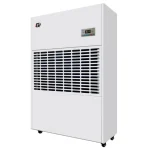
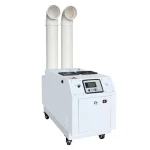
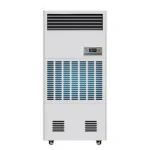
If you are selecting equipment for a warehouse, production room, cold storage transition area, or another humidity-sensitive facility, the biggest mistake is assuming industrial dehumidifier size can be chosen by room size alone. That shortcut may work as a rough starting point for smaller spaces, but industrial projects depend on more than floor area. Moisture load, target humidity, operating temperature, airflow, and daily operating conditions all affect the right size. Even published capacity numbers need context, because dehumidifier ratings are tied to specific test conditions and should not be compared without checking the rating point behind the figure.
For industrial facilities, the real question is not “How large is the machine?”It is: How much moisture must this system remove, under real project conditions, to keep the space stable? That is the sizing logic this guide follows.
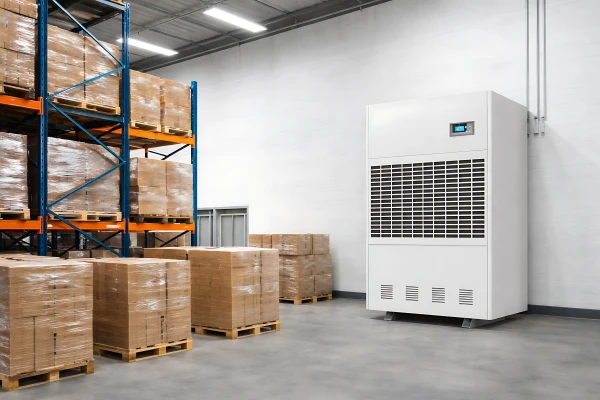
Why Floor Area Alone Does Not Tell You the Right Industrial Dehumidifier Size
Industrial dehumidifier “size” means capacity, not cabinet dimensions
In industrial projects, “size” should usually mean moisture removal capacity, not physical cabinet size. What matters is whether the equipment can remove enough water from the air, under the site conditions, to keep humidity within the required range.
Product specifications may show capacity in liters per day, kilograms per hour, or pints per day, but those figures only become useful when they are read together with the test condition. The same unit can show very different numbers under AHAM-style conditions and under hotter, wetter “saturation” conditions. That is why capacity comparisons should be treated as technical comparisons, not headline comparisons. For a broader framework beyond pure capacity numbers, it helps to read this step-by-step guide on how to choose an industrial dehumidifier.
Two spaces with the same square footage can need very different capacity
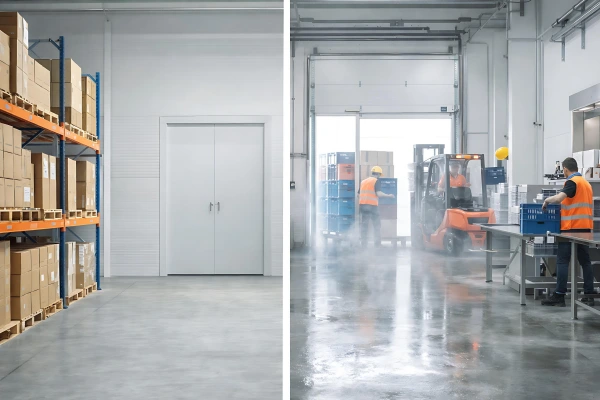
A warehouse and a packaging room can have the same floor area and still need very different equipment. One may remain mostly closed and need only general storage protection. The other may bring in humid outside air all day, receive warm goods, or run washdown cycles that continuously add moisture. Same area. Very different moisture burden.
Humidity targets also vary by application. For general moisture control, the EPA recommends keeping indoor humidity below 60% RH, ideally between 30% and 50% RH, because higher moisture levels can support mold growth and related damage. That is a useful benchmark for storage and general protection, but many industrial projects need tighter control than a simple anti-mold target.
How to Read Industrial Dehumidifier Capacity Correctly
What L/day, kg/h, and PPD actually tell you
These values all describe moisture removal rate, just in different units:
- L/day = liters of water removed per day
- kg/h = kilograms of water removed per hour
- PPD = pints of water removed per day
In practice, they are closely related because 1 liter of water is approximately equal to 1 kilogram, which means:
- 1 L/day ≈ 1 kg/day
- 1 kg/h ≈ 24 L/day
- 1 liter ≈ 2.11 US pints
So, as a simple reference:
- 100 L/day ≈ 4.17 kg/h
- 100 L/day ≈ 211 PPD
This makes it easier to compare specifications from different suppliers. However, unit conversion only shows how the numbers relate mathematically. Even when the conversion is clear, the comparison is still incomplete unless the machines are rated under the same test conditions.
Why rating conditions matter when comparing models
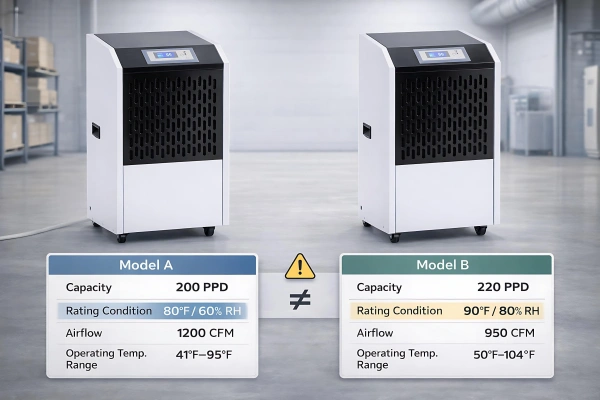
This point is one of the most important in industrial sizing. A capacity number has meaning only when you know the temperature and RH used to measure it. Standardized residential-style rating logic often uses 80°F and 60% RH, while some published specifications also show larger numbers under hotter and more humid conditions. If two models are presented under different rating points, the comparison is incomplete.
That is why a serious review should always check four things together:
- capacity
- rating condition
- airflow
- operating temperature range
If you want a broader comparison of how selection logic changes across working environments rather than just across specifications, this application-based industrial dehumidifier guide is the most relevant next step from this article.
Why airflow matters together with moisture removal
Dehumidifiers do not control humidity by water-removal number alone. They also need to move enough air through the space. In large rooms, tall spaces, or areas with weak circulation, airflow becomes part of the sizing decision. Manufacturers publish airflow for a reason: room coverage, drying uniformity, and recovery speed all depend on it, not just the daily moisture-removal figure.
| Specification | What It Shows | Why It Matters |
|---|---|---|
| L/day / kg/h / PPD | Moisture removal rate | Indicates how much water the unit can remove |
| Rating condition | Temperature and RH used for testing | Makes model comparisons meaningful |
| Airflow | Air volume moved through the unit | Affects coverage and response speed |
| Operating temperature range | Functional temperature window | Helps prevent poor fit in cold or warm areas |
| Humidity control range | Control capability | Important for storage, process, or condensation control |
What Actually Determines the Right Capacity for an Industrial Project
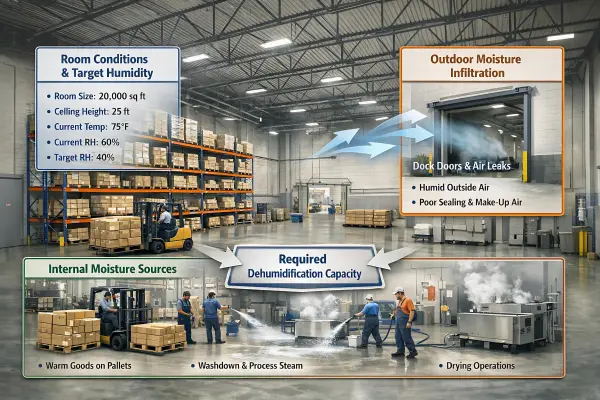
Before estimating a suitable size, it helps to understand what actually drives dehumidification demand in an industrial space. In most projects, capacity is shaped by room conditions, outside moisture entering the space, and humidity generated inside the facility.
Room volume, current conditions, and target humidity
Room dimensions are only the starting point. Ceiling height changes air volume. Current temperature and humidity affect how much water vapor the air contains. Target RH or dew point determines how hard the system has to work. A storage room that only needs to stay under 60% RH is very different from a production room that must stay stable to protect materials, packaging, or process consistency.
Outdoor air, door openings, and infiltration load
In many facilities, infiltration is the hidden driver behind undersizing. Dock doors, personnel doors, poor seals, and make-up air systems can pull in a large amount of moisture. In humid climates, outside air may contribute more load than the room itself. This is why area-only sizing often leads to control problems after installation.
Internal moisture from goods, people, and processes
Many industrial spaces generate humidity internally. Common sources include:
- warm or wet goods entering the room
- washdown and cleaning operations
- steam or hot-water processes
- people and vehicle traffic
- drying, curing, or open-water processes
This is also where sizing support from an experienced supplier becomes more useful. A useful recommendation starts with identifying moisture sources, not just room dimensions.
A Practical Way to Estimate What Size Industrial Dehumidifier You Need
Once the main moisture drivers are clear, the next step is to use that information to narrow the right capacity range and technology path. A practical selection process usually starts with the control goal, then moves to moisture source, capacity range, and equipment type.
Step 1: Define the control goal
Start with the project goal, not the machine model. Common goals include:
- preventing mold and damp damage in storage
- stopping condensation on cold surfaces
- protecting cartons, powders, paper, or metal parts
- maintaining stable conditions for production
- controlling humidity in loading areas or transition zones
Step 2: Identify where the moisture is coming from
Break the moisture load into real sources:
- outside air and infiltration
- goods or materials entering the space
- production-related moisture
- cleaning or washdown
- temperature-driven condensation risk
This step gives you a more practical basis for narrowing the right capacity range.
Step 3: Match the project to a realistic capacity range
Once the humidity target and moisture sources are clear, you can estimate the removal requirement and narrow the selection to a practical capacity band. At this stage, airflow, duty cycle, and installation method should also be reviewed. A system can look oversized in one climate and undersized in another even if the room dimensions are identical.
Step 4: Choose the right technology for the environment
Technology choice can change the sizing result. A capacity figure on its own is not enough if the project involves lower temperatures, lower humidity targets, or conditions where standard refrigerant systems may lose efficiency. In those cases, the right answer is not just a larger unit, but the right dehumidification method matched to the application.
So the correct answer to “What size industrial dehumidifier do I need?” is not only a capacity figure. It is capacity matched with the right dehumidification method.
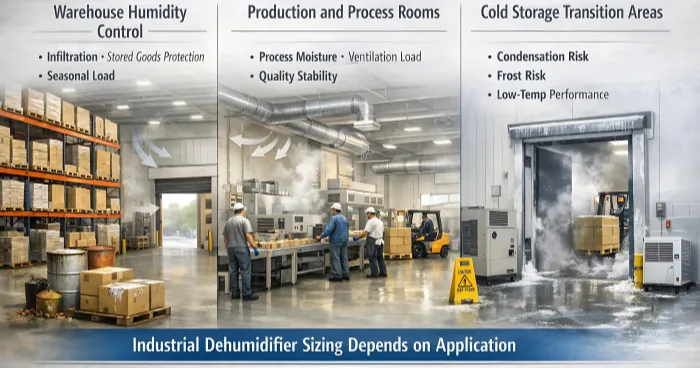
Industrial Dehumidifier Sizing by Application
Warehouse humidity control
Warehouse projects are often shaped by infiltration, stock protection, and seasonal conditions. The real concern may be mold prevention, odor reduction, corrosion control, or packaging protection. In these facilities, loading docks, building leakage, and the moisture sensitivity of stored goods usually matter more than a simple area estimate. For equipment-specific guidance, review dehumidifiers for warehouse projects.
Production and process rooms
Production rooms often need more stable conditions than storage spaces. The concern may be material behavior, process consistency, surface condensation, or product quality. In these projects, internal moisture generation and ventilation load often matter more than room size.
Cold storage transition areas and loading zones
Cold transition areas are easy to undersize. Warm, moisture-laden air entering a colder zone can quickly lead to condensation, fogging, frost, and slippery floors. This is one of the applications where technology choice becomes especially important, because low-temperature performance matters as much as nominal capacity. When the project needs stable drying in colder conditions, a desiccant dehumidifier configuration can be a more suitable option, especially since your current desiccant range is listed for operating conditions down to -10°C.
Practical sizing examples for reference
The examples below are only rough references. Final sizing still depends on room height, temperature, current humidity, target RH, outside air entry, and internal moisture load.
| Example Project | Approx. Area | Typical Conditions | Target RH | Rough Capacity Range |
|---|---|---|---|---|
| Warehouse storage | 5,000 sq ft | Mostly closed, low internal moisture, limited outside air | Below 60% RH | 100–180 L/day |
| Production or packaging room | 5,000 sq ft | Frequent door opening, warm goods, higher moisture load | 45%–50% RH | 180–300 L/day |
| Cold transition zone | 5,000 sq ft | Warm humid air entering a colder area | Condensation control | 120–240 L/day |
You should treat these figures as rough directional examples rather than final project recommendations. Even with the same floor area, different moisture loads and control targets can change the required capacity range.
Common Sizing Mistakes in Industrial Projects
Choosing by square footage only
This is still one of the most common sizing mistakes. Room-size charts can be a useful starting point for lighter-duty applications, but industrial facilities usually need a project-based approach that goes beyond square footage alone. General charts do not capture infiltration, process moisture, operating peaks, or stricter control targets.
Comparing headline capacity without checking the rating point
If one unit is shown at AHAM-style conditions and another is shown under much hotter and more humid conditions, the two numbers should not be treated as equal.
Ignoring seasonal peaks and operating reality
A system that appears adequate during average conditions may fail during the wettest month, after washdown periods, or during frequent door cycles. Facilities that size only for normal operation often discover the problem during the exact conditions that matter most.
What Information Helps Speed Up Equipment Selection
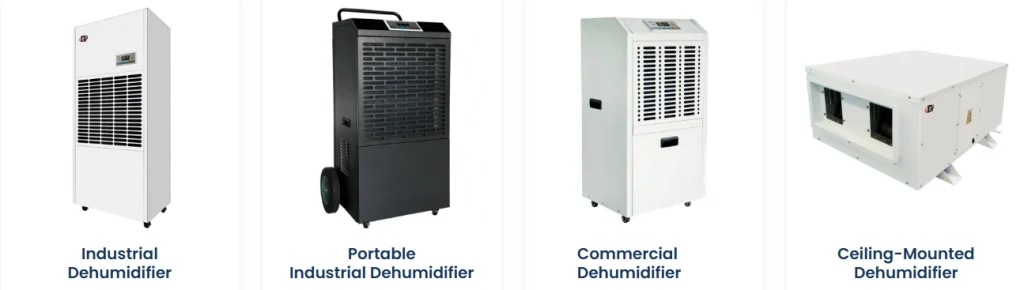
A faster recommendation usually starts with a few basic project details. In many cases, even a simple description of the space, the humidity problem, and the target condition is enough for an initial discussion.
The most useful information to share includes:
- room length, width, and height
- current temperature and humidity, if known
- target humidity or control goal
- application type, such as warehouse, production area, or cold transition zone
- whether doors are opened frequently or outside air enters the space
For more demanding projects, additional details such as ventilation volume, internal moisture sources, and operating schedule can help refine the recommendation further. If some of this information is not available yet, that should not stop the conversation. You can still contact our team with your basic project requirements, and we can suggest a more suitable dehumidifier based on your application, humidity target, and working conditions.
FAQ
1. How do I calculate what size dehumidifier I need?
Start with the space size, then adjust for how damp it is, how often outside air enters, and how strict the humidity target is. In industrial projects, moisture load matters more than floor area alone.
2. Will a dehumidifier kill mold?
No. A dehumidifier does not kill existing mold, but it can help slow further growth by reducing excess humidity and making conditions less favorable for mold.
3. Can a dehumidifier cool a room?
Not directly. It removes moisture, which can make the room feel more comfortable, but it does not lower room temperature the way an air conditioner does.
4. Do industrial dehumidifiers use a lot of electricity?
They can use more power than smaller units, but actual consumption depends on capacity, runtime, and operating conditions. Correct sizing usually matters more than the machine category alone.
5. How big of a dehumidifier do I need?
That depends on more than room size. The right capacity also depends on humidity level, air leakage, temperature, and how the space is used during daily operation.