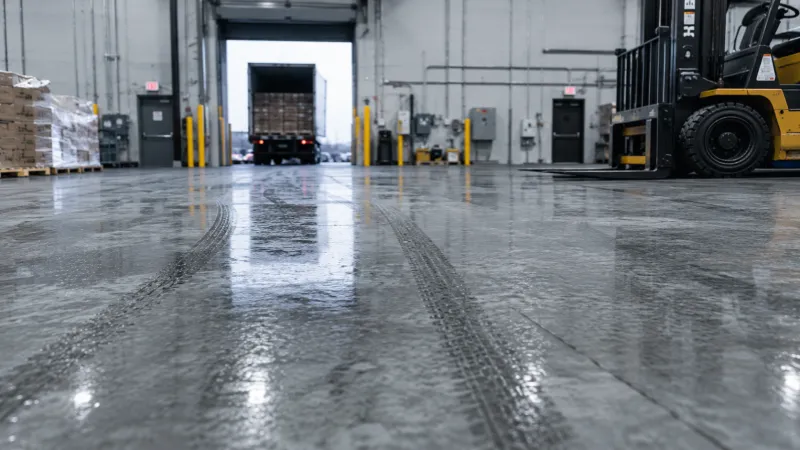
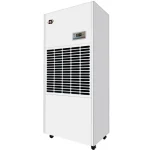
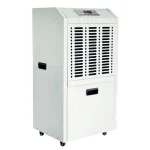
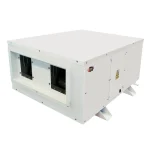
Cold storage rooms are built to keep products cold. That does not mean they can keep moisture under control.
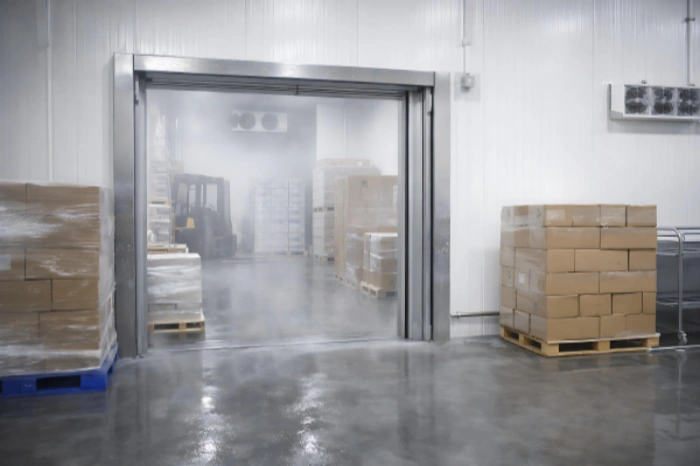
This is where many cold rooms start to fail in daily operation. Warm humid air enters during door openings, loading, staff movement, and cleaning. Once that moisture reaches a low-temperature space, it quickly becomes condensation, frost, or ice. The result is familiar: slippery floors, heavier frost on evaporator coils, damp packaging, and unstable conditions near doors and transfer areas. As ASHRAE’s refrigerated-facility design guidance explains, outside air usually carries more moisture than the air inside a refrigerated room, so even normal traffic or small leakage points can create repeated moisture problems.
For buyers and operators, the takeaway is simple. Cooling lowers temperature. It does not control the moisture load by itself. When condensation and frost start affecting safety, handling, and efficiency, the room usually needs a dedicated dehumidification strategy.
Why Cold Storage Humidity Becomes a Real Operating Problem
Moisture problems start during normal daily operation
A cold room does not need a major fault to develop moisture problems. In many facilities, the problem starts with normal daily activity: door openings, product transfers, staff traffic, and washdown. In cold storage, that routine moisture load can quickly turn into a persistent operating problem.
In cold rooms, excess moisture turns into operational trouble fast
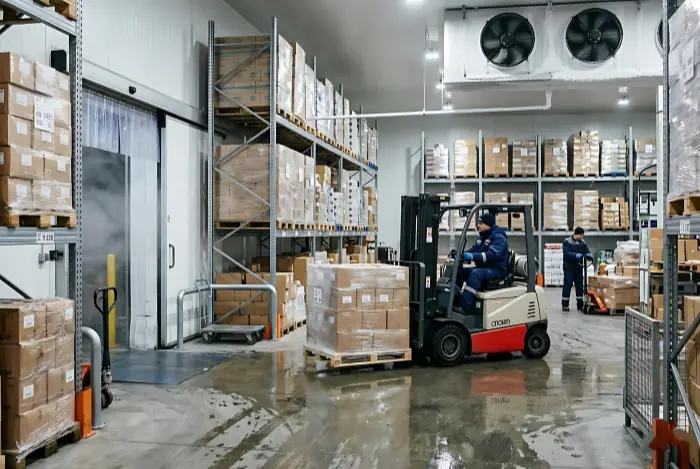
In warmer spaces, excess moisture may stay an air-quality issue for a while. In cold rooms, it becomes an operating issue much faster. It can lead to floor icing, heavier evaporator frost, damp cartons, and unstable conditions around door zones. Once that happens, safety risk rises, defrost pressure increases, and daily work becomes harder to keep consistent.
What buyers usually notice first
This is what buyers usually notice first:
- floors become slippery
- evaporator frost builds faster
- cartons and labels can get damp
- movement becomes less efficient
- the room becomes harder to keep stable during busy periods
| Cold storage humidity issue | What it affects |
|---|---|
| Surface condensation | Wet walls, frames, ceilings, or handling zones |
| Frost and ice buildup | Slip risk and slower movement |
| Heavy coil frost | Lower heat-transfer efficiency |
| Damp packaging | Product handling and presentation |
| Moisture near doors | Less stable room conditions |
Why Standard Dehumidifiers Struggle in Cold Storage
Many units become less reliable as temperature drops
Many dehumidifiers remove moisture by condensing water on a coil. In warmer rooms, that works well. In cold rooms, it becomes less reliable. As temperature drops, icing risk rises and moisture removal becomes less stable. That is why a unit that performs well in a normal commercial space may struggle in a chilled room or freezer-related area.
Cold storage exposes weak moisture control very quickly
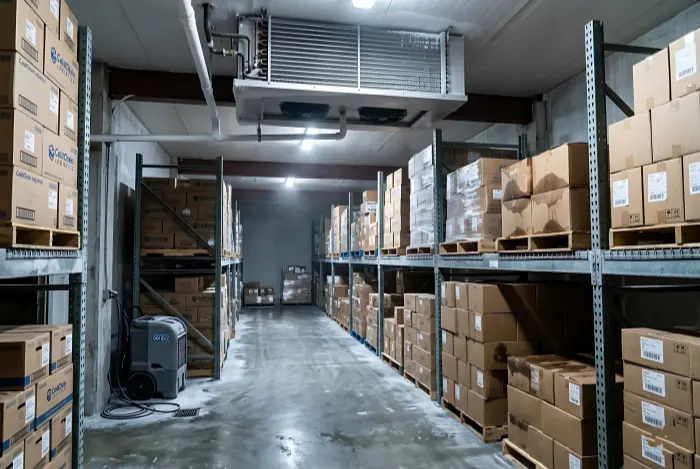
Once humidity is not removed steadily, the room is more likely to see icy floors, heavier coil frost, damp packaging, and unstable conditions near doors and transfer areas. A unit that feels acceptable in a general room can still fail to keep a cold storage area stable.
Refrigeration removes heat, not the full moisture problem
A refrigeration system lowers room temperature, but that does not mean it can control humidity in a stable way. If a room still has wet floors, repeated frost buildup, or damp entry zones, the issue is no longer only cooling capacity. It is moisture control.
| Type | More suitable for | What to watch for |
|---|---|---|
| Standard refrigerant dehumidifier | Moderate-temperature rooms | Performance drops as temperature falls |
| Low-temperature refrigerant dehumidifier | Chilled rooms above deeper-freeze conditions | Still depends on room temperature and moisture load |
| Desiccant dehumidifier | Cold and lower-temperature rooms | Needs the right sizing and placement |
Which Industrial Dehumidifier Type Makes More Sense for Cold Storage?
Start with room temperature first
In cold storage, temperature is usually the first thing to check. As a practical rule, refrigerant dehumidifiers are more suitable in warmer chilled rooms, while desiccant systems become the safer choice as temperatures drop.
| Room temperature | Recommended starting point |
|---|---|
| Above 15°C | Refrigerant dehumidifier is usually the first option |
| 10–15°C | Low-temperature refrigerant or desiccant may both be considered |
| Below 10°C | Desiccant dehumidifier is often the safer choice |
| Around 5°C or below | Desiccant dehumidifier is usually recommended first |
| Sub-zero cold rooms | Desiccant dehumidifier is generally the preferred direction |
In higher-temperature chilled rooms, a purpose-built low temperature dehumidifier may still be a practical option. In colder rooms with repeated frost risk, a desiccant dehumidifier is often the more dependable direction.
How to Choose the Right Cold Storage Dehumidifier
Start with the real room conditions
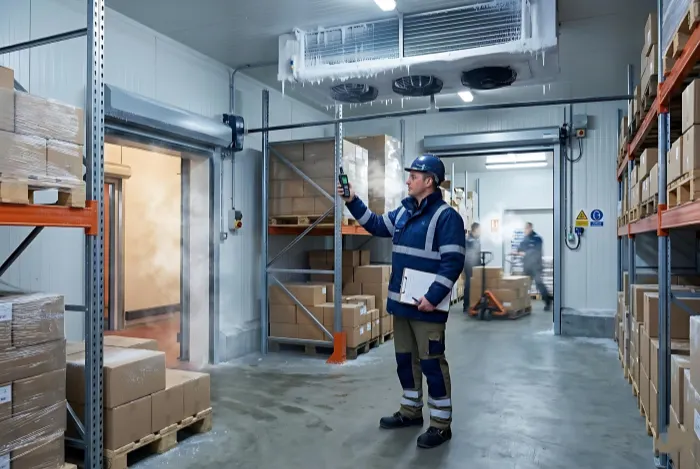
Before comparing machines, check how the room actually operates:
- room temperature
- door-opening frequency
- movement of goods and staff
- where the problem shows up first
- humidity target
- how stable the room needs to stay
These factors tell you more than a model name.
Capacity should match the moisture load
In cold storage, sizing is not just about floor area. It depends on how much moisture the room is dealing with, how low the temperature is, and how tightly conditions need to be controlled. If capacity planning is your next question, what size industrial dehumidifier you need is the most useful next step.
Placement should match where the problem starts
A suitable machine can still underperform if it is installed in the wrong place. In many cold storage projects, the best position is where condensation or frost appears first, such as a door zone, vestibule, or transfer area. Treating that area early is often more effective than trying to correct the problem deeper inside the room.
| What to check | Why it matters |
|---|---|
| Room temperature | Helps determine the right technology |
| Door-opening frequency | Affects how much moisture the room faces |
| Traffic and goods movement | Changes the load during daily operation |
| Humidity target | Affects system choice and capacity |
| Problem location | Helps determine the best installation position |
Different Cold Storage Applications Need Different Dehumidification Approaches
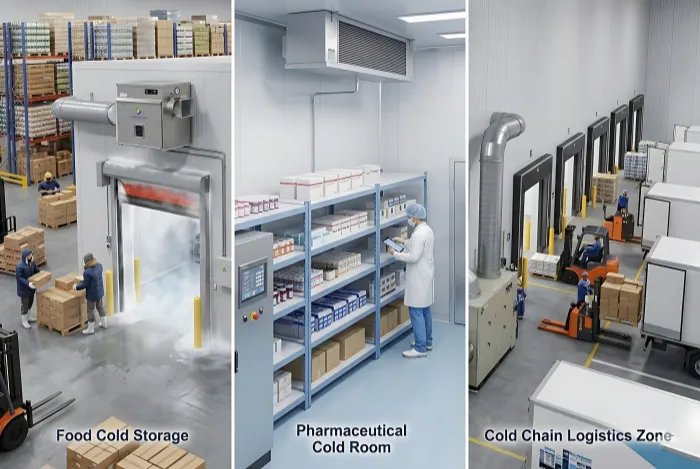
Food cold storage
Damp packaging and frost near busy door areas usually point to a moisture-control problem, not just a temperature problem. In colder rooms, desiccant systems are often the better direction.
Pharmaceutical cold rooms
These rooms need steadier environmental control, so small room-condition changes matter more. In lower-temperature storage, desiccant systems are usually more suitable.
Cold chain logistics
Frequent door openings and constant movement bring in moisture fast, especially around transfer zones. Where frost keeps returning, desiccant systems are often the stronger fit.
What to Ask Before Comparing Suppliers
- Ask how the system performs at your actual room temperature
- Ask whether the room is better suited to desiccant or low-temperature refrigerant technology
- Ask where the system should be installed to control the problem effectively
Key Takeaways for Cold Storage Humidity Control
Cold storage humidity control is not an extra feature. In many projects, it is part of what keeps the room safe, workable, and consistent.
If a cold room already has condensation, frost, wet floors, or damp packaging, do not start by comparing random units. Review the room temperature, identify where the problem shows up first, and choose a system that fits that operating condition.
If you are comparing suppliers as well as system types, it helps to work with an industrial dehumidifier manufacturer that can match equipment selection to real project conditions.
FAQ
Can a dehumidifier reduce frost buildup in cold storage?
It can help by lowering the moisture load before that moisture turns into frost. The best results usually come when the system matches the room temperature and is installed near the main problem area.
Where should a dehumidifier be installed in a cold room?
In many projects, the best location is where condensation or frost appears first, such as a door zone, vestibule, or transfer area. That often works better than placing the unit deep inside the room.
When is cooling alone not enough in a cold room?
If the room keeps showing condensation, wet floors, damp packaging, or repeated frost buildup, cooling alone is usually not enough. These are common signs that moisture needs direct control.
Is a low-temperature refrigerant unit enough for a chilled room?
It may be, especially in higher-temperature chilled rooms. The decision depends on the actual room temperature, the moisture load, and how stable the room needs to stay during operation.
What are the signs that a cold room needs dedicated dehumidification?
Common signs include wet entry zones, slippery floors, damp packaging, heavier frost on coils, and room conditions that become less stable during busy operating periods.