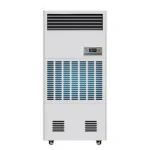
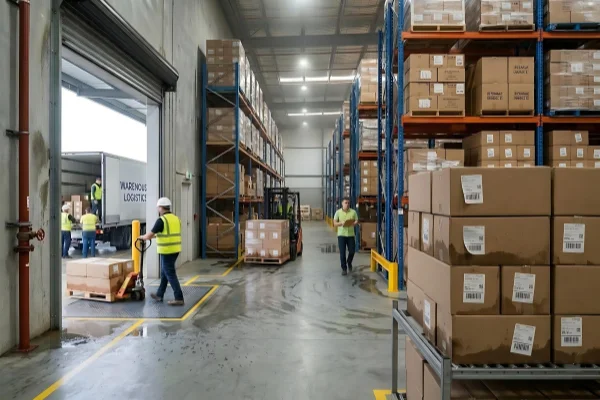
Warehouse humidity problems often begin with small warning signs. Cartons may feel damp. Labels may not stay flat. Condensation may appear near loading doors or colder surfaces. At that stage, the warehouse may still look normal, but moisture is already starting to affect storage conditions.
That is why warehouse humidity control matters. It is not only about making the air feel drier. It is about protecting stored goods, keeping packaging stable, reducing corrosion risk, and avoiding repeated moisture trouble in daily operations. The real question is not whether humidity matters, but when a warehouse needs a dedicated industrial solution and how to judge the right setup for the site.
Why Warehouse Humidity Control Matters
Early moisture signs are easy to miss
A warehouse can already have a humidity problem even when the space still looks normal. Early signs often appear in local areas first, such as damp corners near loading doors, condensation on colder surfaces, or recurring moisture in packaging zones during humid weather. These signs show that humidity is already affecting the storage environment.
Repeated moisture in the same areas usually indicates that humidity control is not stable across the warehouse.
High humidity can affect storage quality and daily operations
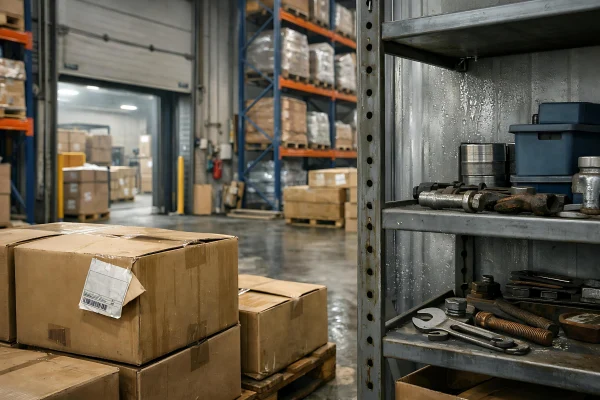
When humidity remains too high, the effect is not limited to one part of the warehouse. Paper packaging can weaken. Labels and adhesives can become less reliable. Metal parts and tools can face a higher risk of surface corrosion. In some cases, changing storage conditions can also make product condition harder to manage consistently.
The effect can also extend to daily operations. Repeated moisture problems often lead to more inspection work, more handling, and less consistent conditions across different parts of the warehouse. That is why warehouse humidity control is connected not only to product protection, but also to routine warehouse management.
| Common humidity issue | Typical warehouse effect |
|---|---|
| Damp cartons | Weaker packaging and stacking performance |
| Lifting labels | Poor presentation and handling risk |
| Condensation on surfaces | Higher corrosion exposure |
| Unstable RH in different zones | Less consistent storage conditions |
When a Warehouse Needs an Industrial Dehumidifier
Air conditioning does not always solve the moisture problem
Air conditioning can lower the temperature, but that does not always mean humidity is under control. In many warehouses, moisture keeps entering the building during normal operation. Loading doors open. Outdoor air comes in. Some areas stay damp because airflow is uneven or because colder surfaces create repeated condensation.
This is why a warehouse can still show damp cartons, condensation, or unstable humidity even when the temperature seems acceptable. The air may feel cooler, but the moisture problem may still remain.
Warehouse conditions make humidity harder to control
A warehouse is usually harder to control than a smaller space. The air volume is larger. Doors open more often. Air also moves less evenly around racks, aisles, and loading zones.
Because of this, humidity problems often appear in specific areas first. Common examples include dock doors, corners, colder surfaces that create repeated condensation, and transition zones. In these situations, the challenge is not just lowering humidity once. The real challenge is keeping humidity more consistent across the storage area during daily use.
Small dehumidifiers usually suit local problems
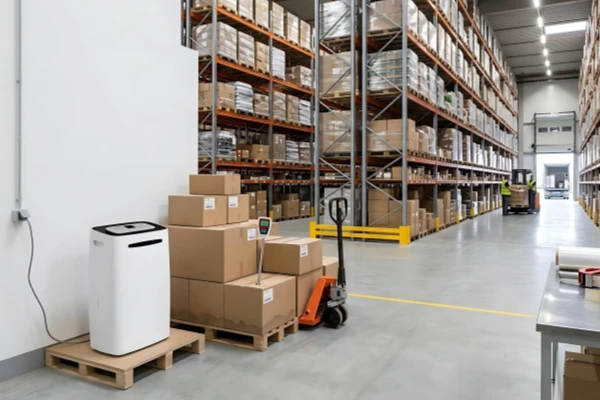
Small dehumidifiers work for a small enclosed area, a temporary drying task, or one local problem zone. A warehouse usually needs broader airflow coverage, longer operating hours, and more consistent humidity control.
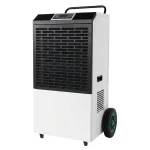
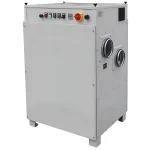
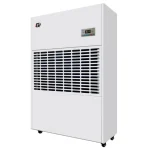
If the goal is full warehouse humidity control, the equipment should be selected for the full operating conditions of the site, not just a short-term local drying task. If you are still comparing the two, it helps to understand the difference between a dehumidifier and an industrial dehumidifier before choosing by size alone.
If these signs keep returning, the next step is to compare the site by stored goods, temperature, door activity, and target RH. Our warehouse dehumidifier solutions page explains how those conditions change the equipment route without assuming that one model fits every warehouse.
How to Set the Right Humidity Target for a Warehouse
One humidity level does not fit every warehouse
A warehouse does not need the same humidity target as every other storage site. The right level depends on what is being stored and what the control goal is.
In some warehouses, the main goal is to keep cartons dry and reduce condensation. In others, the focus may be metal parts, sensitive components, or more stable product condition during storage. Because of that, one RH number cannot be used as the answer for every warehouse.
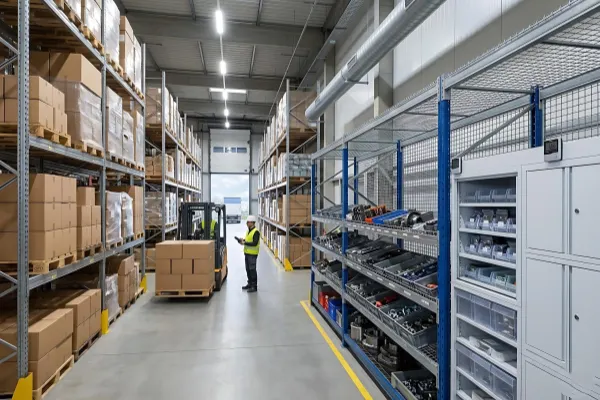
The right target depends on the goods and the storage conditions
The right humidity target depends on what is being stored and what the storage conditions are. Paper packaging does not react like metal parts. Fast-moving goods do not behave like products stored for longer periods. A warehouse with frequent door opening also faces a different moisture pattern from a more enclosed storage area.
Useful questions include:
- What goods are being stored?
- How are they packed?
- How long do they stay in storage?
- Are there colder surfaces or transition zones?
- Is the main concern condensation, packaging stability, or corrosion risk?
These questions make it easier to set a more practical humidity target for the warehouse. They also show what the control approach needs to focus on, because different storage types do not face the same humidity risk.
Typical Humidity Priorities for Different Warehouse Storage Types
| Storage type | Main humidity risk | What usually helps control this risk |
|---|---|---|
| General packaged goods | Damp cartons, label lifting, surface moisture | Keep RH stable and limit humid air during frequent door opening |
| Paper or carton-heavy storage | Soft packaging, deformation, weaker stacking strength | Use a drier, more stable RH setting and reduce seasonal humidity swings |
| Metal parts and tools | Surface condensation and corrosion | Control RH to reduce condensation near colder surfaces and transition zones |
| Sensitive components or electronics | Moisture exposure and unstable storage condition | Keep RH more stable and avoid uneven airflow or changing temperature zones |
| Mixed-goods warehouse | Different goods may have different moisture tolerance | Set the RH target by the most humidity-sensitive goods, or separate storage zones if needed |
This table can help compare humidity priorities across common warehouse storage types. It also shows why one RH target does not fit every warehouse.
A lower RH target is not always necessary
A lower humidity target usually means the system needs to remove more moisture from the warehouse air. That can increase equipment demand and operating cost. In some warehouses, that extra control level is necessary. In others, it does not add much value to the stored goods.
If the main goal is to keep packaging dry, reduce condensation, and maintain stable storage conditions, a practical and stable RH range is often more useful than setting a lower target without a clear storage need or a clear product reason for doing so.
Once the humidity target is clear, the next step is to match the equipment to the warehouse conditions.
What Information to Prepare Before Requesting a Warehouse Dehumidification Plan
You do not need to choose a model before asking for a plan. A useful first assessment starts with a small set of site facts that describe where moisture comes from, what must be protected, and how the warehouse operates.
| Information to record | Why it matters |
|---|---|
| Controlled floor area, clear height, and rack layout | Defines the actual air volume and possible airflow dead zones. |
| Stored goods, packaging, and storage duration | Shows whether the main risk is carton strength, corrosion, condensation, or product sensitivity. |
| Current temperature and RH readings | Establishes the starting condition and whether the problem is continuous or seasonal. |
| Loading-door size, opening frequency, and ventilation | Helps estimate how much humid outdoor air enters during normal operation. |
| Cold surfaces and temperature-transition zones | Identifies places where dew-point conditions can create local condensation. |
| Available power, drainage, installation space, and control needs | Filters out arrangements that will not work reliably at the site. |
Record readings at different times and in more than one zone, especially near dock doors, cold walls, dense racking, and the center of the warehouse. A short operating log is more useful than one RH reading taken on a quiet day.
For a closer look at the calculation inputs, use our dehumidifier sizing guide. To compare refrigerant, low-temperature, and desiccant routes by cargo and climate, review the warehouse dehumidification solutions page.
Common Mistakes When Diagnosing Warehouse Humidity Problems
- Relying on one RH reading: Humidity can differ sharply between dock areas, rack aisles, corners, and the center of the building.
- Ignoring surface temperature and dew point: Condensation can form on cold steel even when the room-average RH does not look extreme.
- Measuring only when doors are closed: A quiet-period reading can miss the moisture load created during receiving and dispatch.
- Treating every storage zone the same: Mixed goods, cold transitions, and dense racking may need separate monitoring or control priorities.
- Changing equipment before logging operations: A short record of RH, temperature, weather, and door activity makes the cause easier to separate from the symptom.
Related Warehouse Humidity Guides
Conclusion
Warehouse humidity control is not only about removing moisture from the air. It is about protecting stored goods, keeping packaging stable, and maintaining more consistent storage conditions across the site.
Once the warehouse size, humidity target, stored goods, and moisture load are clear, it becomes much easier to choose the right system. If the right capacity is still unclear, or if humidity problems keep appearing in different areas, it often makes more sense to speak with an industrial dehumidifier manufacturer than to compare model names alone.
FAQ
What humidity level should a warehouse maintain?
There is no single target for every warehouse. The useful range depends on the stored goods, packaging, storage time, temperature, and whether the main risk is condensation, corrosion, or moisture absorption. Use the most humidity-sensitive stored item and the site’s operating conditions to set the target.
Why does condensation form near warehouse loading doors?
Warm, humid outdoor air can enter when doors open and contact colder floors, racking, walls, or goods. If a surface is below the incoming air’s dew point, water can condense there even when the warehouse-average RH appears acceptable.
Can air conditioning control warehouse humidity?
Sometimes, but not always. Cooling removes moisture only while the system is operating under suitable conditions. Frequent door opening, low cooling demand, uneven airflow, and cold transition zones can leave a warehouse with moisture problems even when the temperature is comfortable.
Where should warehouse humidity be measured?
Measure in several representative zones: near loading doors, inside rack aisles, beside cold surfaces or transition areas, and near the center of the controlled space. Keep sensors away from direct discharge air and log readings across operating and weather changes.
What data should be collected before requesting a dehumidification plan?
Record the controlled area and height, stored goods, target RH, current temperature and RH, door size and opening frequency, ventilation, cold zones, power supply, drainage options, and any monitoring or BMS requirements.