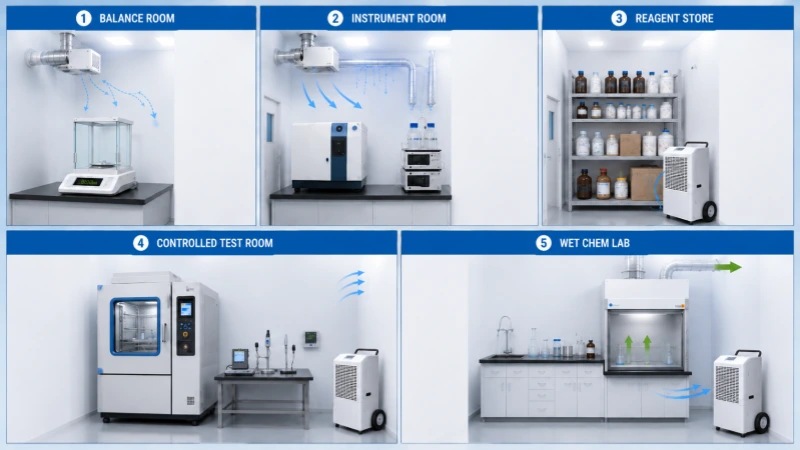
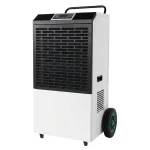
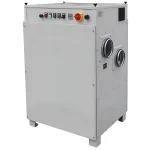
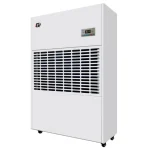
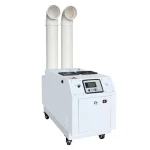
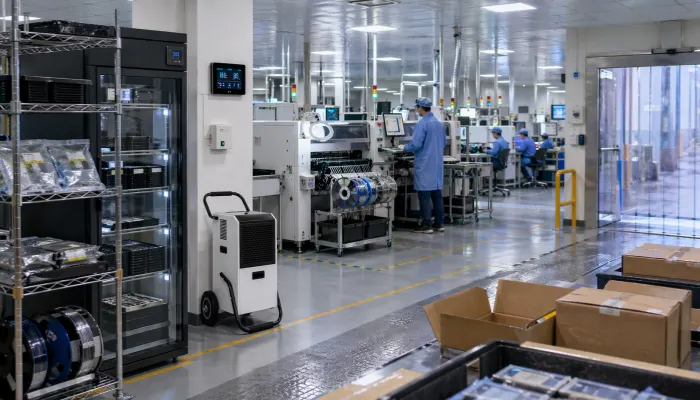
In electronics manufacturing, humidity problems rarely arrive as one obvious failure. They usually show up as smaller warnings across the factory: soldering results that drift more than expected, moisture-sensitive parts waiting too long outside controlled storage, packaging that feels damp near dispatch, or production zones that behave differently from one shift to the next. In practice, those signals often push factories to evaluate an industrial dehumidifier for electronics manufacturing rather than rely on general room control alone.
That is why humidity control in electronics manufacturing sits closer to quality control than to general building comfort. It affects material handling, assembly consistency, storage conditions, and how confidently a plant can keep output stable day after day. Compared with many other spaces in industrial humidity-control applications, electronics manufacturing usually needs tighter control around assembly areas, low-humidity storage, and door zones where outside air can quickly change the room condition.
Where humidity usually starts causing trouble
Moisture-sensitive parts can absorb risk before they reach the line
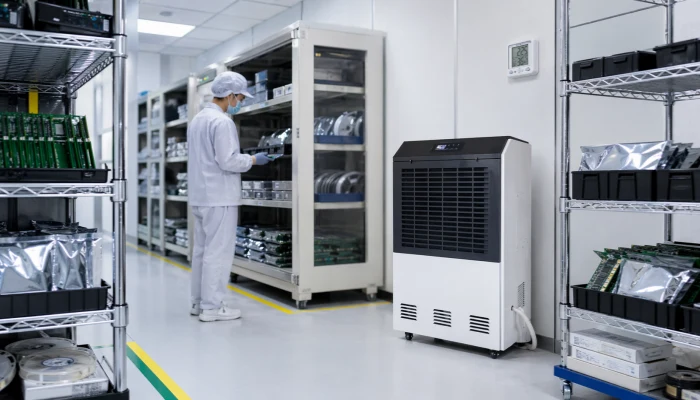
Some electronic components absorb moisture during storage and floor exposure. When those parts later enter high-temperature processes such as reflow, trapped moisture can expand inside the package and raise the risk of cracking, delamination, or latent reliability damage. That is why controlled storage, floor-life discipline, and dry handling are treated as part of process control in electronics manufacturing, not as simple warehouse routine. A useful industry reference is IPC/JEDEC J-STD-033 for moisture-sensitive device handling.
Soldering becomes harder to keep consistent when room conditions drift
On electronics assembly floors, teams usually notice humidity through output, not through theory. If the environment moves too much, the process window narrows. That can show up as more rework, more tuning between shifts, or less predictable soldering quality than the line is supposed to deliver. Buyers do not need a long scientific explanation first. They need to know whether changing room conditions are leading to more rework, less predictable soldering results, or more adjustment between shifts, and whether a more suitable industrial dehumidifier setup is needed for that zone.
Lower RH is not always the whole answer
High humidity can raise moisture-related risk around storage and handling, but pushing conditions drier does not automatically solve everything. The EOS/ESD Association states that humidity is not relied on as part of an ANSI/ESD S20.20 control program. In other words, humidity management can support the factory environment, but it does not replace grounding, packaging controls, ionization, and the rest of a formal ESD program. That keeps the focus where it belongs: on a stable RH target that fits the process instead of a blanket assumption that drier is always safer. See the EOS/ESD Association’s note on humidity and ANSI/ESD S20.20.
The weak point is often outside the main line
Many plants pay close attention to assembly equipment but lose control around staging, temporary storage, packaging, or busy door zones. Those areas may not look like the center of the process, yet they often decide whether materials stay in condition before they reach production or before finished goods leave the site. A dehumidifier system is usually more useful when it protects the path materials actually move through, including receiving areas, storage points, and dispatch zones.
Different factory zones need different humidity targets
A single RH target rarely fits the whole plant. The right dehumidifier setup usually depends on what each zone is trying to protect.
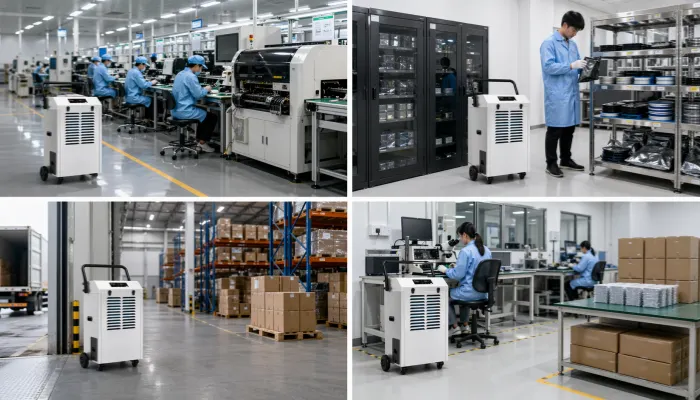
SMT and assembly areas usually need stable, workable RH
For most SMT and assembly floors, the priority is stable operating conditions. These areas tend to run at normal working temperatures, with people, equipment heat, movement, and regular activity. The practical goal is usually to hold RH within a steady, workable band that supports repeatable production rather than to push the room as dry as possible. When control is stable, the process usually becomes easier to manage. When it swings, operators often need more adjustment between runs, and the reason for adding an industrial dehumidifier becomes much more practical.
MSD storage and low-humidity handling areas need tighter control
This is where many electronics projects move beyond general room drying. Moisture-sensitive device storage, low-humidity staging, and other controlled handling areas need deeper and more stable drying than the main production floor. In these zones, the question is not only how to remove moisture from a large room. It is how to keep critical materials in a lower-humidity condition before they enter production. That is where a desiccant dehumidifier often makes more sense, because the goal is not just to dry the room, but to hold a lower and more stable humidity condition around sensitive materials.
Warehouses and shipping zones are often where control gets lost
Warehouse areas can look acceptable while still weakening process control. Frequent door opening, outside air entry, damp packaging, and unstable transition zones around receiving and dispatch all add moisture load in ways that general room averages do not always reveal. For electronics materials and finished goods, that can mean a storage problem rather than a line problem, even if the cost shows up later in production or delivery. In these spaces, the right industrial dehumidifier is usually chosen for large-area stability and real operating conditions rather than for an aggressive low-RH target.
Testing and packaging rooms can still affect consistency before shipment
Testing spaces and packaging rooms may not drive the whole project, but they often decide how well upstream control holds through the last stage. Where consistency matters, a controlled environment near testing and final pack-out helps reduce drift between process completion and shipment. In practice, that often means a dehumidifier strategy that protects the last meters of the process, not just the main line.
Quick planning table
| Factory zone | What usually goes wrong | What the dehumidifier needs to do |
|---|---|---|
| SMT / assembly floor | Room conditions drift and make output less repeatable | Hold moderate, steady RH with reliable room control |
| MSD storage / low-humidity room | Sensitive parts absorb moisture before assembly | Maintain lower, tighter RH, often with desiccant drying |
| PCB / material warehouse | Materials pick up moisture during storage and movement | Keep large-space dehumidification stable, especially near door zones |
| Packaging / dispatch area | Conditions change near dispatch before shipment | Reduce moisture swings and improve transition-zone control |
Which dehumidifier type fits each factory zone?
In electronics manufacturing, the same dehumidifier approach rarely fits assembly floors, low-humidity storage, and dispatch zones equally well.
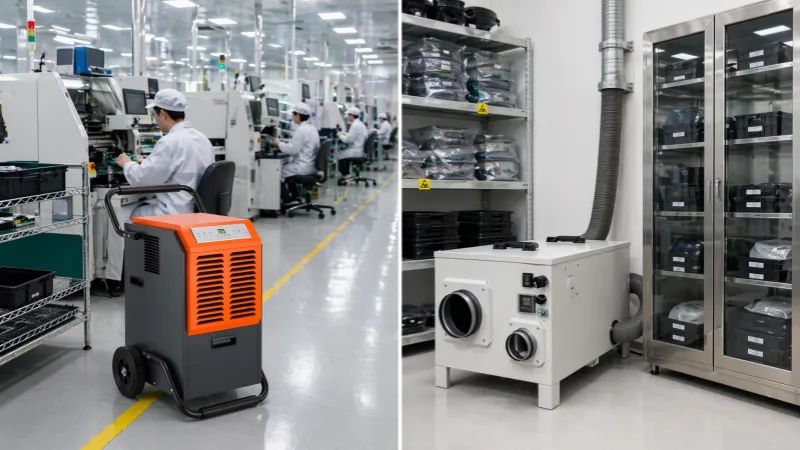
Refrigerant dehumidifiers usually fit normal-temperature production areas
For general assembly floors, packaging rooms, and many warehouse areas that operate at ordinary indoor temperatures and need moderate RH control, a refrigerant dehumidifier is often the practical starting point. These projects usually care more about reliable moisture removal across a large working space than about pushing RH to a very low level.
Desiccant dehumidifiers usually fit lower-humidity and tighter-control zones
Where the RH target is lower, the tolerance is tighter, or the environment is more demanding, a desiccant dehumidifier becomes more relevant. In electronics manufacturing, that often means MSD-related storage, low-humidity handling zones, or other controlled areas where general room drying may not be enough.
One dehumidifier setup rarely fits the whole plant
A production floor, a low-humidity storage room, and a shipping zone do not behave the same way. Treating them as one identical environment often leads to oversimplified choices. In practice, refrigerant and desiccant dehumidifiers are often chosen for very different factory conditions.
| Zone type | More likely dehumidifier fit |
|---|---|
| General assembly floor | Refrigerant dehumidifier |
| Standard packaging / dispatch area | Refrigerant dehumidifier |
| MSD storage / low-humidity room | Desiccant dehumidifier |
| Mixed plant with different RH targets | Zoned or hybrid dehumidifier setup |
How to evaluate the right dehumidifier setup
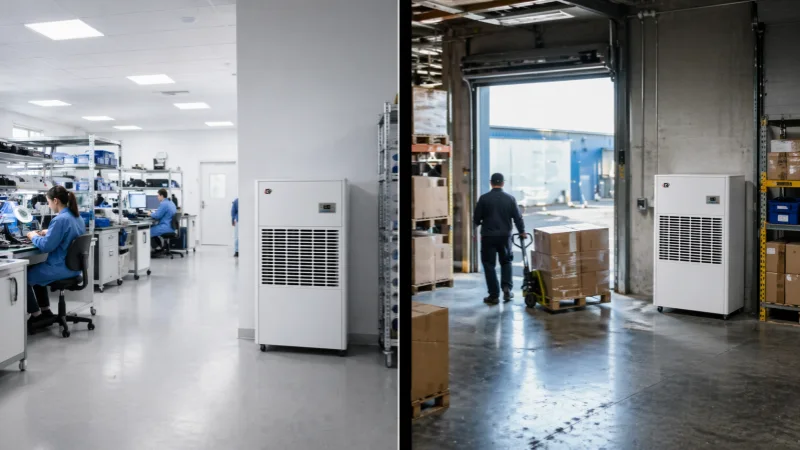
Why floor area alone is not enough for dehumidifier sizing
Two rooms with the same square footage can need very different industrial dehumidifier strategies. Outside air entry, door-opening frequency, room temperature, fresh-air load, operating schedule, and target RH all change the real moisture burden. In electronics manufacturing, “How big is the room?” is usually the wrong first question. The better question is what is adding moisture to that zone and how tightly the RH needs to be controlled. In most factories, the right industrial dehumidifier size depends more on moisture load and room conditions than on square footage alone.
Buyer checklist
| Buyer check | Why it changes the dehumidifier decision |
|---|---|
| Zone use | Assembly, storage, packaging, and low-humidity rooms do not behave the same |
| Target RH | Moderate room control and low-humidity storage are different dehumidifier projects |
| Temperature condition | Dehumidifier technology fit changes with operating temperature |
| Door traffic and infiltration | Moisture load often comes from real site movement |
| Fresh air / HVAC interaction | Outside air can change total dehumidification load significantly |
| Runtime and stability needs | Continuous production needs steadier control |
Monitoring matters as much as machine choice in critical zones
In electronics plants, a dehumidifier system is rarely enough on its own if critical zones are not monitored over time. In important zones, continuous monitoring, alarm logic, and a workable maintenance approach often matter as much as the original dehumidifier decision. In most electronics plants, choosing an industrial dehumidifier starts with the zone and control target, not with the brochure headline.
What better humidity control can improve?
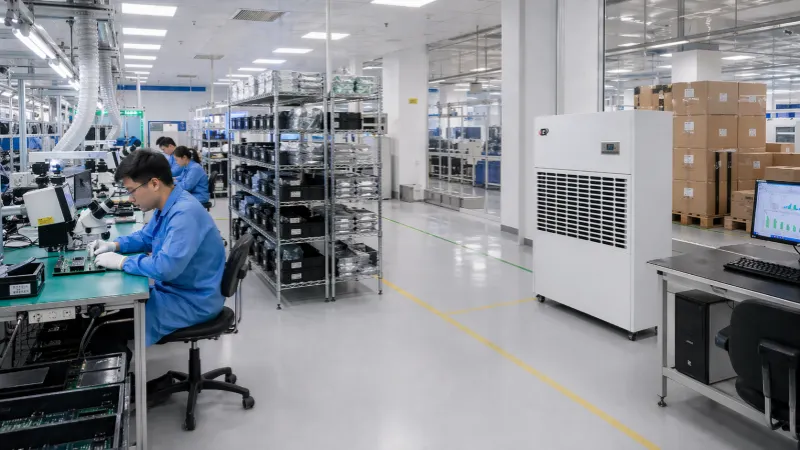
Better yield and fewer rework issues
Where humidity contributes to unstable assembly conditions or variable material handling, stronger control can help reduce avoidable process variation. For most plants, that shows up as steadier output rather than as a dramatic single metric. In many cases, the business value of the industrial dehumidifier is clearest here.
Less material risk in storage and staging
Controlled storage and more stable transition areas reduce the chance that materials pick up moisture before they enter production. That matters for components, PCB-related storage, and packaged goods moving through receiving or dispatch. A well-matched dehumidifier system protects more than room air; it protects the condition of the materials moving through the site.
More consistent process control and stronger audit confidence
Factories that can define target conditions, monitor them, and show that the environment supports stable production tend to present a more controlled operation overall. For a widely recognized quality reference in electronic assemblies, IPC-A-610 remains one of the most widely used standards for assembly acceptability. It is not a humidity standard by itself, but it reinforces why stable process conditions matter in real manufacturing environments.
A more defensible ROI discussion
In electronics manufacturing, buyers rarely judge an industrial dehumidifier by moisture removal alone. The stronger business case usually comes from steadier conditions, lower material risk, fewer avoidable production issues, and better control across zones that matter to quality and yield. That is usually the point where dehumidifier selection turns into a quality and operations discussion rather than a facilities-only purchase.
FAQ
What is the ideal humidity level for electronic components?
It depends on component sensitivity and storage method. For opened MSD packaging, low-humidity storage is commonly used to slow moisture absorption and reduce handling risk.
What is the ideal humidity for PCB assembly?
A commonly cited working range is about 40% to 60% RH. That range helps balance ESD risk, solder paste behavior, and moisture-related concerns during assembly.
Does humidity affect soldering?
Yes. Low humidity can dry solder paste faster, while unstable conditions can affect stencil life, tack, and wetting behavior during assembly.
Does humidity affect ESD?
Yes. Lower humidity makes static charge buildup easier, while higher humidity helps charges dissipate more readily on surfaces.
What is the ideal humidity level for storing PCBs?
A commonly recommended storage range is about 40% to 60% RH for many PCB warehouse situations. The right target still depends on packaging method, storage time, and moisture sensitivity.
What to do next
In electronics manufacturing, humidity control affects more than the feel of the room. It influences material handling, process consistency, storage stability, and the conditions that support quality and yield. General production areas usually need steady, workable RH control. MSD-related areas usually need tighter and lower-humidity control. Warehouses and transition zones need a setup that reflects how the site actually operates, especially where door openings and outside air can quickly change room conditions.
A better next step is to identify the zone where humidity is creating the most risk, define the RH target for that zone, and compare industrial dehumidifier options against the way the plant actually runs each day.