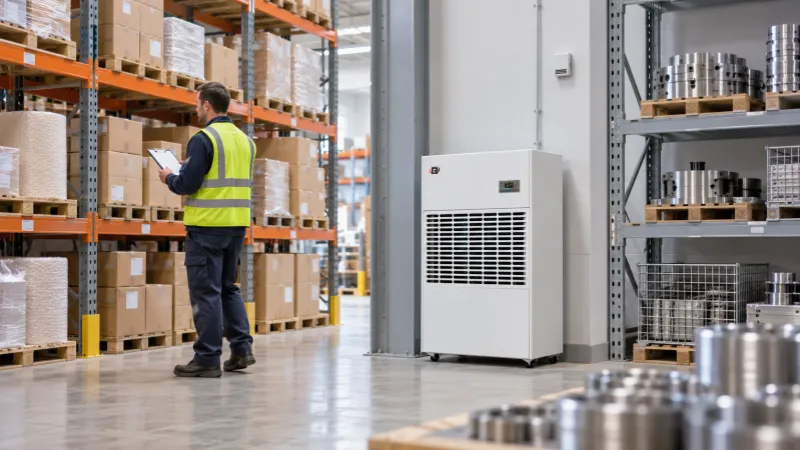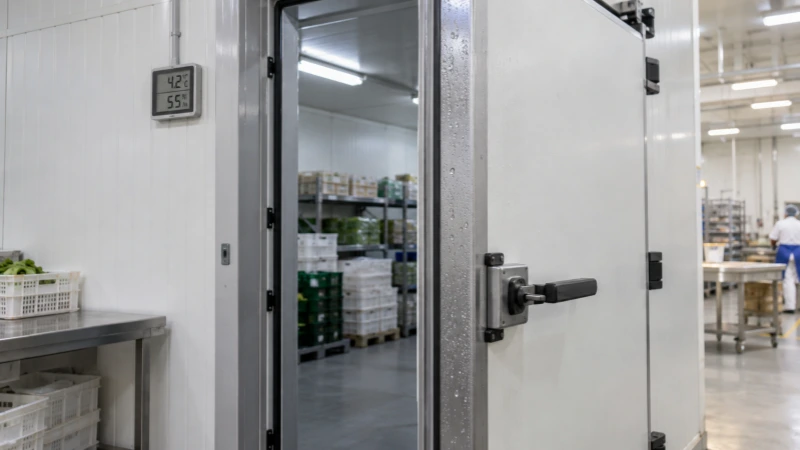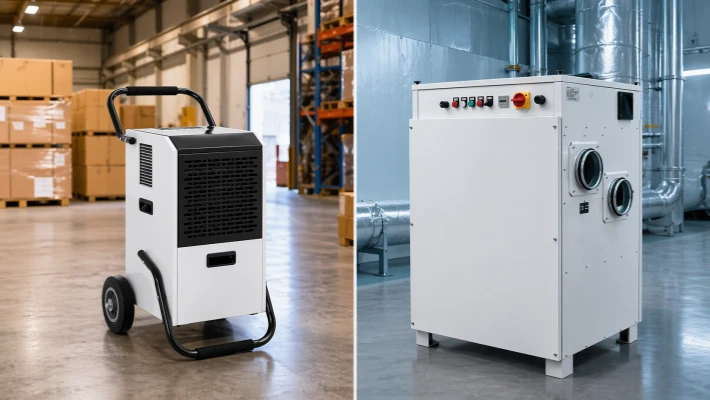
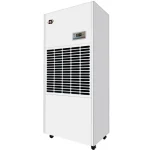
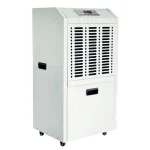
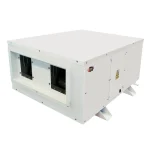
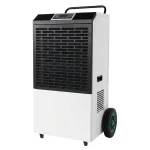
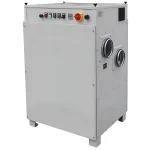
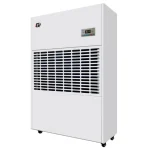
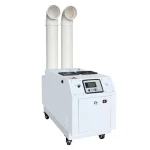
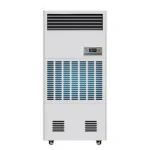
One customer needs a ceiling-mounted dehumidifier that aligns with an existing duct system. Another needs a low-temperature unit with a heated drain, a corrosion-resistant coil, and remote alarms. A distributor may be satisfied with a proven machine carrying its own color, control-panel design, nameplate, manual, and packaging. A process plant may need a different heat exchanger, fan curve, control sequence, and verification plan.
All four projects are “custom,” but they do not require the same engineering.
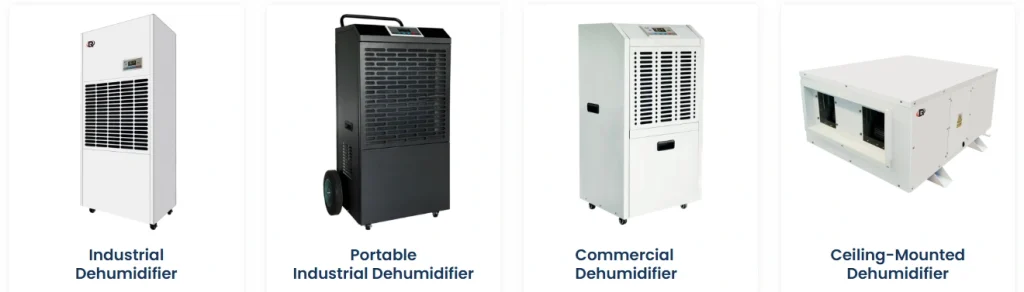
Rinwang’s OEM/ODM service starts from refrigerant and desiccant technologies, with floor-standing, portable, ceiling-mounted, ducted, high-temperature-resistant, and low-temperature-resistant configurations. The high- and low-temperature models remain refrigerant dehumidifiers; they are engineered to operate in more demanding temperature ranges. From these foundations, a project can modify the moisture-removal system, airflow, cabinet, installation, drainage, electrical supply, controller, materials, branding, documents, and packaging.
This guide maps those options in practical terms: what can be customized, when each option is useful, what it changes inside the machine, and what must be tested before production.
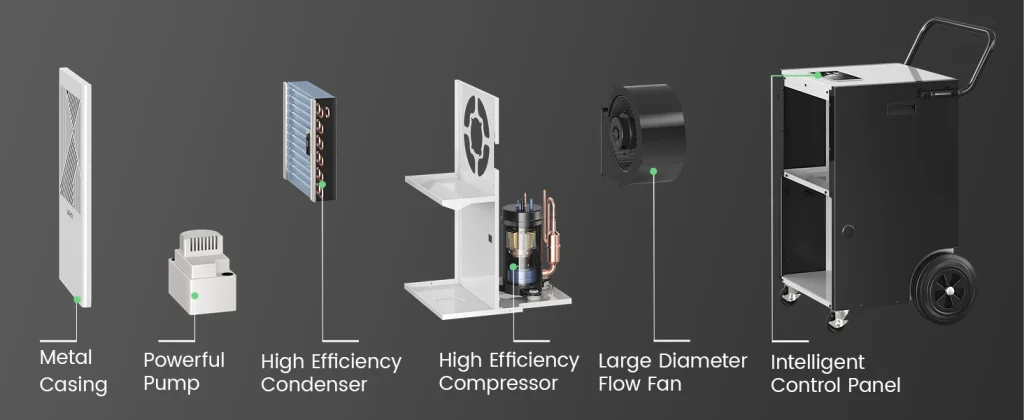
The Rinwang Customization Map
The table below is the short answer to “What can you customize?”
| Product area | Available or project-based customization | Why a buyer may need it |
|---|---|---|
| Dehumidification technology and product format | Refrigerant or rotary desiccant technology; floor-standing, portable, ceiling-mounted, or ducted format | Match the moisture-removal method and physical layout to temperature, humidity, dew point, and installation |
| Moisture-removal performance | Capacity, design condition, compressor and refrigeration circuit, heat-exchanger area, desiccant rotor, regeneration system, defrost, heat recovery | Reach the required RH or dew point at the real inlet-air condition |
| Air system | Process airflow, reactivation airflow, fan selection, external static pressure, duct flange, inlet/outlet direction, filtration | Connect to the room or process without losing airflow through ducts and filters |
| Mechanical structure | Cabinet dimensions, vertical or horizontal layout, service-panel side, ceiling suspension, floor mounting, handles, casters, lifting points | Fit the machine into the available space and keep it maintainable |
| Drainage | Gravity drain, condensate pump, drain position, overflow/high-water strategy, low-temperature drain protection | Support unattended operation where floor drainage is unavailable or freezing is possible |
| Environmental protection | Cabinet finish, coil protection, selected stainless-steel parts, filter package, insulation, noise and vibration measures | Survive pool air, salt, fertilizer, dust, washdown, cold rooms, or occupied spaces |
| Electrical system | Voltage, frequency, phase, plug/cable, protection devices, heaters, component selection, nameplate | Match the destination market and site power supply |
| Controls and connectivity | Controller functions, panel overlay, external sensors, alarms, dry contacts, RS485/Modbus, remote display, selected Wi-Fi/BMS functions | Integrate the dehumidifier with the building or production system |
| Branding | Logo, cabinet color, model name, panel appearance, labels, serial-number format | Create a coherent private-label product |
| Documentation | Rating nameplate, manual, language, installation information, wiring diagram, data sheet, spare-parts information | Support local sales, installation, compliance, and after-sales service |
| Packaging | Carton or crate, brand labels, shipping marks, accessory kit, document placement, pallet requirements | Protect the configured product and make it ready for the buyer’s channel |
| Validation and compliance | Sample test plan, performance checks, electrical and functional tests, FAT, destination-market certification support | Confirm that customization has not created a new performance or compliance risk |
Not every option is compatible with every base model. The purpose of the first engineering review is to select the nearest proven model, preserve what already works, and identify only the modules that truly need to change.
Choose the Dehumidification Technology First
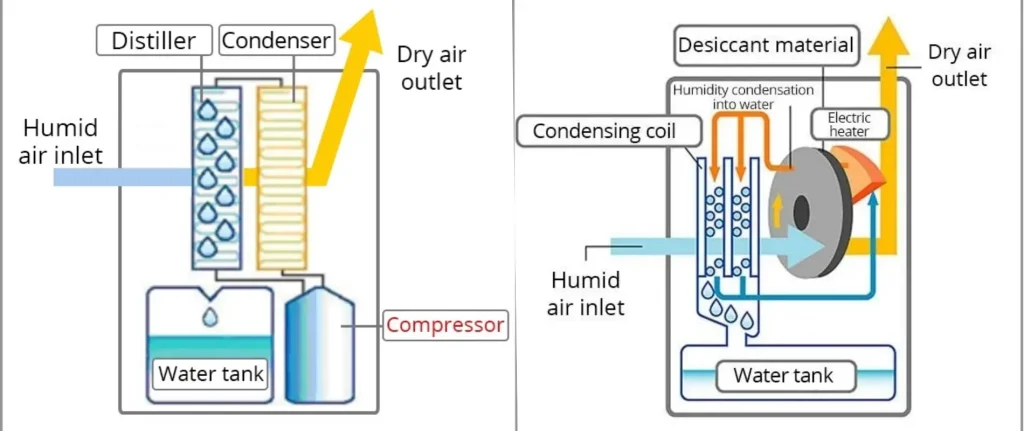
The most important customization decision is not the logo or cabinet. It is the way the machine removes moisture.
Refrigerant dehumidifiers
A refrigerant dehumidifier cools air below its dew point, condenses water on the evaporator, and then reheats the air across the condenser. It is usually the practical starting point for warm or moderately cool spaces with meaningful moisture content.
Rinwang can configure refrigerant dehumidifiers for commercial rooms, warehouses, greenhouses, pools, construction drying, general manufacturing, and other applications where a condensate drain is acceptable. The range includes standard, high-temperature-resistant, and low-temperature-resistant industrial refrigerant dehumidifier configurations. The high- and low-temperature versions still use refrigerant condensation; their components, protection, defrost, and control logic are adapted to the required operating-temperature range.
Typical customization areas include:
- Compressor and refrigerant-circuit selection
- Evaporator and condenser size
- Airflow through the coil
- Hot-gas, electric, or control-based defrost strategy
- Condensate collection and pumping
- High- or low-temperature component and protection package
- Fan, filter, and duct connection
- Floor-standing, ceiling-mounted, portable, or ducted cabinet
Refrigerant dehumidifiers usually offer a lower-cost route when the inlet temperature and humidity are suitable. Their limitation is that moisture-removal performance falls as the air becomes colder or drier. If the required temperature or dew point is outside the practical range of refrigerant condensation, a desiccant dehumidifier may be the better choice.
Desiccant dehumidifiers
A rotary desiccant dehumidifier passes process air through a moisture-adsorbing rotor. A separate heated reactivation airstream removes the collected moisture from the rotor.
This technology is a stronger starting point for cold storage, low-RH rooms, low-dew-point processes, pharmaceutical or food applications, electronics, archives, and other conditions where a cooling coil would lose capacity or frost.
Rinwang’s desiccant dehumidifier range can be configured for:
- Rotor size and moisture-removal duty
- Process and reactivation airflow
- Available external static pressure
- Process and reactivation duct connections
- Regeneration heater capacity and energy source
- Rotor sealing and leakage control
- Filtration
- Pre-cooling or post-cooling interfaces
- Temperature, humidity, or dew-point sensing
- Controls and system communication
The rotor and regeneration system must be designed together. A larger rotor alone does not guarantee a better result if the reactivation airflow, heater, sealing, or process-air condition is wrong.
For buyers comparing the basic technologies, the key differences between refrigerant and desiccant dehumidification should be settled before cabinet and control options are selected.
Customize the Moisture-Removal Performance
Once the technology and base model are selected, Rinwang can configure the performance around the real air condition rather than a generic catalog number.
Capacity must include a rating condition
Rinwang’s current industrial product range can be presented as approximately 60–2,400 L/day, but liters per day is not an absolute property. Temperature and relative humidity determine how much water a refrigerant system can condense.
A useful performance request includes:
- Inlet temperature and relative humidity
- Normal and worst-case values
- Target relative humidity or dew point
- Room volume or process airflow
- Outdoor-air or door-opening infiltration
- Product, people, washdown, evaporation, or process moisture load
- Required pull-down or recovery time
- Continuous or intermittent operating schedule
The U.S. Department of Energy’s consumer dehumidifier test procedure is one example of why a capacity rating needs a defined air condition and method. For a Rinwang OEM/ODM project, the agreed data sheet should identify the rated condition and, when needed, an additional application condition or performance curve.
Heat exchanger, compressor, and airflow
In a refrigerant dehumidifier, capacity is created by the complete thermal system:
- Compressor displacement and operating envelope
- Refrigerant circuit and charge
- Evaporator and condenser surface area
- Coil temperature
- Air velocity and contact time
- Fan curve and system resistance
- Defrost behavior
- Condensate removal
A buyer may need a larger coil to improve moisture removal at a lower air velocity, a different compressor to suit voltage or capacity, or a fan selected for a duct system rather than free-air operation. These changes are related; modifying one part without checking the others can reduce efficiency, create unstable refrigerant pressures, increase noise, or move performance away from the required design point.
The custom proposal should therefore state what is changing and how Rinwang will verify the result. Depending on project depth, that may include airflow measurement, refrigeration pressure checks, condensate collection over time, power measurement, and a performance test at an agreed inlet condition.
Low-temperature operation and defrost
Cold-room performance is not created by adding the words “low temperature” to a standard machine. The project may require:
- Hot-gas or electric defrost
- Modified coil and airflow design
- Frost or coil-temperature sensing
- Heated drain pan or protected drain line
- Compressor operating protection
- Control logic that balances defrost and moisture removal
- Insulation around cold surfaces
If the target is extremely dry or the temperature is below the useful range of a refrigerant dehumidifier, a desiccant system may be more appropriate than a more aggressive defrost cycle.
Desiccant performance and regeneration
A desiccant project should define:
- Process-air inlet temperature and humidity
- Required outlet condition or dew point
- Process airflow and external static pressure
- Reactivation airflow
- Regeneration temperature and heat source
- Available electrical, steam, gas, or recovered heat
- Allowable supply-air temperature rise
- Filter loading and service conditions
Rinwang can then size the rotor and supporting system around both the dry-air duty and the available regeneration energy.
Customize Airflow, Static Pressure, and Duct Connections
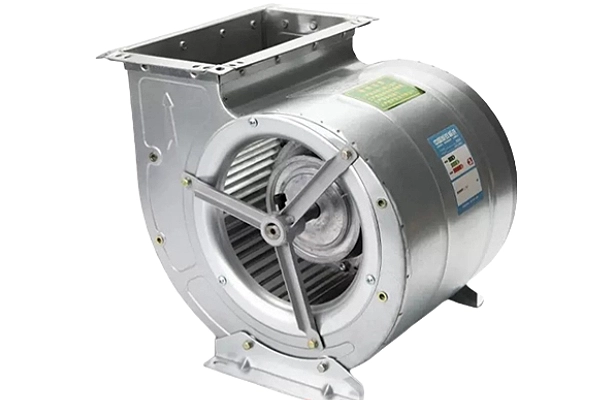
A dehumidifier can have sufficient moisture-removal capacity and still fail in the field if dry air does not reach the wet zone.
Air volume and external static pressure
For a standalone room unit, the fan mainly overcomes internal resistance. For a ducted unit, it must also overcome:
- Supply and return ducts
- Elbows and transitions
- Grilles and diffusers
- Prefilters or high-grade filters
- Dampers
- Air-treatment modules
Rinwang can evaluate a different fan, motor, airflow, or duct arrangement when the required operating point is provided. The correct request is “3,000 m³/h at 350 Pa external static pressure,” not simply “3,000 m³/h.”
For desiccant systems, process air and reactivation air each need their own airflow, pressure, and duct connection.
Inlet and outlet direction
Sheet-metal modification can reposition air connections to suit the plant layout. Options may include:
- Front, rear, side, top, or bottom air connection
- Straight-through airflow
- Top discharge
- Side discharge
- Separate process and return connections
- Round or rectangular duct flange
- Transition piece or customer-specified interface
Changing only the external flange is relatively simple. Reversing the internal airflow path may require moving the fan, coil, drain pan, filter, electrical compartment, or service doors.
Filter configuration
Filtration protects the dehumidifier and, in some projects, the process. A custom filter package can consider:
- Washable or replaceable prefilter
- Larger filter area for longer service intervals
- Higher-efficiency particulate filtration
- Activated-carbon stage for selected odors or contaminants
- Filter pressure or maintenance indication
- Accessible filter location
Higher filtration increases pressure drop. Fan selection, noise, energy consumption, and delivered airflow must be rechecked whenever the filter changes. If the project specifies a rated particulate filter, HEPA, activated carbon, or UV-C, Rinwang evaluates compatibility with the selected model before including it in the quotation.
Customize the Cabinet and Installation
Industrial dehumidifier customization is often structurally flexible because many models use fabricated sheet-metal cabinets rather than a fixed high-volume plastic mold.
Cabinet dimensions and service access
Rinwang can modify sheet metal to address:
- Maximum width, height, or depth
- Doorway and elevator restrictions
- Equipment-room clearance
- Controller position
- Service-panel side
- Filter removal direction
- Drain outlet position
- Internal component brackets
- Access to the compressor, fan, rotor, heater, and electrical panel
The engineering drawing should show both the installed dimensions and the clearance needed to remove service parts. A smaller cabinet is not automatically better if the coil is starved of airflow or maintenance becomes impossible.
Installation format
| Format | Custom elements | Typical reason |
|---|---|---|
| Floor-standing | Footprint, feet, lifting points, discharge direction, service side | Accessible installation in a room or mechanical area |
| Portable | Handles, casters, frame, cable, drainage, impact protection | Restoration, construction, rental, or temporary drying |
| Ceiling-mounted | Suspension points, low-profile cabinet, pump, service access, remote controller | Concealed installation or limited floor space |
| Ducted | Flanges, inlet/outlet layout, fan/static pressure, access panels | Distribute dry air or connect to HVAC/process air |
The ceiling-mounted dehumidifier range can serve as the base when a horizontal, concealed, or duct-connected format is required.
Drainage
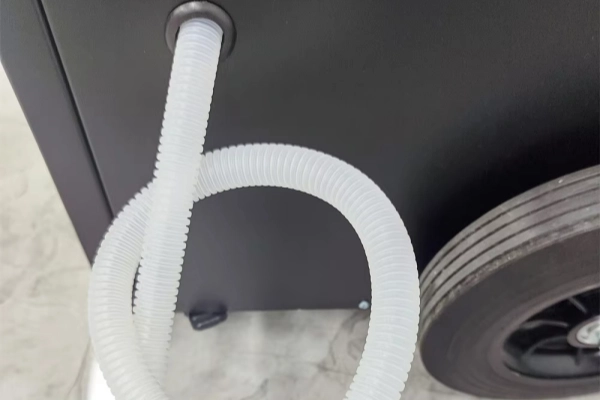
Available project decisions include:
- Gravity drain or condensate pump
- Drain connection size and location
- Hose or rigid-pipe connection
- Pump lift and route
- High-water switch or alarm
- Overflow strategy
- Heated drain components for cold conditions
The drain design should be shown on the installation drawing rather than left for the installer to solve after delivery.
Sheet-metal NRE, MOQ, and sample timing
Rinwang’s current operating position is:
- Routine sheet-metal modification NRE is generally not charged.
- A custom unit can begin from one unit.
- A typical custom sample takes 10–25 days.
These terms are most reliable for branding, configuration, and normal sheet-metal work based on an existing model. New refrigeration systems, special tooling, advanced controls, third-party tests, and certification are separately scoped.
Customize Materials for Corrosion, Cleanliness, Dust, and Noise
The environment determines which parts need protection. “Stainless steel” or “anti-corrosion” is too broad for a useful specification.
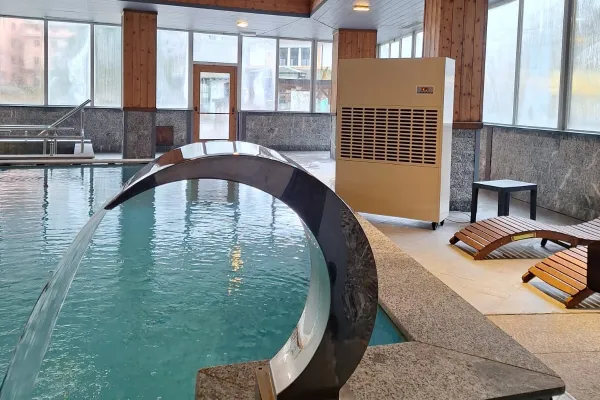
Pool, coastal, greenhouse, and chemical exposure
Moisture can carry chloramines, salt, fertilizer, pesticides, or process chemicals into the coil and cabinet. A protection package may address:
- Powder-coated or otherwise protected sheet metal
- Epoxy or other approved coil protection
- Corrosion-resistant drain pan and drain components
- Selected stainless-steel fasteners or panels
- Protected electrical enclosure and connectors
- Coating repairs after fabrication
- Filter selection and inspection access
Rinwang’s current commercial pages identify epoxy-coated coils for pool applications, and industrial pages describe anti-corrosion materials and coatings for harsh environments. For any corrosive project, the quotation should name the protected parts, material or coating, preparation method, and required corrosion test instead of relying on a generic “anti-corrosion” label.
Food, pharmaceutical, and clean production areas
These projects may need:
- Smooth, cleanable internal surfaces
- Accessible drain pan
- Selected 304 or 316 stainless-steel components
- Compatible sealants and insulation
- Higher-grade filtration
- Remote sensors and alarms
- Documented cleaning and maintenance access
The material scope should identify which parts are upgraded. “Stainless-steel construction” could mean the complete air path, the external panels, the drain pan, or only selected fasteners; those are very different products and prices.
Dusty environments
For warehouses, powders, woodworking, or construction, customization may focus on filter area, access, pressure drop, coil-cleaning clearance, sealed electrical compartments, and a maintenance indication. A higher-grade filter is not a substitute for a dust-control system, but it can protect the dehumidifier from premature fouling.
Noise and vibration
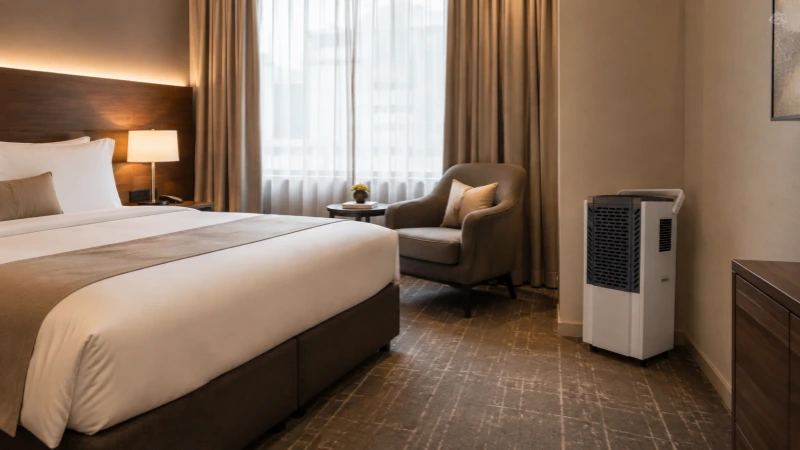
For hotels, museums, laboratories, and occupied commercial spaces, a lower-noise build may involve:
- Lower air velocity
- Different fan or speed
- Compressor isolation mounts
- Panel damping
- Flexible duct connections
- Discharge silencer or acoustic treatment
- Remote location with ducted air distribution
Noise targets should include the measurement distance and operating mode. A custom low-noise design must still deliver the required airflow and moisture-removal performance.
Customize Voltage, Electrical Components, and Protection
Rinwang currently confirms the following voltage and frequency ranges:
| Voltage | Available frequency |
|---|---|
| 110–120 V | 50 Hz or 60 Hz |
| 220–240 V | 50 Hz or 60 Hz |
| 380–415 V | 50 Hz or 60 Hz |
An electrical change can affect the compressor, fan, regeneration heater, contactors, protection devices, cable, plug, transformer or power supply, controller, wiring diagram, and nameplate.
The inquiry should therefore include voltage, frequency, phase, plug or terminal requirement, maximum current, destination country, and whether the unit connects directly or through a control panel.
Available phase combinations, plugs, cables, and verified nameplate data depend on the selected model and destination market and are confirmed in the project specification.
Customize the Controller, PCB Functions, and System Communication
Controls can be customized at several depths.
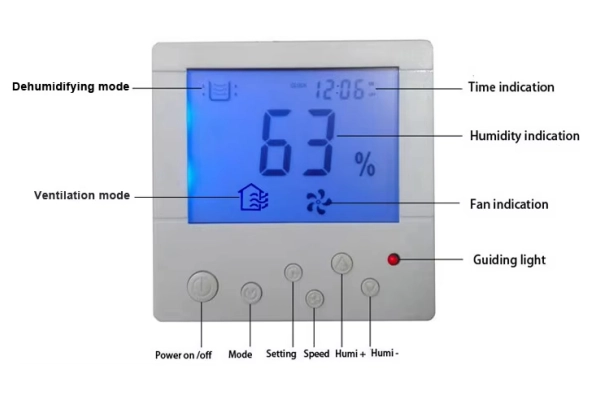
Panel and user-interface customization
Rinwang confirms that panel printing or a membrane overlay can be changed to match the final function set. This can cover:
- Customer logo and model
- Button labels
- Display language
- Function icons
- Alarm text
- Operating instructions
Function changes
Rinwang also confirms that controller functions can be added. Depending on the selected base model and controller, a project can evaluate:
- Humidity and temperature setpoints
- Auto restart after power loss
- Delayed start
- Fan-only or continuous-fan mode
- Defrost logic
- External sensor selection
- Runtime counter
- High-water, filter, sensor, pressure, or temperature alarms
- Remote start/stop
- Run and fault dry contacts
- Duty/standby or multi-unit sequencing
- Process interlocks
- Data recording
The exact list should be written as an input/output and sequence-of-operation document. “Add an alarm” is incomplete until the trigger, delay, reset, output, and fail-safe behavior are defined.
RS485, Modbus, Wi-Fi, and BMS
Modbus RS485 is a confirmed Rinwang communication option. A proper integration package should define:
- Baud rate, parity, and device address
- Register map
- Read-only and writable points
- Units and scaling
- Alarm and fault codes
- Remote-command priority
- Communication-loss behavior
- Test method with the customer’s PLC
Selected Rinwang product lines also offer remote displays and Wi-Fi/app functions. If a project requires a customer-specific Modbus map, data logging, cloud connection, BACnet, multi-unit master control, the interface and development scope are reviewed before quotation.
Customize the Brand, Nameplate, Documents, and Packaging
Private-label customization should make the complete delivery feel like one product, not a standard machine with an added sticker.
Visual identity
Rinwang can customize:
- Cabinet logo
- Cabinet color or finish
- Customer model name
- Controller-panel graphics
- Product and warning labels
- Serial-number format
Artwork is approved on a dimensional drawing so the buyer can check position, size, color, contrast, and interference with vents or service panels.
Manuals and technical information
The documentation package can include:
- Branded user manual
- Language version
- Installation instructions
- Wiring diagram
- General-arrangement drawing
- Maintenance schedule
- Troubleshooting information
- Spare-parts list
- Product data sheet
For deeper ODM projects, buyers may also request a performance curve, electrical schematic, Modbus register map, FAT report, and certification matrix. The quotation identifies which documents are included, which are controlled, and which require project-specific engineering or testing.
Packaging
Packaging options can include:
- Branded carton, crate label, or external graphic
- Model, barcode, and shipping mark
- Pallet dimensions
- Internal support and corner protection
- Moisture protection
- Accessory and spare-parts pack
- Manual and certificate pocket
- Export crate where required
Logo, nameplate, manual, and packaging customization do not have an independent MOQ. Rinwang confirms that these items can be included from a one-unit custom order.
Build a Custom Package for the Application
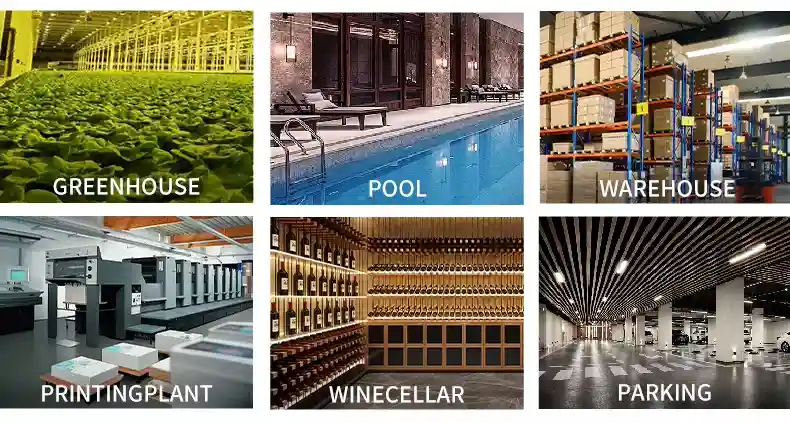
The same option does not create the same value in every industry. The combinations below show how customization maps to a real operating problem.
| Application | Main moisture problem | A practical custom configuration |
|---|---|---|
| Warehouse and logistics | Outdoor-air infiltration, door openings, carton damage, metal corrosion, uneven RH | Refrigerant or desiccant technology selected by temperature; higher airflow/static pressure; duct zoning; remote RH sensors; Modbus; multi-unit alarms |
| Greenhouse | Plant transpiration, nighttime condensation, fertilizer exposure, changing crop load | Capacity matched to crop and season; floor or ceiling layout; protected coil; drainage; remote sensor; branded cabinet |
| Indoor pool or spa | Continuous evaporation, chloramine corrosion, excess room heat | Corrosion-protection package; ducted air distribution; condensate drainage; supply-air heat management; project-specific heat recovery |
| Cold storage and cold chain | Warm-air infiltration, frost, wet floors, packaging condensation | Desiccant or low-temperature-resistant refrigerant system; door-zone dry-air interface; low-temperature controls; heated drain; remote alarms |
| Food processing and packaging | Condensation, powder caking, hygiene, cold-zone frost | Cleanable surfaces; selected stainless parts; filtration; low-temperature-resistant refrigerant or desiccant system; process interlock; documented maintenance access |
| Pharmaceutical and electronics | Low-RH or dew-point requirement, product sensitivity, auditability | Desiccant or combined system; higher filtration; remote sensors; alarms and data; BMS/PLC interface; validation test plan |
| Museum, archive, or laboratory | RH fluctuation, noise, localized sensitivity, unattended operation | Lower-noise build; remote sensor; tighter control logic; fault alarm; duty/standby arrangement; ducted placement |
| Data center or technical room | Condensation risk, continuous operation, system integration | Temperature/RH or dew-point strategy; BMS communication; dry contacts; redundant unit logic; front-access maintenance |
| Restoration, construction, or rental | Frequent transport, impact, rapid setup, customer branding | Portable model; rugged frame; casters and handle; pump; cable/plug; runtime counter; Wi-Fi option; private-label package |
These are configuration patterns, not fixed designs. Final selection still depends on temperature, humidity, moisture load, airflow, space, power, contaminants, and target market.
Rinwang’s application cases include a French greenhouse OEM project in which floor-standing and ceiling-mounted layouts were compared before the customer selected a standing format and added custom branding. It is a useful example of how application layout and private-label requirements can be handled in the same project.
Choose the Right OEM/ODM Project Route
After the custom options are identified, the project can be placed into one of three practical routes.
| Project route | Typical scope | Commercial approach |
|---|---|---|
| Private Label OEM | Logo, color, panel graphics, model, nameplate, manual, packaging; sometimes voltage or light configuration | Starts from 1 unit; lowest engineering risk; normal custom sample target 10–25 days |
| Base-Model ODM | Existing refrigerant, high-/low-temperature refrigerant, desiccant, or ceiling-mounted model with modified sheet metal, airflow, ducting, fan, drainage, filter, controls, or electrical configuration | Starts from 1 unit; routine sheet-metal NRE generally not charged; validation follows changed modules |
| Full Custom / Engineer-to-Order | New thermal balance, heat exchanger, refrigerant system, rotor/AHU arrangement, special materials, new control architecture, or target-market certification | Project quotation for engineering, tooling, components, testing, and certification; schedule defined after concept review |
The factory’s 1-unit MOQ, generally free sheet-metal NRE, and 10–25-day sample response should not be interpreted as a promise that a completely new certified refrigeration or air-handling system has no development cost. The quotation should separate:
- Base model
- Custom components
- Engineering/NRE
- Tooling or fixtures
- Sample and validation
- Certification
- Packaging
- Per-unit production price
Changes to branding, electrical components, controls, refrigerant, sheet metal, airflow, or the refrigeration system are reviewed against the destination-market compliance route before the sample is released.
From Requirement to Approved Production
A custom project becomes repeatable when every request is converted into a drawing, specification, test, or approved sample.
1. Application brief
The buyer provides the design air condition, target, installation, airflow, power, destination market, custom option list, quantity, and schedule.
2. Technology and base-model selection
Rinwang selects the dehumidification technology and nearest proven base model, then proposes the capacity, airflow path, cabinet format, controls, materials, and major project assumptions.
3. Design basis and configuration matrix
The project records:
- Required inlet and outlet air states
- Performance guarantee point
- Airflow and external static pressure
- Electrical supply
- Refrigerant or rotor system
- Cabinet and duct connections
- Drainage
- Materials and filters
- Controls and communication
- Brand and document package
- Destination-market compliance
4. Drawings and engineering release
Depending on the project, the buyer approves the general-arrangement drawing, duct layout, service access, electrical diagram, control sequence, panel art, nameplate, manual, and packaging.
5. Prototype or configured sample
Rinwang’s normal custom-sample range is 10–25 days for a project based on an existing model. New components, deep engineering, or third-party certification can extend it.
The sample should test the change that created the risk. A new color needs appearance approval; a new fan needs airflow and pressure verification; a new control function needs an I/O test; a new heat exchanger needs performance data.
6. Design validation and compliance gate
Critical comments are closed before mass production. If certification is required, the exact model, critical components, refrigerant, electrical configuration, standard, applicant, holder, and laboratory are agreed.
7. Golden sample and trial production
The approved sample, drawing, bill of materials, software version, artwork, and test method become the manufacturing reference.
8. Batch production, FAT, and delivery
Production checks are linked to the approved configuration. The final package includes the agreed inspection records, documents, accessories, packaging, spare parts, and shipping information.
Quality Checks Should Follow the Customization
The quality plan should expand as the engineering depth increases.
| Custom change | Verification that may be required |
|---|---|
| Logo, color, labels, packaging | Artwork, color/position, adhesion or durability as agreed, label accuracy, accessory and pack-out check |
| Cabinet or duct modification | Dimensions, fit, service access, air leakage, drainage, vibration, airflow direction |
| Fan, filter, or duct pressure | Airflow and static pressure, motor current, noise, filter installation |
| Compressor, coil, or refrigerant circuit | Vacuum/pressure/leak checks, operating pressures, condensate test, performance, power, protections |
| Low-temperature configuration | Defrost sequence, drain protection, low-temperature run, recovery after defrost |
| Desiccant system | Process/reactivation airflow, regeneration temperature, outlet condition/dew point, sealing, heater protections |
| Controller or communication | Function sequence, sensors, alarms, dry contacts, register map, communication-loss behavior |
| Electrical configuration | Wiring, grounding, protection devices, current, dielectric/electrical safety tests as applicable, nameplate |
| Material or coating | Material scope, coating coverage, appearance, cleaning/compatibility or corrosion test when specified |
A deeper OEM/ODM project may also define incoming inspection, continuous-run testing, noise testing, EMC pre-checks, a factory acceptance test, serialized records, and a retained golden sample.
Before an order is placed, the quality agreement should state the applicable Rinwang tests, test conditions, record format, sampling plan, and whether the buyer or a third party will witness the FAT.
Compliance Is Customized by Market as Well as by Machine
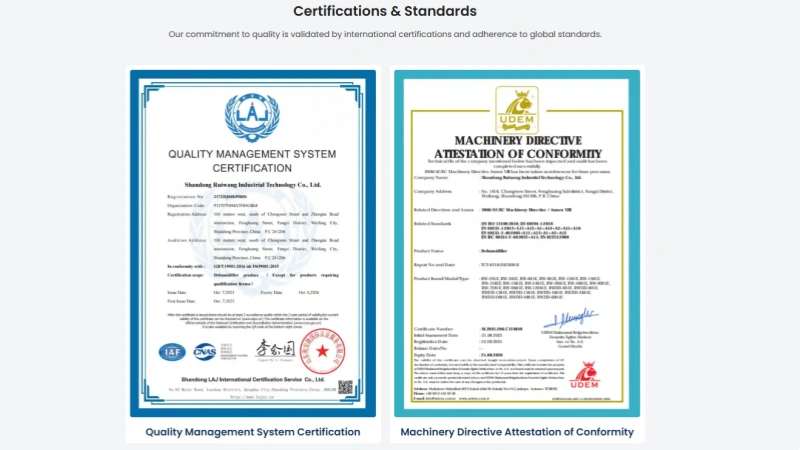
Changing the market can change the required product just as much as changing the airflow.
Rinwang reports CE documentation across its current model range. Buyers should request the formal model list, applicable standards and editions, declaration or report numbers, holder, and issuing or testing body for the exact configuration being quoted.
Rinwang does not currently have a completed ETL/UL project available for publication. If a North American customer requires ETL or UL, Rinwang can develop the required configuration and arrange the certification project.
The European Commission’s Blue Guide explains why a business placing a product on the EU market under its own name or trademark must understand the associated manufacturer responsibilities. UL’s current 60335-2-40 standards update also shows why a North American project must confirm the product category, standard edition, refrigerant, construction, and certification route rather than relying on an old generic UL claim.
Refrigerant is part of this market decision. Rinwang confirms the available refrigerant against the product family, electrical configuration, destination market, and applicable test or certification evidence during quotation; one refrigerant should not be assumed to cover every capacity and market.
What Determines the Final OEM/ODM Price?
Two custom projects based on the same cabinet can have very different costs.
The main price drivers are:
- Compressor, heat exchanger, fan, rotor, and heater
- Refrigerant and safety components
- Cabinet material and sheet-metal complexity
- Airflow and external static pressure
- Filter and corrosion-protection package
- Electrical configuration
- Controller, sensors, software, and communication
- Sample and engineering time
- Tooling and fixtures
- Performance, reliability, and third-party tests
- Certification
- Branded documents and packaging
- Warranty and spare-parts package
- Order quantity and annual forecast
A clear quotation separates one-time project costs from the production unit price. This lets a buyer understand which costs disappear, remain fixed, or are diluted as annual volume grows.
Rinwang currently quotes routine sheet-metal modification as generally free of NRE and accepts one-unit custom projects. The boundary is the base design: a new coil, rotor system, refrigeration circuit, certification program, or custom control architecture can create engineering and validation cost even when the cabinet itself is easy to modify.
Frequently Asked Questions
Can Rinwang customize more than the cabinet and logo?
Yes. Rinwang OEM/ODM projects can extend into moisture-removal performance, heat exchangers, rotor and regeneration requirements, airflow/static pressure, fan and filter selection, ducting, drainage, environmental protection, electrical configuration, controls, communication, and validation. The exact depth depends on the selected technology and base model.
Can a custom project start with one unit?
Yes. Rinwang confirms a one-unit starting quantity for custom projects, including branding, documents, packaging, and routine sheet-metal work. Full engineering, new certification, tooling, or special components are quoted separately.
How long does a custom sample take?
A custom sample based on an existing model normally takes 10–25 days. A new refrigeration system, rotor or air-handling design, advanced control development, special component, or third-party certification can require a longer project schedule.
Can Rinwang customize voltage and Modbus communication?
Yes. Rinwang confirms 110–120 V, 220–240 V, and 380–415 V at 50 or 60 Hz, plus function changes, custom panel printing/overlay, and Modbus RS485. Phase availability and verified nameplate data are confirmed for the selected model in the project specification.
Can Rinwang build for low temperatures or low dew points?
Yes. The solution may use a low-temperature-resistant refrigerant configuration or a rotary desiccant system. Both remove moisture, but the refrigerant option relies on condensation and defrost, while the desiccant option is better suited to colder air or lower dew points. Selection depends on inlet temperature, moisture content, target RH/dew point, and available energy.
Can Rinwang provide CE, ETL, or UL certification?
Rinwang reports CE documentation across its model range; buyers should request the documents covering the exact quoted configuration. Rinwang does not currently have a completed public ETL/UL project, but can develop and submit a customer project for the required certification route.