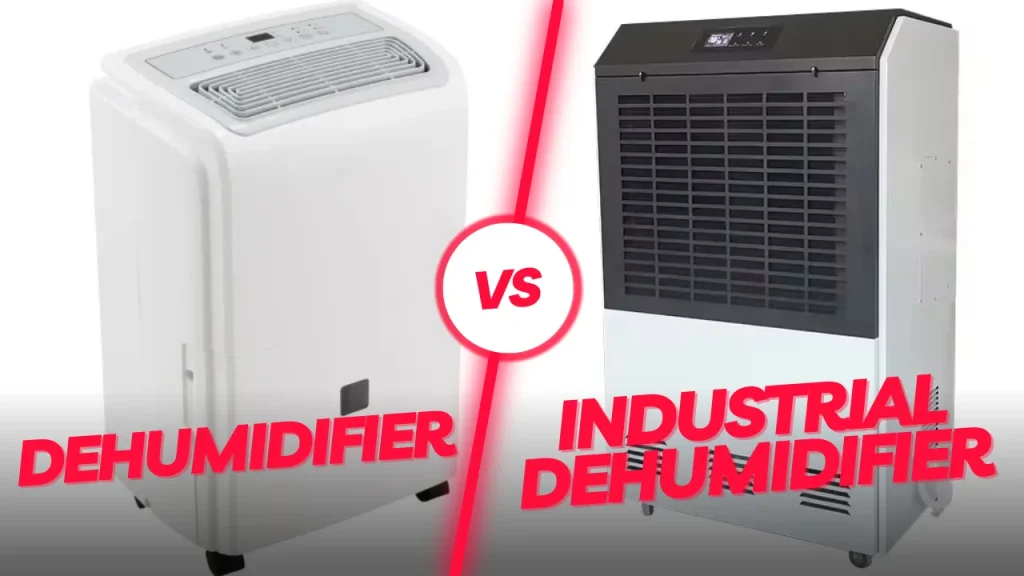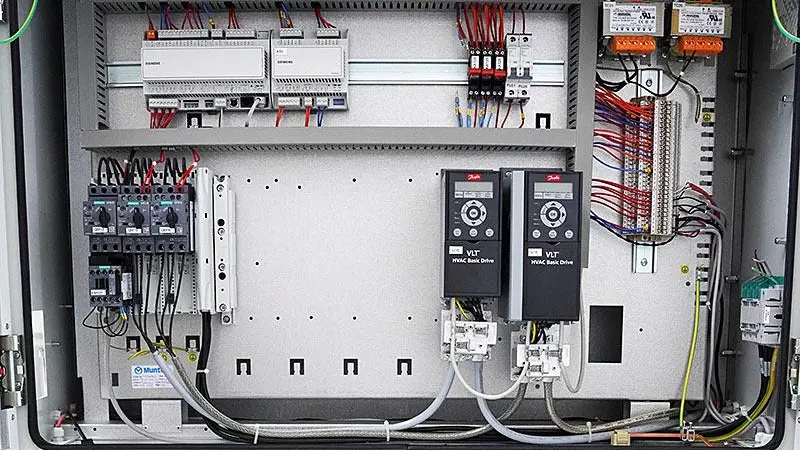
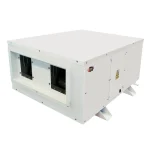
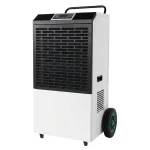
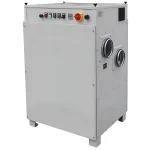
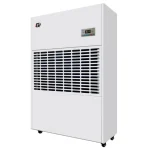
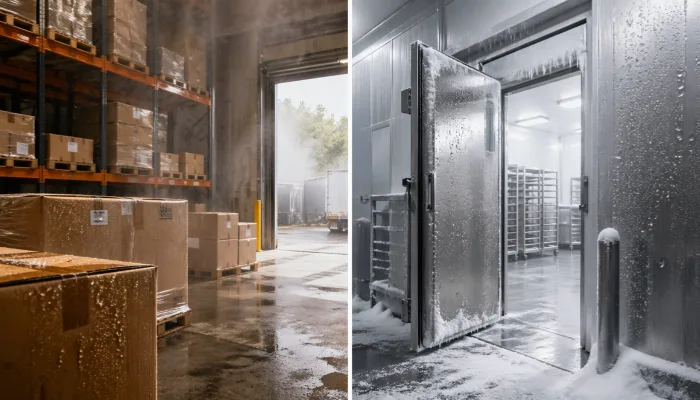
On paper, choosing between a refrigerant dehumidifier and a desiccant dehumidifier looks simple. The real difficulty starts on site. One facility may stay warm and humid, while another runs cold enough for condensation or frost to appear. Both are moisture problems, but they do not point to the same solution.
A warm warehouse with sticky air does not need the same approach as a cold room with frost risk. Damp cartons in storage and condensation in a chilled process zone are not the same problem. Once those differences are clear, the choice between refrigerant and desiccant becomes much easier.
Quick answer: which one is better?
A refrigerant dehumidifier removes moisture by cooling air below its dew point so water condenses out.
A desiccant dehumidifier removes moisture with a drying material and then uses heat to regenerate that material.
For warmer spaces with moderate humidity targets, refrigerant is often the better first option. For colder spaces, or for projects that need drier air, desiccant is often the better fit. This general split matches ASHRAE’s guidance on cooling-based and desiccant-based dehumidification. The difference also becomes much clearer when standard units and industrial systems are compared under the same site conditions.
Refrigerant vs desiccant dehumidifier at a glance
| Decision area | Refrigerant dehumidifier | Desiccant dehumidifier |
|---|---|---|
| Drying method | Cools air and condenses moisture | Adsorbs moisture and regenerates with heat |
| Best fit | Warmer, wetter spaces | Colder spaces or lower-humidity targets |
| Typical strength | Good operating efficiency in warm, humid conditions | Stable drying in cold or low-dew-point conditions |
| Typical limit | Capacity can fall as temperatures drop | Higher regeneration energy and system complexity |
| Common use cases | Warehouses, indoor pools, general production areas | Cold storage, pharma, battery, low-temp food processing |
| Installation impact | Often more compact | Often needs more planning for regeneration air and exhaust |
How a refrigerant dehumidifier works
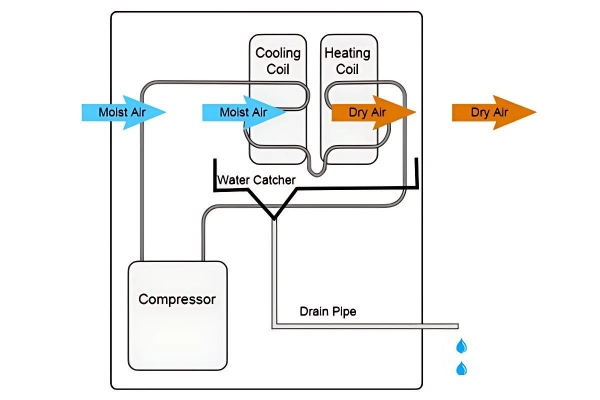
A refrigerant dehumidifier pulls humid air across a cold evaporator coil. When the air is cooled below its dew point, moisture turns into liquid water and drains away. The air is then reheated and sent back into the space.
The same principle appears in the U.S. Department of Energy’s definition of a dehumidifier. It describes a refrigerated surface that condenses moisture from the air, along with a fan and a way to collect or remove condensate.
This method usually works best when the space stays warm enough for steady condensation-based drying. Warm warehouses, indoor pools, and many general industrial areas fit that pattern.
How a desiccant dehumidifier works
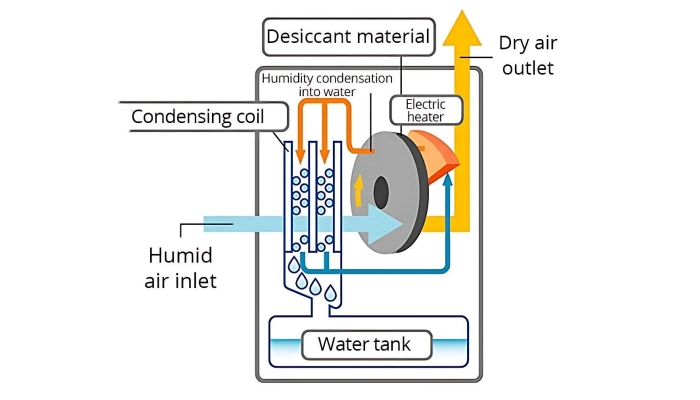
A desiccant dehumidifier does not rely on a cold coil. It uses a drying material, often in a wheel, to absorb moisture directly from the air. That material is then regenerated with heat so it can keep working.
That is why desiccant systems are often used in colder spaces or in projects that need drier air. In those conditions, refrigerant usually becomes harder to justify.
Start with what the space actually needs
Before comparing cost or installation, first answer a simpler question: what kind of moisture problem does the space actually have?
That usually comes down to two things:
- Is the space mainly warm or mainly cold?
- Does it need general humidity control or much drier air?
If those two points are not clear, it is very easy to compare the wrong technologies.
Is the space warm or cold?
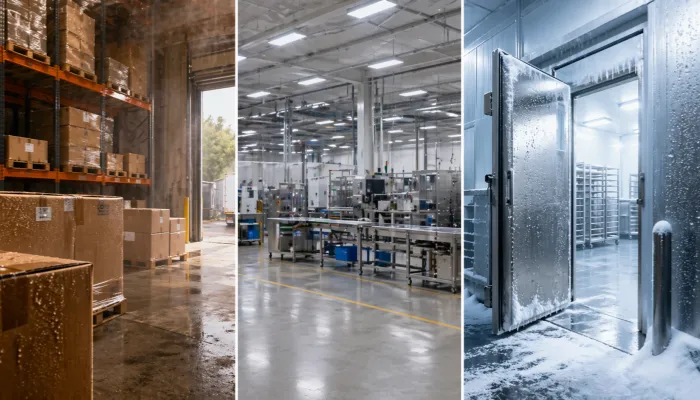
Temperature is usually the first filter. If the facility stays warm most of the time, refrigerant usually belongs on the shortlist first. If it stays cold for long periods, the desiccant usually moves to the front.
A warm warehouse with sticky air and damp cartons usually points in a different direction from a freezer-adjacent zone with frost risk. A general production hall at normal room conditions is not the same as a chilled room where condensation keeps forming on colder surfaces.
| Site condition | What it usually suggests | Better starting point |
|---|---|---|
| Warm warehouse with sticky air and damp cartons | Warm operating profile with moderate humidity target | Refrigerant |
| General production hall at normal room conditions | Cold operating conditions with tighter moisture control need | Refrigerant |
| Chilled room with condensation on colder surfaces | Lower-temperature control problem | Desiccant |
| Freezer-adjacent transition zone with frost risk | Cold operating condition with tighter moisture control need | Desiccant |
| Large building with both warm and cold zones | Mixed operating profile | Review both or consider a mixed approach |
Colder storage conditions usually need a more specific decision process, which becomes clearer in cold storage humidity control.
Does the space need moderate humidity control or much drier air?
Not every project needs very dry air. Many only need steady humidity. If the goal is to reduce general dampness, stabilize storage conditions, or control moisture in a warm area, refrigerant may already be enough. If the space needs drier air, tighter control, or steadier performance in colder conditions, desiccant usually becomes the better fit.
A warehouse may simply need humidity brought under control so cartons stay stable and the air stops feeling damp. A pharmaceutical storage area, battery room, or low-temperature process space may need much tighter control and much drier air. Those are not the same requirements, so they should not be judged by the same standard.
That is why spaces such as pharmaceutical storage humidity control cannot be judged the same way as an ordinary warm warehouse or production room.
Then compare what the project can support
Once the space requirement is clear, the next question is more practical:
Which option makes more sense for the project itself?
At this point, the decision is usually shaped by two things:
- what the system will cost over time
- how easily it can be installed in the real building
Which option makes more sense over time?
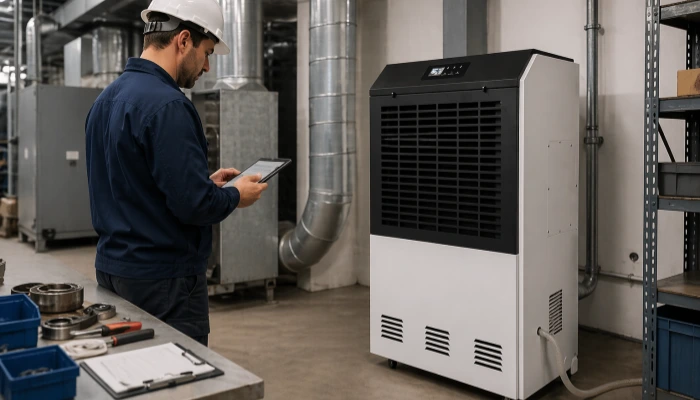
A lower equipment price does not always lead to a lower project cost.
A unit that looks cheaper on paper can cost more later if it runs outside its ideal temperature range, cannot hold the required condition, or creates more service issues.
The comparison usually needs to include:
- upfront equipment cost
- annual electricity use
- seasonal performance
- maintenance burden
- installation changes needed to make the system work
A warm, humid space often gives refrigerant a cost advantage in day-to-day operation. A colder or lower-humidity space may reverse that logic.
The quote only shows the starting cost. Over time, electricity use and real operating efficiency often make a much bigger difference. That becomes clearer when looking at industrial dehumidifier electricity use and how to tell if an industrial dehumidifier is energy efficient.
Which option fits the building more easily?
A system that looks right on paper still has to work inside the building.
Desiccant systems usually need more planning for regeneration air, exhaust routing, added heat, and layout. Refrigerant systems are often easier to place in tighter retrofit projects.
That does not make one universally better. It means the building itself is part of the decision.
A system may be technically suitable and still become difficult once space, airflow, exhaust routing, or heat management are taken into account. This is especially true in retrofit projects where the layout is already tight and major changes are hard to make.
Where refrigerant usually makes more sense

Refrigerant systems usually fit better in warmer spaces with moderate humidity targets and a meaningful moisture load.
Warehouses and distribution spaces
A warehouse often struggles with sticky air, damp cartons, or moisture drift near loading doors during humid weather. If the temperature stays in a normal warm operating range, refrigerant is often the more practical first option. That pattern shows up clearly in warehouse humidity control.
Indoor swimming pools
Indoor pool spaces combine warm air with a heavy moisture load. That operating pattern often aligns well with refrigerant-based drying when the system is matched to the actual room condition. The same logic appears in indoor swimming pool dehumidification.
Greenhouses and many standard grow environments
Greenhouses and many grow rooms need steady moisture control, but they are not automatically desiccant applications. Temperature profile, moisture load, and control target still decide the answer. That can be seen in industrial dehumidifier for greenhouse humidity control. In commercial cultivation environments where ordinary units struggle, the same comparison leads toward why standard dehumidifiers fail in commercial grow rooms.
Where desiccant usually makes more sense
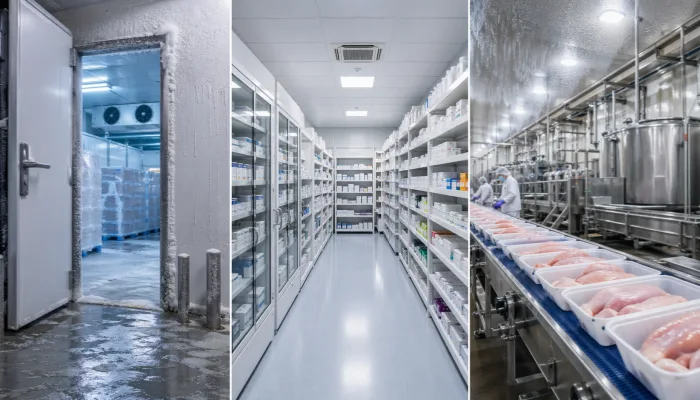
Desiccant systems usually fit better where lower temperature, tighter moisture control, or condensation prevention is the main challenge.
Cold storage and freezer-adjacent zones
These spaces often show moisture problems as frost, condensation, unstable transition areas, or repeated wetting near colder boundaries. That is different from general warm-air dampness. In these conditions, desiccant usually belongs near the front of the selection process.
Pharmaceutical storage and tighter controlled spaces
Some facilities can tolerate ordinary humidity fluctuation. Others cannot. When the margin for error is small, steadier moisture control matters much more.
Food processing with colder or more demanding conditions
Some food plants run warm enough that refrigerant remains practical. Others deal with chilled processing, colder zones, or condensation risk that changes the answer. Those differences become clearer in industrial dehumidification for food processing.
Some facilities need both technologies, not one winner
A large site may contain several different operating conditions at once.
One facility may have a warm packaging area, a chilled prep zone, and a colder storage room. In that kind of layout, one technology may fit one zone well while another suits the rest.
This kind of staged logic is also reflected in ASHRAE’s low-dew-point dehumidification guidance, where refrigeration may be used first and desiccant dehumidification may handle the final stage in some applications.
That same mixed-condition logic also appears across industrial dehumidifiers by application.
A simple buyer checklist before asking for quotations
| Buyer question | Why it matters | What it often points toward |
|---|---|---|
| What temperature does the space run at most of the time? | Temperature removes the wrong option quickly | Warm often points to refrigerant; cold often points to desiccant |
| What humidity level or dew point is actually required? | The target can rule out an unsuitable technology fast | Moderate RH often favors refrigerant; lower dew point often favors desiccant |
| Is the problem general dampness or a specific symptom? | Wet floors, damp packaging, frost, and unstable door zones behave differently | Helps define the real control objective |
| Is the site one condition or several zones? | Mixed zones often need different control logic | A mixed approach may be worth reviewing |
| Is the priority a lower quote or a lower lifecycle cost? | Cheap equipment is not always cheap operation | Pushes the discussion toward TCO |
Common mistakes buyers make
- Assuming desiccant is always better
Desiccant has a stronger place in colder and lower-dew-point applications. That does not make it the better value in every warm, wet facility. - Assuming refrigerant can solve every industrial moisture problem
Refrigerant can solve many industrial moisture problems well. It does not automatically stay effective in every cold room, freezer-adjacent zone, or lower-humidity process area. - Ignoring low-temperature symptoms until the unit starts icing up
A project may look fine in a quote comparison and still show trouble later if the room condition was misunderstood at the start. If colder operating conditions are already causing performance trouble, the same warning signs often appear in why an industrial dehumidifier may freeze up. - Treating this as a label choice instead of a site-condition choice
“Refrigerant” and “desiccant” are not conclusions. They are responses to temperature, humidity target, building layout, and operating pattern.
FAQ
Are desiccant dehumidifiers better than refrigerant dehumidifiers?
Not always. Desiccant units are usually the better fit in colder spaces or lower-humidity applications, while refrigerant units often make more sense in warmer, wetter environments.
Do desiccant dehumidifiers use more electricity?
They often use more power because they need heat for regeneration. Actual energy use still depends on room condition, control target, and how the system is configured.
At what temperature do refrigerant dehumidifiers stop working well?
Standard refrigerant models usually lose efficiency as temperatures fall, and many struggle below about 41–50°F. Some specialized low-temperature models can operate lower, but standard units often cannot.
Do desiccant dehumidifiers heat the room?
Yes, they usually add some warmth because heat is part of the regeneration process. In colder spaces, that can be helpful, but it may be a drawback where temperature rise is undesirable.
Can desiccant dehumidifiers run continuously?
Yes, many industrial desiccant systems are designed for continuous operation. That is common in facilities that need stable humidity control rather than occasional moisture removal.
Final answer: match the technology to the condition
There is no universal winner.
For warmer spaces with moderate humidity targets, refrigerant is often the better first option.
For colder spaces or lower-humidity targets, desiccant is often the better fit.
For facilities with mixed zones and mixed operating conditions, one technology may suit one area while another suits the rest.
Start by defining the room condition, the moisture problem, and what the facility actually needs to fix. Once those are clear, the right technology usually becomes much easier to narrow down. In colder projects, or in spaces that need drier and more stable air, the decision often moves toward desiccant dehumidifier systems.