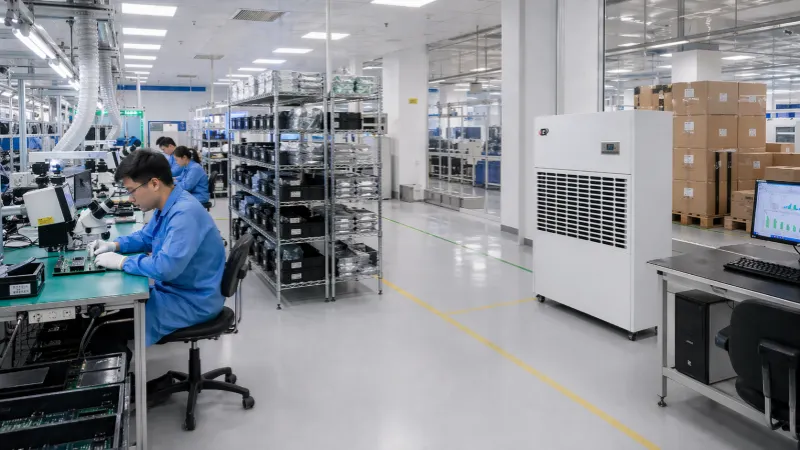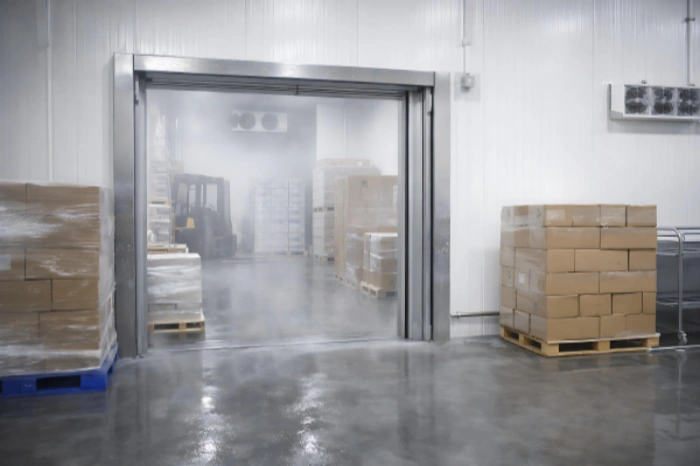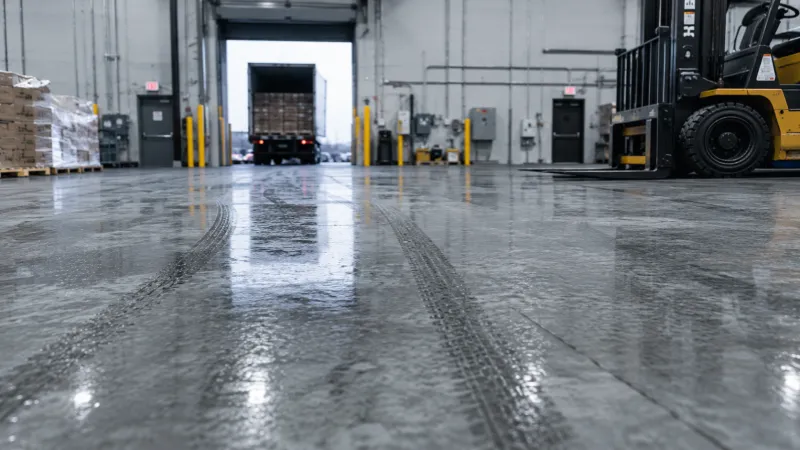
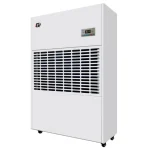
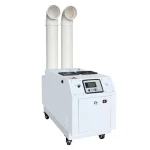
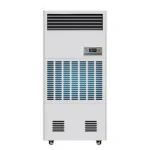
Commercial kitchen humidity problems rarely appear in just one place. A dish room may stay wet after service, dry storage may develop caking or packaging problems, and condensation may form around walk-in cooler doors even when the dining area feels comfortable. The reason is that these spaces operate under very different conditions. Cooking, warewashing, outdoor makeup air, washdown, cold surfaces, and frequent door openings all add moisture in different ways.
That is why a commercial kitchen should not be treated as one humidity-control zone. The right approach is to identify the problem area first, understand where its moisture is coming from, and then decide whether the solution is ventilation, makeup-air treatment, pressure correction, or dedicated dehumidification.
This guide looks at those areas one by one, with practical humidity targets and equipment choices for restaurants, hotel kitchens, commissaries, and other foodservice facilities.

What Humidity Level Should Each Commercial Kitchen Zone Maintain?
There is no single correct RH target for an entire commercial kitchen.
| Zone | Typical condition | Practical control target | What the target protects |
|---|---|---|---|
| Cooking line | Hot, grease-laden, under strong hood extraction | No separate room RH target | Controlled mainly by hood capture, exhaust, makeup air, and HVAC balance |
| Warewashing and dish room | Hot and humid, with moisture rising sharply during service | About 50–60% RH where practical | Ceiling and gasket mould, wet surfaces, condensation on adjacent cold surfaces |
| Prep and cold prep rooms | Moderate temperature, frequent door traffic | About 55–60% RH | Surface condensation, mould on ceilings and grout, label and packaging performance |
| Dry storage | Usually around 10–21°C, with little internal heat | About 50–60% RH, tightened where stock requires it | Caking, carton softening, label failure, corrosion risk |
| Walk-in cooler surround and ante-room | Cold surfaces exposed to warmer humid air | Dew point below the critical surface temperature | Door-frame condensation, gasket frost, floor moisture, evaporator icing |
| Freezer ante-room or vestibule | Very cold surfaces and repeated door opening | Low enough dew point to prevent frost and ice | Threshold ice, frost on hardware, moisture entry into the freezer |
| Dining room | Comfort-driven, affected by outdoor air and kitchen pressure | About 50–60% RH | Sweating diffusers, damp ceiling tiles, musty complaints |
These are practical design ranges rather than universal code limits. The final target should reflect the stock being stored, the local climate, surface temperatures, hygiene requirements, and the capability of the ventilation and HVAC systems.
A dish room and a dry store may be only a few metres apart, but they behave very differently. The dish room experiences sharp moisture peaks during service, while the dry store is usually cooler, quieter, and has little internal heat. Both may operate around a similar RH range, but that does not mean they should be treated by the same machine or controlled from the same sensor.
The target also depends on what the room is protecting. Flour, sugar, spices, cartons, labels, cans, and cured products do not respond to humidity in exactly the same way. A 50–60% RH range is often a useful starting point for dry storage, while highly hygroscopic or corrosion-sensitive stock may justify tighter control.
Visible symptoms can help identify where to investigate. Repeated caking, softened cartons, lifting labels, corrosion spotting, or condensation on cooler frames and pipework all point to a moisture problem, but they should not be used to estimate a precise RH value. If several of these appear in the same area, log temperature and RH through a representative service cycle before selecting equipment.
Where Commercial Kitchen Moisture Actually Comes From
Cooking steam is the obvious suspect, but it is not always the moisture source that controls the room condition. A properly designed kitchen hood is intended to capture much of the heat, grease, and vapour produced directly by the cooking appliances. Moisture that remains in surrounding spaces often comes from sources that are only partly captured or not extracted at all.
Warewashing, Washdown, and Door Traffic
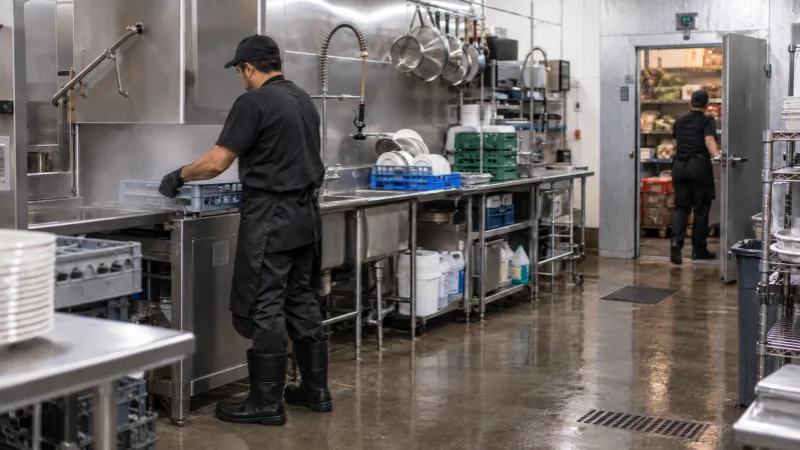
Warewashing can be one of the largest uncaptured internal moisture sources in a commercial kitchen.
In the Food Service Technology Center’s test of a CMA EST-AH door-type machine under ASTM F2474, total convective heat gain to the space was 8.5 kBtu/h, of which 5.9 kBtu/h was latent, at 30 racks per hour with 73°F incoming water (test report). Using an approximate latent heat of vaporisation of 1,060 Btu/lb, that is roughly 5.5 lb, or about 2.5 kg, of water vapour released into the room per hour under that test condition.
Actual moisture release varies with dishwasher type, exhaust arrangement, rack throughput, water temperature, pre-rinse equipment, and operating practice, so that figure should not be treated as a universal design load. What it shows is that a relatively small dish room can carry a substantial moisture load.
Other internal sources matter because they often appear when ventilation is least effective. Washdown leaves water on floors and walls after service, sometimes just as exhaust systems are being reduced. Steam kettles, pasta cookers, and combi ovens can release vapour during loading, unloading, or venting. Every walk-in door opening also moves warmer humid room air toward a colder space, where moisture can condense or freeze.
Untreated Makeup Air and Building Pressure
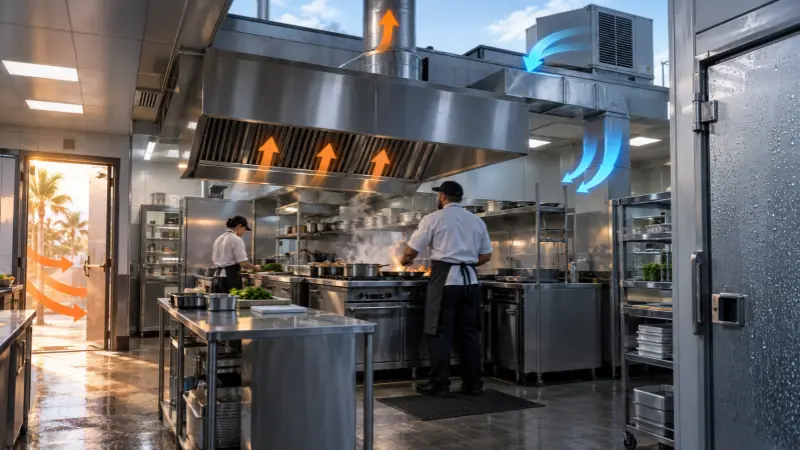
Commercial kitchen exhaust systems move large volumes of air out of the building, and that air has to be replaced. In the United States, the International Mechanical Code requires makeup air supplied from all sources to be approximately equal to the exhaust demand and appropriately interlocked with the exhaust system. Other markets apply their own mechanical-code requirements, but the airflow principle is the same.
The important question is not only how much makeup air is supplied, but also its condition. If the makeup air unit only tempers outdoor air rather than cooling and dehumidifying it to an appropriate dew point, a large moisture load may be introduced whenever the kitchen hoods are running. In hot, humid climates, that outdoor-air load can be larger than many of the internal moisture sources.
Pressure balance then determines where any shortfall comes from. If exhaust exceeds supplied makeup and outdoor air by too much, the building can operate under excessive negative pressure and pull untreated outdoor air through doors, service entrances, and envelope leaks. A field study of seven restaurants found that all seven operated at negative pressure during normal service, ranging from -0.8 Pa to -43 Pa and averaging -12.7 Pa (Cummings et al., ASHRAE Winter Meeting 1996).
Signs of excessive negative pressure can include exterior doors that are difficult to open, strong draughts at entrances, humid air entering at service doors, and persistent moisture near thresholds during humid weather.
At the same time, the kitchen itself is normally intended to remain slightly negative relative to guest areas so that cooking odours stay contained. These are two different pressure relationships: the building should not be excessively negative to outdoors, while the kitchen may still remain slightly negative to the dining room.
The practical chain is straightforward. Too much exhaust creates a large makeup-air demand. If that air is not supplied and treated correctly, humid air enters through the makeup-air system or uncontrolled leakage. Indoor dew point rises, and cold surfaces begin to condense moisture.
A dehumidifier acts near the end of that chain. It should not be used to compensate for an unresolved ventilation or pressure problem.
Why Air Conditioning Alone May Not Control Kitchen Humidity
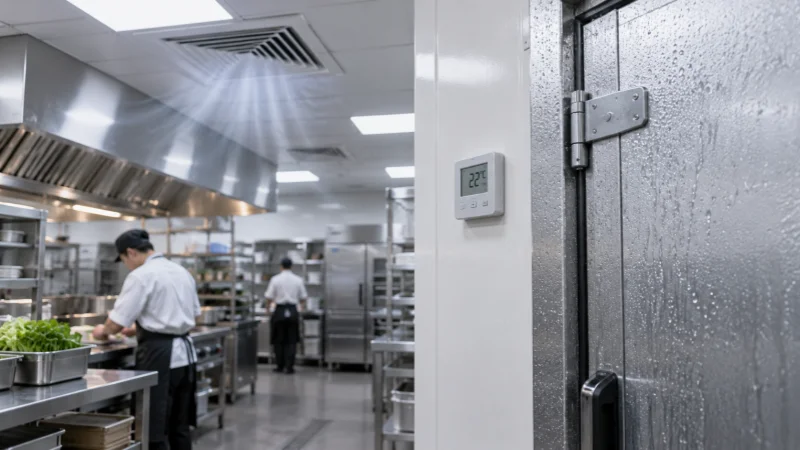
Conventional air conditioning is mainly controlled by room temperature, while kitchens can carry a large moisture load even after the room reaches its temperature setpoint.
In offices and many retail spaces, sensible heat is usually the dominant cooling load. In dish rooms, wet prep areas, and kitchens receiving humid outdoor air, moisture can make up a much larger share of the total load. Engineers call this the latent load: the part of the cooling load associated with removing moisture rather than simply lowering air temperature.
That difference matters because a conventional air conditioner may satisfy the thermostat before enough water has been removed. The compressor then unloads or cycles off while moisture is still entering from warewashing, washdown, infiltration, or makeup air. The room can therefore feel cool while RH remains high enough for condensation to continue on cold surfaces.
Lowering the thermostat is not a good long-term answer. It may extend cooling and remove more water, but it also overcools the space and can make some surfaces colder, increasing condensation risk elsewhere. If separate reheat is then added only to bring the room temperature back up, the system is cooling the air and then reheating it.
A dedicated refrigerant dehumidifier works differently because it can respond directly to RH or dew point. Air is cooled below its dew point at the evaporator so moisture condenses, and the condenser then reheats the dried air. A standard standalone unit normally discharges air warmer than the entering air; where near-neutral supply temperature is required, the system needs suitable reheat control, remote heat rejection, or HVAC integration.
Fix Ventilation Before Adding a Dehumidifier
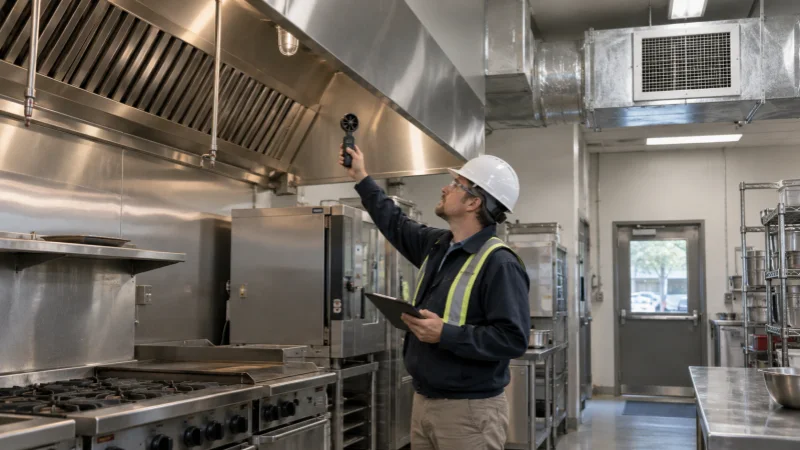
Before sizing a dedicated dehumidifier, check the parts of the system that determine how much moisture enters the space in the first place. Hood capture, exhaust volume, makeup-air quantity and condition, building pressure, door leakage, damaged gaskets, and envelope problems should all be reviewed first.
If those problems are corrected and a zone still misses its RH or dew-point target, then dedicated dehumidification becomes a much more predictable solution. In many projects, this sequence also reduces the equipment capacity required.
Why a Dehumidifier Does Not Belong on the Cooking Line
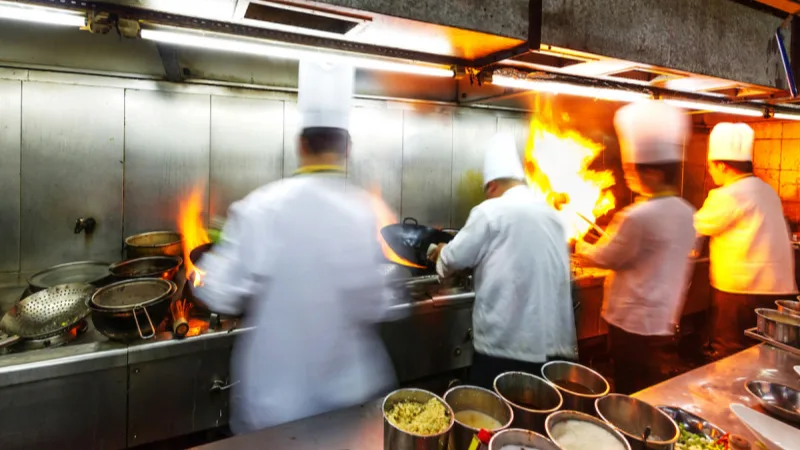
The active cooking and hood zone is normally the wrong place for a conventional room dehumidifier.
Grease aerosol can load filters and coat heat-exchanger surfaces around fryers, ranges, and charbroilers, reducing airflow and heat-transfer performance. The moisture load around the cooking line may also be dominated by the large makeup-air stream feeding the exhaust system, which a room-scale dehumidifier is not intended to replace.
Commercial cooking ventilation is also subject to fire, mechanical, hygiene, and equipment-listing requirements. In the United States, NFPA 96 forms part of that framework, while other markets have their own requirements.
For these reasons, dedicated room dehumidification normally belongs in the spaces beside the cooking line rather than inside the grease-laden hood capture zone.
Where a Dehumidifier Actually Makes Sense
| Zone | Typical failure symptoms | Suitable approach | Main engineering constraints |
|---|---|---|---|
| Cooking line | Condensation near pass or ductwork, humid spill from hood zone | Correct hood capture, exhaust, makeup air treatment, and HVAC balance | Grease aerosol, very high airflow, fire and mechanical-code requirements |
| Warewashing and dish room | Ceiling mould, dripping surfaces, persistently wet floor | High-airflow refrigerant unit, often ceiling-mounted or ducted | Dishwasher vapour removal, return-air position, corrosion and cleanability |
| Prep and cold prep rooms | Sweating stainless surfaces, mould in grout or ceiling finishes | Ceiling-mounted or ducted refrigerant unit | Avoid blowing directly across exposed food; consider noise and washability |
| Dry storage | Caking, soft cartons, peeling labels, corrosion spotting | Refrigerant unit selected for actual room condition | Low-temperature performance, defrost capability where needed, unattended control |
| Walk-in cooler surround and ante-room | Door-frame sweating, gasket frost, floor moisture | Low-temperature refrigerant or desiccant depending on condition | Control doorway dew point, not RH inside the cooler |
| Freezer ante-room or vestibule | Threshold ice, frost on hinges and hardware | Usually desiccant where a very low dew point is required | Very low temperature, infiltration during door openings, pressure control |
| Cellars and below-grade stores | Musty air, labels lifting, corrosion on racking | Low-temperature refrigerant where suitable | Cool surfaces, weak ventilation, condensate lifting |
| Dining room | Sweating diffusers, damp ceiling tiles, guest complaints | Correct outdoor air and pressure first; add dedicated control only if needed | Noise, comfort, visible installation |
Warewashing and Dish Rooms
Dish rooms are often one of the strongest candidates for dedicated moisture control because the source is concentrated and the room is relatively small. Before adding a dehumidifier, however, the dishwasher itself should have the heat and moisture removal required by the applicable mechanical code and the manufacturer’s listing.
In many jurisdictions this is handled through a Type II hood or another approved heat/moisture removal arrangement. Exact requirements vary, so it should not be treated as a universal rule for every machine in every market.
The dehumidifier return should be positioned away from the direct dishwasher discharge plume so that it treats mixed room air rather than a jet of near-saturated vapour. Ceiling-mounted or ducted units are often practical because they keep floor space clear and can position supply and return air more effectively.
Dry Storage
Dry storage is often overlooked because the room does not look as wet as a dish room. The selection problem is different: these spaces may be cooler and drier than the test condition used for a dehumidifier’s headline capacity.
As entering air becomes cooler and drier, moisture-removal capacity falls and frost risk may increase depending on the equipment design. That does not mean every standard refrigerant unit will automatically frost, but it does mean that minimum operating temperature, defrost strategy, and output at the actual design condition should be checked before ordering.
For unattended storage, independent RH control and a high-humidity alarm can be particularly useful. A smaller correctly selected machine with reliable control is usually more valuable than an oversized unit chosen only from its headline litres-per-day figure.
Walk-In Cooler and Freezer Entrances
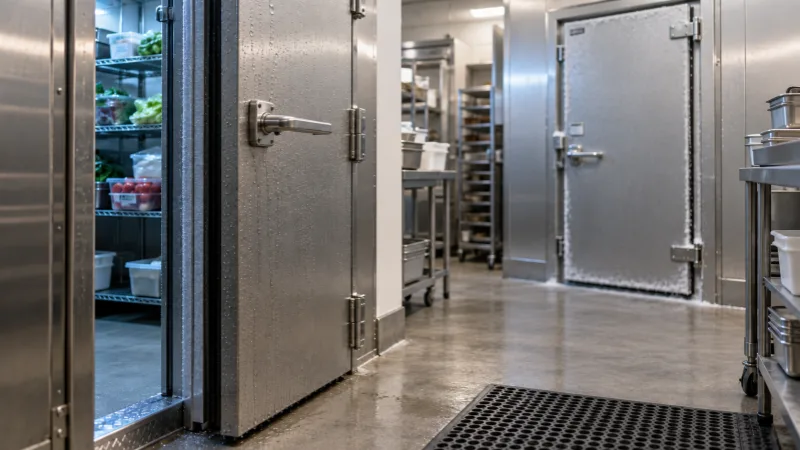
Condensation around a walk-in cooler door is mainly a dew-point problem outside the box. If the surrounding air’s dew point is above the temperature of the door frame, threshold, panel edge, or other cold surface, water forms there.
Damaged gaskets, poor door alignment, failed sweeps, weak anti-sweat heaters, and damaged insulation may all contribute, so mechanical faults should be corrected first. Lowering the dew point around the entrance then addresses the humidity side of the problem and reduces the amount of moisture carried into the cooler during door openings.
That can reduce evaporator frost, icing around the entrance, defrost frequency, and moisture accumulation on hardware. Conditions inside the refrigerated room are a separate selection exercise covered in cold storage dehumidifier selection.
Freezer entrances demand a lower dew point because moisture may freeze rather than simply condense. Where the intake air is very cold or the required dew point is low, desiccant technology is commonly considered instead of a conventional refrigerant system.
Refrigerant or Desiccant: Which Fits Each Zone?
The choice follows the entering-air condition and required dryness, not the room name.
| Entering condition and target | Typical technology to investigate | Common foodservice application |
|---|---|---|
| Moderate room temperature, target roughly 45–60% RH | Standard refrigerant dehumidifier | Dish rooms, prep rooms, many dry stores |
| Cool conditions down toward a few degrees above freezing | Low-temperature refrigerant unit with appropriate defrost | Cooler ante-rooms, cellars, below-grade stores |
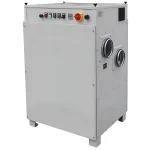
| Very cold intake air or a low dew-point target, often below about 40% RH | Desiccant dehumidifier | Freezer vestibules and other low-dew-point duties |
These are practical starting ranges rather than fixed technology limits. One refrigerant unit may operate at lower temperatures than another, and a desiccant system may also be selected at warmer conditions when a lower dew point is required.
Final selection should be based on the actual entering temperature and RH, the required room dew point, the manufacturer’s performance data, defrost behaviour, and energy requirements.
The mechanism behind the two technologies is explained in refrigerant and desiccant dehumidifiers. For cooler applications, a low-temperature dehumidifier may be suitable where a standard refrigerant unit is no longer effective. For lower dew-point duties, see desiccant dehumidifiers.
How to Specify a Dehumidifier for a Commercial Kitchen
Once the problem zone and dehumidification technology are clear, the next question is whether the equipment can operate reliably in a kitchen environment.
Mounting and Air Distribution

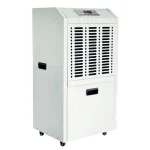
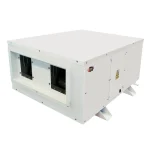
Commercial kitchens rarely have spare floor area, so ceiling-mounted and ducted units are often the most practical formats. Ducting can also keep the machine itself outside the dirtiest or most congested part of the room while still delivering dry air to the controlled zone.
For example, a unit can serve a dry store from an adjacent plant space rather than occupying shelving or aisle space inside the room. Ceiling-mounted dehumidifiers are commonly considered for dish rooms, prep rooms, and storage areas where floor space and access matter.
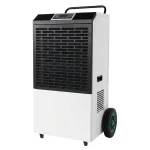
Portable commercial machines still have a role for temporary drying, fault cover, or site investigation, but they are rarely the best permanent answer for a working commercial kitchen.
Corrosion Protection and Cleanability
High humidity, grease aerosol, washdown chemicals, and coastal salt can create a more aggressive environment than ordinary warehouse duty. Coil corrosion protection should therefore be considered where exposure justifies it, and filters should be accessible and washable or easily replaceable.
The maintenance interval should follow the operating environment rather than a fixed calendar. Visible filter loading, reduced airflow, coil contamination, falling condensate output under similar conditions, or repeated high-humidity alarms are all signs that inspection and cleaning are needed.
Drainage, Controls, and Installation
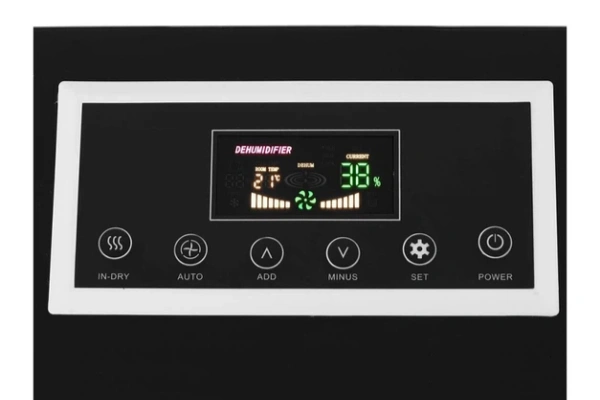
Continuous drainage should be planned before installation. Confirm whether gravity drainage is possible, whether condensate must be pumped, and whether the drain route can avoid food preparation and exposed storage areas. Ceiling-mounted installations may also require secondary condensate protection under local codes.
A dedicated unit should normally control from RH or dew point rather than only room temperature. Useful options can include remote sensors, high-humidity alarms, run/fault indication, operating schedules, and BMS communication. In dry storage, an alarm is particularly valuable because the room may go for long periods without anyone noticing a fault.
Electrical compatibility and destination-market requirements should also be confirmed before production, including voltage, phase, frequency, connection method, and any required approvals. Rinwang holds CE and ISO 9001.
What a Supplier Needs Before Quoting
A useful quotation depends on site data rather than floor area alone. Provide as much of the following as possible:
- room dimensions for each zone to be treated;
- target RH or dew point;
- local summer outdoor design condition;
- dishwasher type, quantity, rack throughput, and operating hours;
- hood type and exhaust volume;
- makeup-air capacity and whether it is dehumidified or only tempered;
- number and temperature of walk-in coolers or freezers;
- door sizes and approximate opening frequency;
- washdown method and schedule;
- available ceiling or plant-space clearance;
- drain locations and whether gravity drainage is possible;
- available electrical supply;
- existing temperature and RH logs.
Foodservice projects are especially sensitive to warewashing throughput, hood exhaust, makeup-air condition, pressure balance, walk-in door traffic, and washdown timing. Those inputs often affect the answer more than room volume alone.
The general method for converting site data into capacity is covered in sizing an industrial dehumidifier.
Compare Capacity at the Same Condition
A dehumidifier’s headline capacity is meaningful only at the temperature and RH at which it was measured. As entering air becomes cooler or drier, a refrigerant dehumidifier normally removes less water.
That means a machine rated at a warm, humid test condition may deliver substantially less in a dry store operating around 20°C and 55% RH. Different suppliers may also publish headline capacities at different rating conditions.
When comparing quotations, ask each supplier for the expected output at your actual design condition, ask what temperature and RH were used for the headline rating, and compare competing units only at the same entering-air condition.
If a quotation shows only a litres-per-day figure without its rating condition, that figure is not enough for a fair comparison.
Frequently Asked Questions
Will a dehumidifier make a commercial kitchen cooler?
Usually not. A standard standalone refrigerant dehumidifier removes moisture but normally returns dry air warmer than the entering air because compressor and condenser heat ultimately return to the room. Cooling remains the job of the air-conditioning or makeup-air system; where near-neutral discharge air is required, suitable reheat control or HVAC integration is needed.
Do I still need a dehumidifier if the kitchen already has hoods and a makeup air unit?
Possibly. Hoods and makeup air mainly address cooking ventilation, while dish rooms, dry stores, cooler surrounds, and other adjacent spaces can still have their own moisture loads. Also check whether the makeup air unit actually dehumidifies outdoor air rather than only heating or cooling it.
Where should a dehumidifier be installed in a restaurant kitchen?
Typical locations include dish rooms, prep rooms, dry storage, cooler ante-rooms, cellars, and other adjacent spaces that remain too humid after ventilation problems are corrected. Ceiling-mounted or ducted equipment is often preferred, while conventional room dehumidifiers should generally be kept out of the grease-laden cooking and hood capture zone.
Why is my walk-in cooler door sweating?
The surrounding air’s dew point is probably above the temperature of the frame or another cold surface. A dehumidifier can help by lowering the dew point around the entrance, but gaskets, door alignment, sweeps, insulation, anti-sweat heaters, and door-opening frequency should also be checked.
Next Step
Fix the air side first, set a control target for each zone, and then specify equipment only for the areas that still miss that target. The final selection should be based on actual entering conditions and moisture load rather than room area or headline litres per day alone.
Rinwang manufactures commercial and industrial dehumidifiers in ceiling-mounted, ducted, low-temperature, and desiccant configurations. Send your zone conditions, target RH or dew point, ventilation information, and electrical supply, and the required capacity and configuration can be evaluated from those conditions.