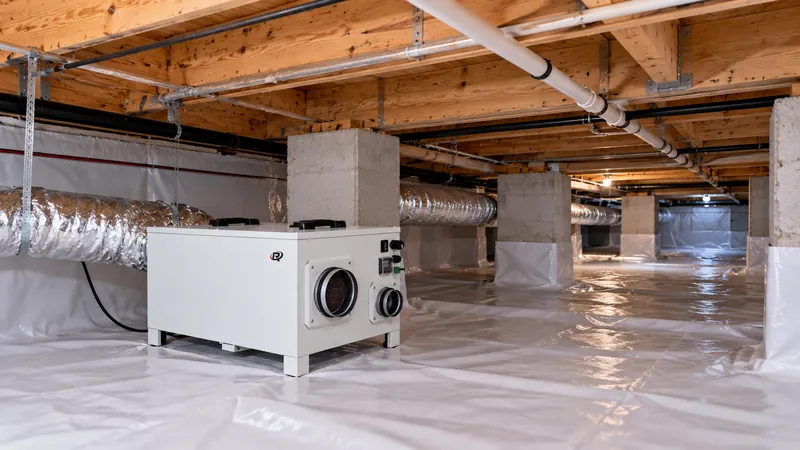
A crawl space may need a dehumidifier when moisture continues to accumulate after leaks, ground moisture and uncontrolled outdoor-air entry have been addressed. If the existing drying strategy cannot maintain acceptable humidity during normal seasonal conditions, dedicated dehumidification becomes a reasonable option.
Repeated relative humidity (RH) readings around or above 60% warrant investigation, but they do not automatically justify installing equipment. An encapsulated crawl space may also remain dry without a separate dehumidifier if another properly designed system provides sufficient moisture control.
This guide explains when a crawl space dehumidifier is necessary, what to measure before deciding, and which moisture problems should be corrected first. It also covers encapsulated crawl spaces, the evidence supporting permanent dehumidification, and the information needed before selecting equipment.
When Is a Crawl Space Dehumidifier Needed?
The strongest case for dedicated dehumidification is a reasonably enclosed crawl space where excessive airborne moisture repeatedly returns despite completed source repairs and an existing drying strategy. Similar symptoms, however, can arise from different causes, so contractors should distinguish continuing moisture loads from problems that can be resolved through drainage repairs, insulation work or temporary drying.
| Crawl space condition | Initial decision | Recommended action |
|---|---|---|
| RH repeatedly rises after water-entry and enclosure repairs | Dehumidification may be justified | Confirm the recurring load and evaluate permanent control |
| Enclosed space remains dry during humid weather | A separate unit may be unnecessary | Continue monitoring |
| Standing water, active leaks or groundwater seepage | Not the first solution | Correct water entry before equipment selection |
| Humid outdoor air enters through uncontrolled openings | Equipment need is not yet established | Review enclosure and ventilation |
| Condensation occurs only on a cold pipe or duct | May be a localized problem | Check insulation and surface temperature |
| Newly encapsulated space contains wet materials | Temporary drying may be needed | Reassess after materials stabilize |
| Multiple sections remain humid after repairs | Dedicated control may be appropriate | Evaluate moisture removal and air distribution |
A musty smell, damp insulation or sweating ductwork can indicate a moisture problem, but none independently proves that permanent equipment is required. For property portfolios, each building should be assessed separately because groundwater exposure, foundation construction and mechanical systems may vary even when floor plans appear similar.
What Should You Measure Before Deciding?
A reliable assessment separates recurring airborne humidity from local condensation and moisture retained in building materials. Temperature and RH trends show whether the problem returns during normal operating conditions, while surface-temperature and material-moisture measurements help determine whether the issue is localized or widespread.
1. Relative Humidity and Temperature Trends
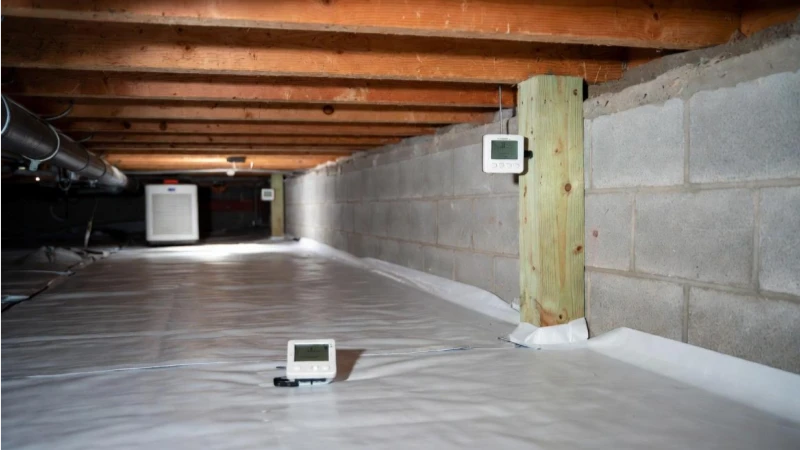
The EPA recommends keeping indoor RH below 60%, ideally between 30% and 50% where possible. This is general indoor guidance, not a crawl-space-specific threshold for installing equipment. A single reading above 60% calls for investigation rather than an immediate purchasing decision.
Record temperature and RH during periods associated with the complaint, including rainfall, humid weather, overnight cooling and reduced air-conditioning operation. A week or two of monitoring can provide an initial picture, but dry-weather records alone cannot establish performance during the humid season. Divided crawl spaces also require measurements in more than one location.
Repeated high RH after completed repairs may indicate a continuing airborne moisture load. If conditions remain stable through representative seasonal operation, the existing drying strategy may be sufficient. A setpoint near 50% RH may provide operating margin in some projects, but the final target should reflect actual surface conditions, materials and building requirements.
2. Dew Point and Cold-Surface Condensation
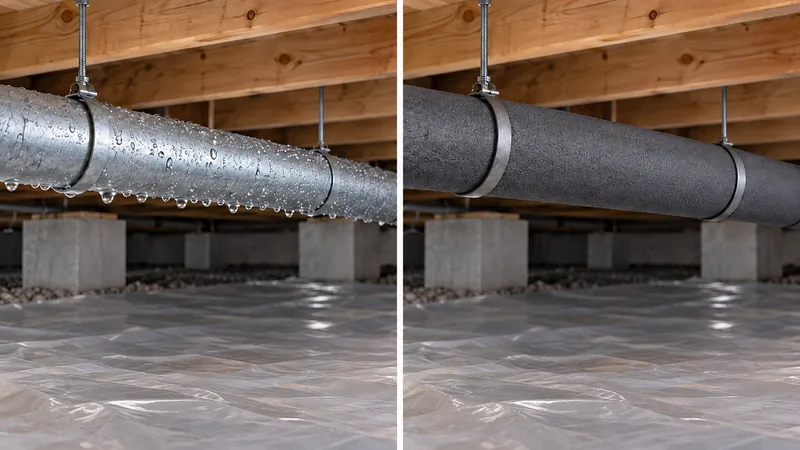
An acceptable average RH does not mean every surface is protected from condensation. Water can form whenever a surface falls below the dew point of the surrounding air, even when a nearby humidity sensor reports a reasonable reading.
For example, if the local air dew point is 14°C and an exposed pipe surface is 11°C, condensation may occur on that pipe. Where the problem is limited to damaged duct insulation, improving insulation or addressing local air leakage may be more appropriate than installing a whole-space dehumidifier. Widespread condensation associated with excessive airborne moisture may require broader humidity control.
3. Moisture in Building Materials
Wood moisture measurements help distinguish continuing airborne humidity from framing that remains wet after flooding, leakage or construction. USDA Forest Products Laboratory guidance describes wood moisture content below approximately 20% as providing a margin of safety against fungal decay, although a higher reading does not independently prove decay or identify the water source.
Measurements should be compared across affected and unaffected locations using a suitable meter and necessary corrections. Localized wet framing may point to water entry near a foundation wall, while widespread moisture may indicate broader exposure. Wet materials can require separate drying or professional assessment, but their moisture content alone does not establish the permanent dehumidifier capacity or even the need for one.
Which Moisture Problems Must Be Fixed First?
Dehumidifiers remove water vapor from air, but they cannot repair drainage failures, prevent groundwater seepage or stop active plumbing leaks. Contractors should first check surface drainage, foundation entry points, HVAC condensate systems, ground vapor barriers and uncontrolled outdoor-air openings. Any water-entry defects must be addressed as part of the moisture-control plan before establishing the permanent equipment load.
Visible growth, persistent odors or damaged framing may also require separate professional assessment or remediation. Lowering RH can help prevent further moisture accumulation, but it does not remove existing contamination or establish structural safety.
Separate Temporary Drying from Permanent Control
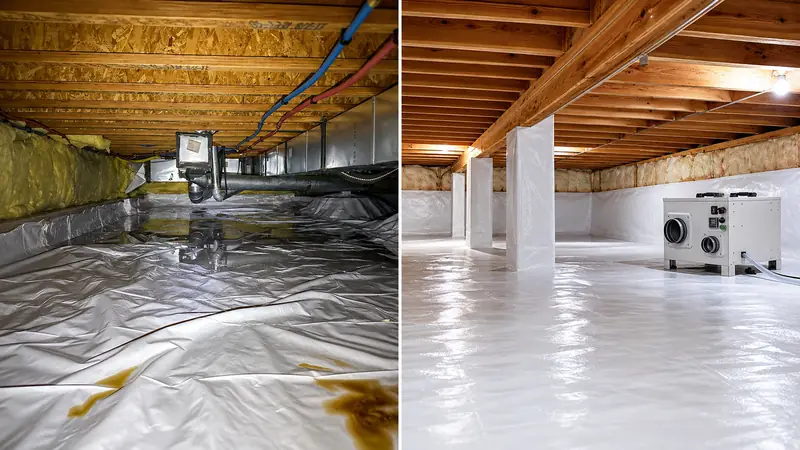
A recently repaired or encapsulated crawl space may contain substantial stored moisture in wood, insulation and other materials. The initial drying demand can be significantly higher than the moisture load remaining after the space stabilizes, so sizing permanent equipment solely from temporary drying conditions may lead to unnecessary capacity.
Monitor material moisture and RH as drying progresses. If the materials dry and the existing system maintains stable conditions through representative weather, additional permanent equipment may not be necessary. If excessive humidity repeatedly returns despite completed repairs, dedicated dehumidification becomes a more reasonable option.
Does an Encapsulated Crawl Space Always Need a Dehumidifier?
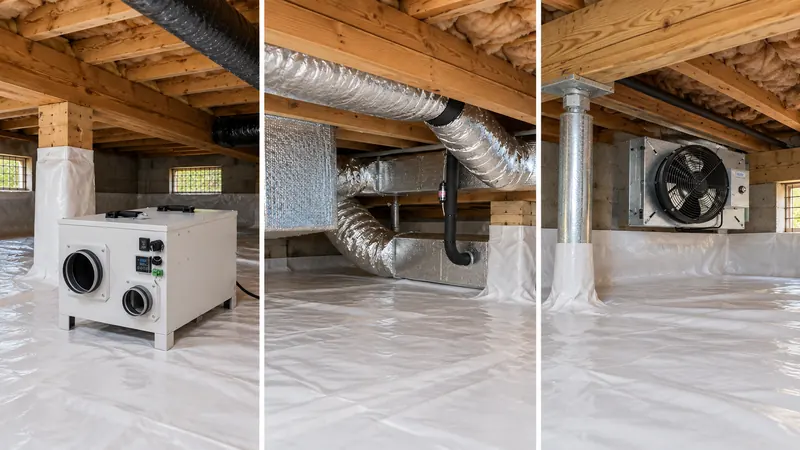
No. Encapsulation reduces moisture entry but does not automatically eliminate every source or provide a complete drying strategy. An enclosed crawl space still requires effective moisture management, which may be provided by dedicated dehumidification, conditioned-air supply or a properly designed mechanical-exhaust arrangement.
Dedicated dehumidification removes moisture according to the crawl space’s own humidity demand, but it requires drainage, electrical supply and maintenance access. Conditioned-air supply relies on the building’s air-conditioning system and must be checked when occupied spaces need little cooling. Mechanical exhaust depends on an appropriate replacement-air pathway and pressure control; in humid conditions, introducing more outdoor air can increase rather than reduce the moisture load.
For a U.S. residential-code example, 2021 IRC Section R408.3 addresses ground vapor retarders and alternative provisions for unvented crawl spaces, including specified mechanical-exhaust, conditioned-air and dehumidification arrangements. Designers and local authorities must confirm the adopted code edition and applicable building classification, particularly for commercial and multifamily projects.
The deciding factor is whether the selected strategy maintains acceptable conditions during representative seasonal operation. Encapsulation alone does not prove that a dehumidifier is necessary, just as the absence of visible condensation does not prove the existing system is adequate.
What Evidence Justifies Permanent Dehumidification?
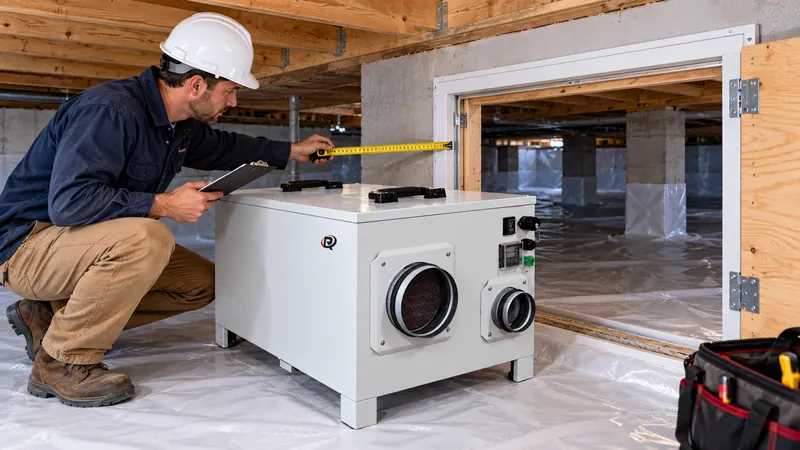
A recommendation to install a permanent dehumidifier should identify the moisture problem that remains and explain why the existing control strategy cannot manage it. For contractors and property managers, a documented assessment provides a more reliable basis for purchasing decisions than a single RH reading, musty odor or assumption that every encapsulated space requires equipment.
The evidence should connect the site’s measured conditions with completed corrective work and the remaining need for humidity control.
| Evidence | What it should establish |
|---|---|
| Temperature and RH records | Excessive humidity recurs during relevant weather or operating conditions |
| Moisture-source assessment | Active water entry and avoidable moisture sources have been addressed |
| Surface and material observations | Local condensation and stored material moisture have been distinguished from recurring airborne humidity |
| Existing drying strategy | Current conditioning or ventilation cannot reliably maintain the required condition |
| Remaining moisture demand | A continuing load remains that permanent equipment must control |
The assessment should also define how successful humidity control will be verified, including the target condition, measurement locations and relevant operating periods. Straightforward projects may need only limited verification, while divided crawl spaces, recurring complaints and multi-building properties benefit from more detailed records.
If the evidence cannot establish a continuing moisture load or explain why existing controls are insufficient, further investigation may be more appropriate than immediate equipment procurement. This helps prevent unnecessary installations and provides a clearer basis for equipment sizing when dehumidification is justified.
What Happens After Dehumidification Is Justified?
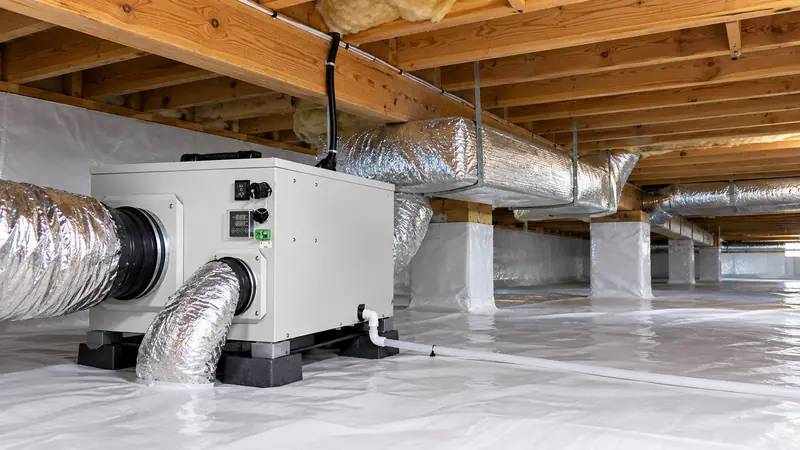
Once permanent moisture removal is justified, equipment selection should reflect the crawl space’s actual operating conditions rather than its floor area or the largest advertised capacity. A dehumidifier’s moisture-removal performance depends on entering-air temperature and RH, and a unit rated under warm, humid conditions may remove substantially less moisture in a cooler crawl space.
Capacity should therefore be evaluated against the remaining moisture load and actual operating conditions. Refrigerant dehumidification may be suitable for moderate-temperature applications, while colder environments or lower dew-point requirements need closer evaluation using model-specific performance data. An advertised low-temperature operating limit or defrost function does not guarantee the same removal capacity across the entire operating range.
Air distribution is equally important because sufficient total moisture-removal capacity does not ensure that dry air reaches every section behind foundation walls or narrow passages. For unattended operation, condensate drainage, electrical supply, maintenance access, controls and restart behavior should be verified during installation and on-site commissioning, rather than assumed from equipment specifications.
Information for an Initial Project Review
Contractors and property managers can begin an equipment review with the project location, building use, crawl space dimensions and layout, enclosure condition, completed moisture repairs, available temperature/RH records, power supply and drainage options. These details help establish which additional measurements and model-specific information are needed before selecting equipment.
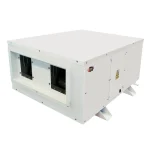
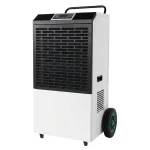
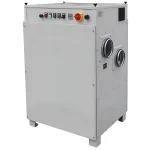
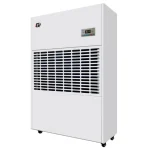
For multiple buildings or bulk equipment requirements, differences in operating conditions, electrical supply, drainage and maintenance access should be reviewed before standardizing one configuration. Rinwang’s industrial crawl space dehumidifier can be considered once these project requirements are defined, with final suitability confirmed against the selected model’s performance data.
Contractors, property managers and bulk equipment buyers can also submit the available site information for an assessment of the crawl space’s dehumidification requirements. This allows the equipment discussion to focus on the moisture load that remains after necessary repairs, rather than relying on floor area or a general capacity estimate.
Conclusion
A crawl space does not automatically need a dedicated dehumidifier because it is damp or encapsulated. The decision should follow moisture-source repairs, representative measurements and an assessment of whether the existing drying strategy can maintain acceptable conditions.
Where a recurring airborne moisture load remains and existing controls are insufficient, permanent dehumidification may be justified. Equipment selection should then follow verified performance requirements and the practical conditions of the project.
Frequently Asked Questions
Can I Use a Regular Household Dehumidifier in a Crawl Space?
A household model may be suitable if its specifications permit the actual temperature, environmental conditions and installation arrangement. For permanent unattended use, reliable drainage, service access, restart behavior and suitable controls must also be considered rather than relying on advertised capacity alone.
Should a Crawl Space Dehumidifier Run All Year?
A permanent dehumidifier should respond to humidity demand within its approved operating conditions rather than follow an assumed year-round operating schedule. Seasonal demand may vary, so continued monitoring is needed to confirm that humidity remains within the required range when the unit operates less frequently.
Can Heating Replace Crawl Space Dehumidification?
Heating alone does not remove water vapor, although increasing air temperature can reduce its relative humidity. Cold surfaces may still collect condensation if their temperature remains below the surrounding air’s dew point, so heating cannot automatically replace moisture removal.
Will a Crawl Space Dehumidifier Remove Radon?
No. A dehumidifier controls water vapor but does not remove radon or replace a properly designed radon mitigation system. Suspected radon problems require separate testing and appropriate mitigation measures regardless of crawl space humidity.