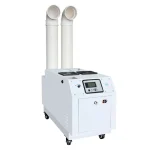
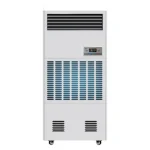
A heavy-duty dehumidifier can help protect stored vehicles, tools, spare parts, and equipment from excess moisture in commercial garages and enclosed storage spaces. However, the right equipment depends on more than floor area or advertised water-removal capacity. A garage with wet vehicles and frequent door openings presents a different challenge from an attic where roof construction, ventilation, and seasonal temperatures determine whether the space is suitable for storage.
For an enclosed commercial garage, dehumidification may be appropriate when recurring airborne moisture remains after water-entry problems have been addressed. Attic storage requires an additional decision: whether the building enclosure and temperature conditions allow the intended goods to be stored safely in the first place. This guide focuses on enclosed vehicle and equipment storage rather than the broader ventilation design of underground parking facilities.
The following sections explain how to recognize the relevant moisture problems, choose a suitable dehumidification approach, and assess the installation requirements that matter for commercial storage projects.
Why Commercial Garages and Attic Storage Become Damp
Moisture problems in storage spaces are not always caused by high average room humidity. Water can enter with vehicles, pass through building defects, or condense on surfaces that are colder than the surrounding air. Identifying the source is important because a dehumidifier can remove airborne moisture but cannot repair leaks, eliminate surface contamination, or replace necessary building ventilation.
Commercial Garages: Wet Vehicles and Changing Conditions
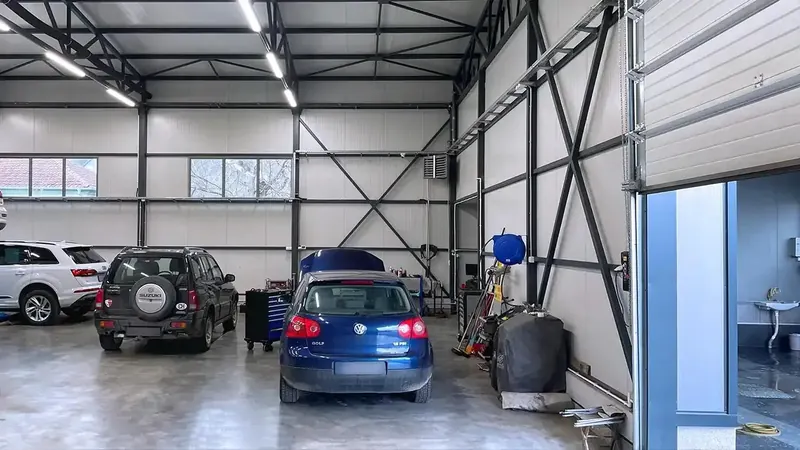
Vehicle-storage garages experience recurring moisture exposure as cars, service vehicles, and equipment enter from outdoors. During rainy or snowy weather, water carried onto floors and vehicle surfaces can evaporate after parking. Large doors also allow outdoor air to enter, although the resulting moisture load depends on the outdoor and indoor humidity conditions rather than door-opening frequency alone.
In unheated garages, cold metal components and concrete floors create another concern. When a surface falls below the surrounding air’s dew point, condensation can form even if the humidity controller shows an apparently acceptable RH. This can affect stored tools, spare parts, and machinery near exterior walls or behind shelving where air circulation is limited.
Corrosion is not necessarily proof that the entire garage needs more dehumidification. Road salt, other surface contaminants, previous water exposure, and localized condensation can also contribute to metal deterioration. Before increasing equipment capacity, check the affected storage locations, remove avoidable water sources, and establish whether the problem is widespread or confined to particular surfaces.
Attic Storage: Roof Design and Temperature Exposure
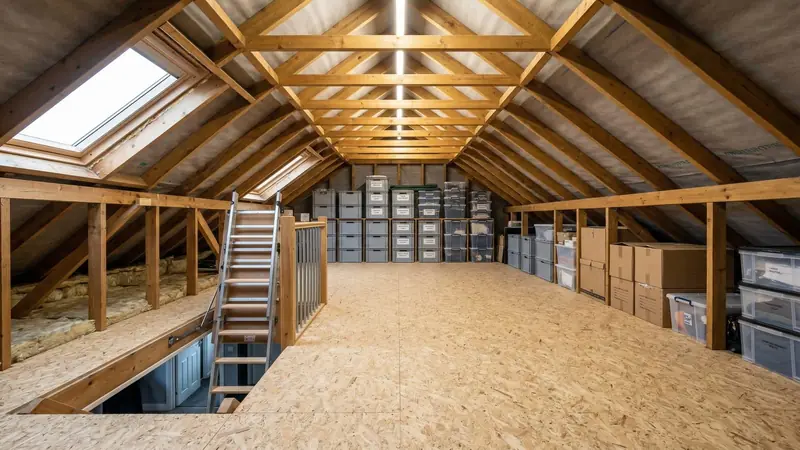
Attic moisture problems must be considered in relation to the building enclosure. A traditionally vented attic exchanges air with the outdoor environment through designed openings, so placing a dehumidifier inside may create a continuous load without correcting the actual source of dampness. Roof leakage, ceiling air leakage, misplaced exhaust outlets, and ventilation defects should be investigated before mechanical dehumidification is considered.
A designed unvented or conditioned attic uses a different approach to insulation, air leakage, and moisture control. Its roof assembly must be evaluated as a complete system rather than treating the attic as an ordinary sealed storage room. The Pacific Northwest National Laboratory explains relevant roof-assembly requirements in its guidance on moisture management in unvented attics. That guidance addresses specific residential code provisions and does not automatically establish requirements for commercial buildings.
Even where the roof assembly is suitable for supplemental humidity control, temperature may still limit storage use. Summer heat can make an attic unsuitable for certain electronics, packaging, or other sensitive goods, while winter conditions can affect equipment operation and drainage. A dehumidifier cannot compensate for an unsuitable storage temperature simply by lowering relative humidity.
When Is Heavy-Duty Dehumidification Appropriate?
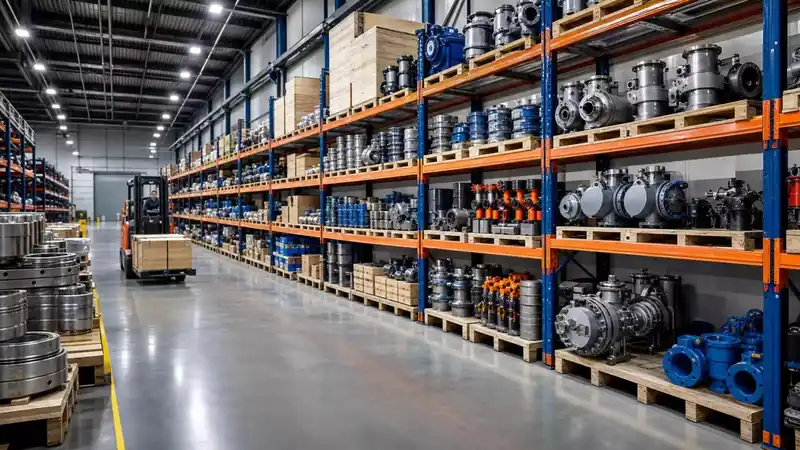
A dedicated dehumidifier is most useful when the storage area has a defined control boundary, the main sources of liquid water have been addressed, and an ongoing moisture load still requires management. The decision should begin with the goods being protected and the conditions they need, rather than assuming every garage or attic requires a particular humidity setting.
For general indoor environments, the US Environmental Protection Agency recommends keeping relative humidity below 60%, ideally between 30% and 50% where possible. The EPA discusses the relationship between moisture and mold growth in its explanation of indoor humidity and moisture problems. Those values are useful general references, but commercial storage targets should account for the materials, their temperature limits, and any manufacturer-defined requirements.
| Storage Environment | Main Concern | Recommended First Action |
|---|---|---|
| Enclosed commercial vehicle garage | Wet vehicles, outdoor air entry, cold metal surfaces | Correct water entry, assess storage conditions, then evaluate recurring moisture removal. |
| Unheated equipment garage | Seasonal cold and condensation | Establish winter conditions and verify low-temperature equipment performance. |
| Traditionally vented attic | Roof leakage, air leakage, intended ventilation | Investigate building moisture control before considering dedicated equipment. |
| Designed unvented attic storage | Roof assembly, seasonal heat, enclosed-space humidity | Confirm storage suitability and building design before assessing supplemental dehumidification. |
| Enclosed equipment-storage room | Corrosion, damp packaging, uneven air distribution | Define stored-material requirements and measure conditions near vulnerable goods. |
Once the space is considered suitable for humidity control, the next question is whether the selected equipment can maintain the required conditions during normal use. A target RH alone does not determine capacity, and a dehumidifier’s permitted operating temperature does not guarantee sufficient moisture removal at that temperature. These distinctions become particularly important in cold garages and storage spaces exposed to seasonal changes.
Choosing the Right Equipment for Garage and Attic Storage
Equipment selection should reflect the actual operating environment, not simply the room’s name. Refrigerant systems are often suitable for enclosed garages working within their effective temperature and humidity range, while desiccant systems deserve consideration when low temperatures or low target dew points make conventional refrigerant equipment unsuitable. Installation format also matters because a correctly sized machine cannot protect goods that receive little treated air.
| Operating Condition | Equipment to Evaluate | Critical Selection Factor |
|---|---|---|
| Moderate-temperature enclosed garage | Industrial or commercial refrigerant dehumidifier | Capacity at target temperature and RH |
| Unheated garage with cold winter conditions | Low-temperature-capable refrigerant equipment or a suitable desiccant system | Verified cold-condition removal and defrost behavior |
| Storage with a low required dew point | Desiccant or specialized dehumidification system | Target dew point, regeneration energy, and airflow |
| Storage room with limited floor area | Ducted, overhead, or other compatible configuration | Air distribution, mounting, drainage, and service access |
| Designed unvented attic storage | Building-compatible supplemental dehumidification arrangement | Roof design, temperature limits, equipment location, and safe drainage |
Matching Refrigerant or Desiccant Technology to the Conditions
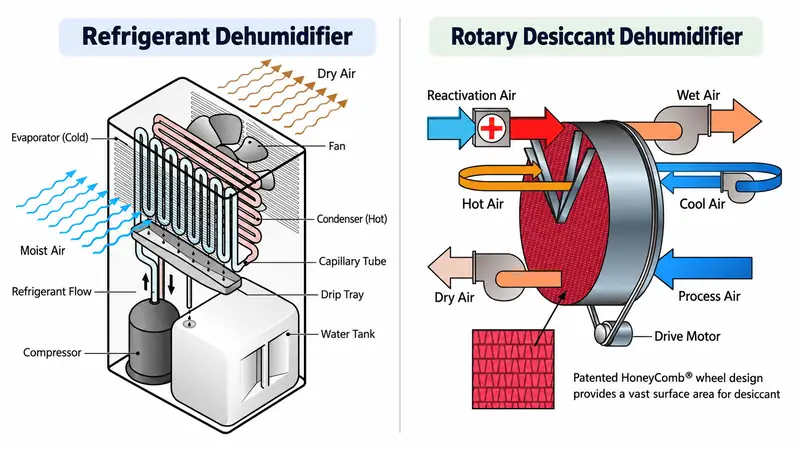
A refrigerant dehumidifier removes water vapor by cooling air sufficiently for moisture to condense. In a garage with moderate temperatures and a suitable moisture load, this may provide a practical approach to continuous humidity control. However, removal capacity generally changes as inlet conditions become colder or drier, and defrost operation can affect performance during winter.
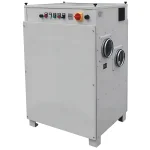
Desiccant equipment may offer an alternative when the required conditions fall outside a suitable refrigerant model’s effective range. Its regeneration energy, moist-air exhaust, and installation requirements must also be considered, so it is not automatically the better choice for every cold garage. The relevant decision is whether either technology can maintain the specified storage conditions at an acceptable total operating cost, as explored in Rinwang’s comparison of refrigerant and desiccant systems.
Choosing an Installation Format
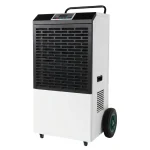
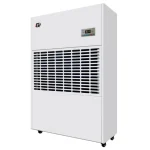
Floor-mounted equipment can be practical in garages with accessible service areas and suitable drainage routes, while portable units may be useful for temporary drying or projects requiring equipment movement. Where storage racks or other equipment occupy much of the floor, a ducted or overhead arrangement may improve the use of available space. The delivered airflow, rather than the machine’s position alone, determines whether the intended storage areas receive sufficient humidity-controlled air.
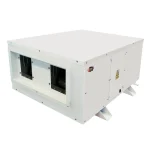
In storage facilities with limited floor space, Rinwang’s ceiling-mounted dehumidifier options may be worth evaluating alongside floor-mounted equipment. The installation still requires appropriate structural support, air distribution, service clearance, and condensate drainage. A ceiling-mounted or attic-installed machine is not necessarily intended to control the attic itself; the served zone and its supply, return, and sensing arrangements must be defined separately.
Example: Protecting Equipment in an Unheated Vehicle-Storage Garage
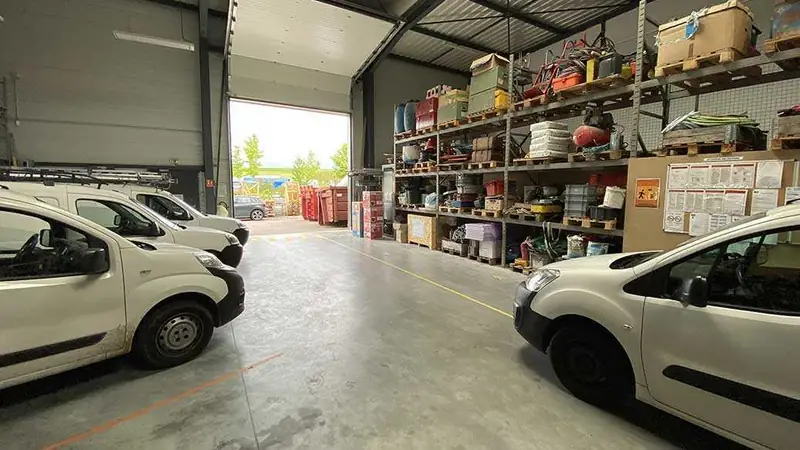
Consider an enclosed commercial garage that stores service vehicles, tools, and replacement parts. During winter, the indoor temperature may fall to approximately 8°C (46°F), and vehicles enter several times a day with rainwater or snowmelt on their surfaces. Metal parts near an exterior wall have started to corrode, even though the humidity controller near the main entrance does not consistently report very high RH.
The first task is to examine the affected storage area rather than immediately purchase a larger dehumidifier. Measurements near the metal parts can identify cold surfaces and local humidity conditions that differ from those at the controller, while an inspection can establish whether salts, standing water, or restricted airflow contribute to the corrosion. Recording wet-vehicle entry and door-opening patterns provides additional context for the changing moisture load.
If recurring airborne moisture still requires mechanical control, the equipment supplier must verify performance around the expected winter operating conditions. The selected arrangement should also distribute treated air around storage racks without being obstructed by parked vehicles, and its condensate route must remain protected and functional. The solution may combine moisture-source reduction, improved circulation, and properly selected equipment rather than relying on capacity alone.
Example: Evaluating an Enclosed Attic for Equipment Storage
Consider a commercial building with a previously designed unvented attic proposed for storing packaged equipment and spare materials. Periodic humidity readings suggest that supplemental moisture control might be useful, but the space also experiences elevated summer temperatures. The building operator is considering an overhead dehumidifier because available floor space is limited.
Before equipment is selected, the project team should establish whether the roof assembly and existing HVAC strategy can support the intended storage use. The goods’ allowable storage temperatures must also be checked, since removing moisture does not eliminate heat-related damage. If the attic cannot provide a suitable environment for the stored materials, relocating the goods or modifying the building system may be more appropriate than adding a dehumidifier.
If supplemental dehumidification is justified, the design must identify the actual zone being served and confirm that the equipment can operate within the expected inlet-air and cabinet-ambient temperature limits. Installation support, access for maintenance, and condensate drainage become particularly important above finished ceilings. Depending on the approved arrangement, secondary containment, high-water shutdown, or monitored alarms may be needed to limit water-damage risks.
How to Check Capacity at Real Operating Conditions
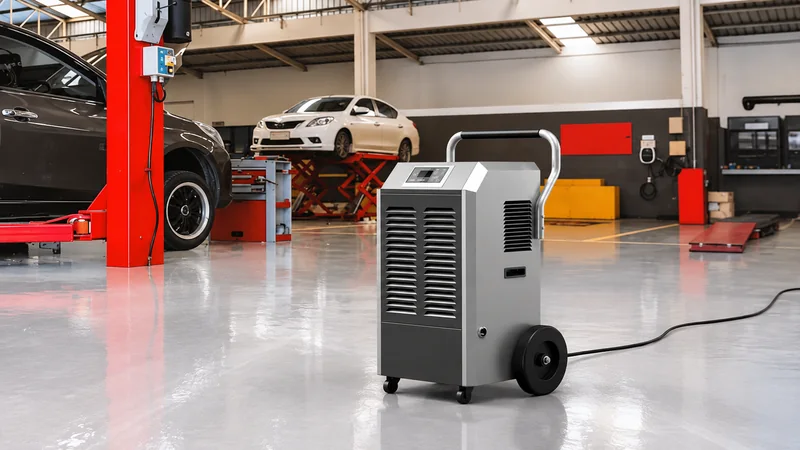
Commercial buyers should compare removal capacity at conditions that represent the facility, not simply the largest number printed on a product label. Garage dimensions provide useful information, but the actual duty also depends on moisture introduced by vehicles, outdoor air entering through doors, required ventilation, and the time allowed for humidity to recover after normal operating events.
The effect of temperature can be seen in the Santa Fe Advance Dry110. Its published water-removal ratings under two inlet conditions show 110 US pints/day at 80°F (26.7°C) and 60% RH, compared with 70 US pints/day at 65°F (18.3°C) and the same RH. The difference illustrates why a warmer rating point should not be used to approve equipment for cooler storage conditions.
| Published Inlet Condition | Water Removal |
|---|---|
| 80°F (26.7°C), 60% RH | 110 US pints/day |
| 65°F (18.3°C), 60% RH | 70 US pints/day |
These figures apply only to that model and do not establish Rinwang performance or a general correction factor. They also cannot be extrapolated to an 8°C garage without further validated data. When preparing a project specification, buyers should request removal capacity at representative conditions and use the expected moisture load to determine the required equipment duty. Rinwang’s industrial dehumidifier sizing methodology provides the broader calculation framework without relying on floor area alone.
Installation and Long-Term Storage Protection
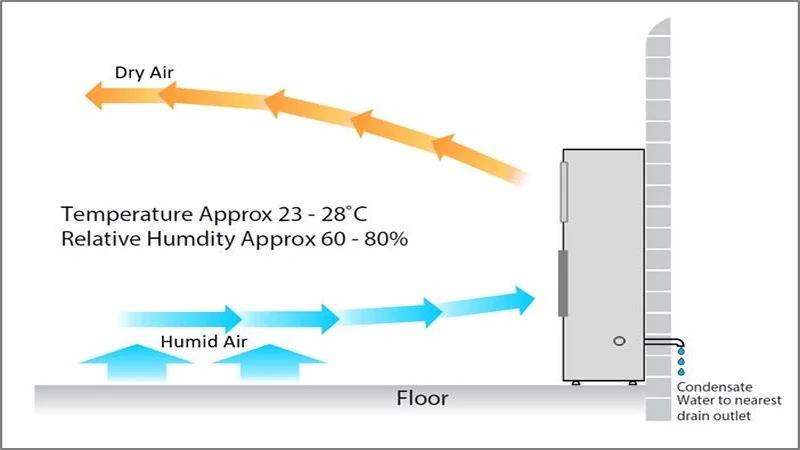
A dehumidifier must be installed so its treated air reaches the goods being protected, its drainage remains reliable, and maintenance can be performed safely. In a garage, parked vehicles and shelves may obstruct airflow, while exposed drain lines and controls may be vulnerable to impact. In attic installations, structure, access, seasonal temperature, and leakage consequences can impose additional constraints that need to be resolved before equipment approval.
For ducted equipment, the proposed ductwork and fittings should be evaluated against the unit’s available external static pressure. For refrigerant systems, condensate discharge must be compatible with the installation, including gravity fall or pump performance where applicable. Cold areas may require protection against drain freezing, while overhead locations may need a defined response to blockage, pump failure, or high water levels.
Long-term protection also depends on monitoring the actual storage conditions. Sensors should represent vulnerable areas rather than only the air beside the machine, and temperature should be recorded alongside RH where condensation is a concern. If a particular storage pocket remains damp while the main controller indicates satisfactory conditions, check airflow distribution and measurement locations before concluding that more dehumidification capacity is required.
Operating costs should be compared only after the proposed equipment can meet the same humidity requirement under representative conditions. Energy consumption, auxiliary fans, pumps, regeneration heat where applicable, and maintenance access can all affect the overall cost. A useful handover should confirm operating settings, drainage protection, representative humidity measurements, and who is responsible for inspections or alarms during unattended operation.
Frequently Asked Questions
How Can Metal Tools Be Protected in an Unheated Garage?
Remove standing water and corrosive residues, then check for condensation on cold metal surfaces. If moisture remains a problem, maintain suitable humidity with adequate airflow and a dehumidifier rated for the garage’s operating conditions.
What Performance Data Should I Request for a Cold Garage?
Ask for water-removal capacity at your expected winter temperature and target RH, including defrost performance where relevant. Also verify the operating temperature range, airflow, power supply, and drainage requirements.
When Is Dehumidification Appropriate for an Unvented Attic?
Supplemental dehumidification may help when the roof assembly is suitable and existing moisture controls are insufficient. Confirm storage temperature limits, equipment access, and drainage before installation.
Can a Room Dehumidifier Protect Items Inside Sealed Containers?
Not necessarily. A room dehumidifier controls surrounding humidity but may not remove trapped moisture inside sealed containers. Sensitive goods may also require moisture-resistant packaging or controlled storage cabinets.
Rinwang manufactures industrial and commercial dehumidification equipment for project-based humidity-control applications. For a technical review, please provide the facility location, space dimensions, seasonal temperature range, available humidity readings, target storage conditions, and details of the goods being protected. Information about door activity, existing ventilation, electrical supply, drainage, and preferred equipment placement will also help establish an appropriate configuration.
With these project details, Rinwang can evaluate suitable equipment technologies, capacity requirements, and installation options for your storage environment. The objective is not simply to specify a larger machine, but to establish a reliable humidity-control solution that protects stored materials under normal operating conditions.