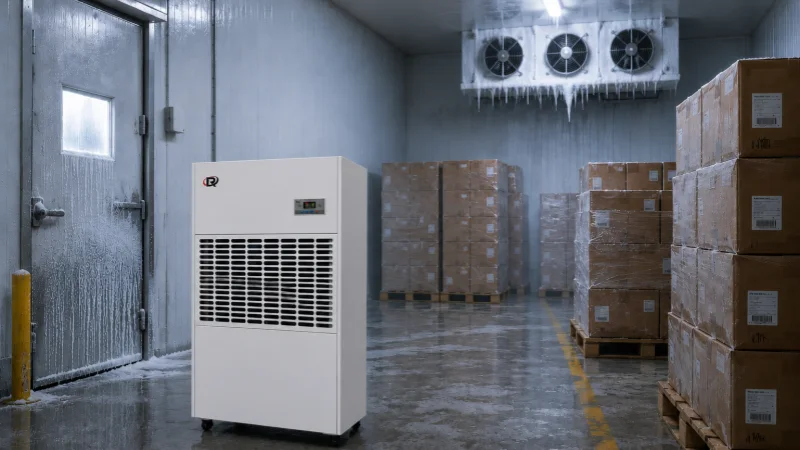
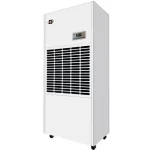
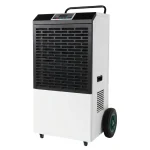
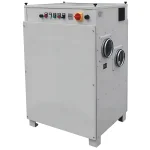
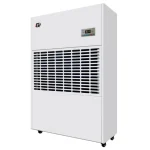
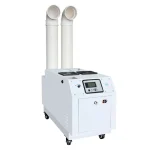
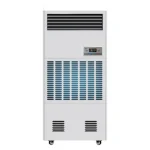
Stable relative humidity (RH) helps a pharmaceutical storage room maintain the conditions required for the products it holds. For moisture-sensitive medicines, those conditions work alongside protective packaging to support product stability during storage. Keeping the room under control also gives warehouse and quality teams a clearer basis for assessing what happened if conditions leave the approved limits.
The challenge is that a warehouse keeps changing throughout the day. Deliveries arrive, doors open, cleaning takes place and temperatures shift. A satisfactory reading at one moment does not show whether the products remained within their storage requirements through those changes. This guide explains why RH stability matters in room-temperature pharmaceutical storage, what it means in practice and how to connect monitoring results with useful corrective action.
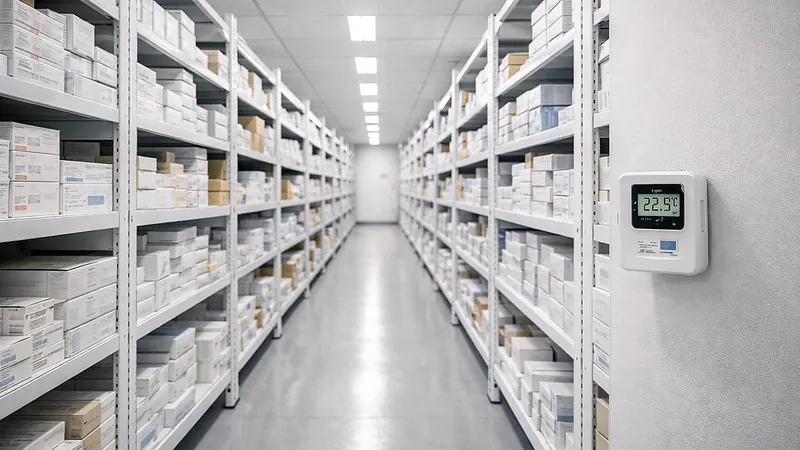
How moisture can affect stored pharmaceutical products
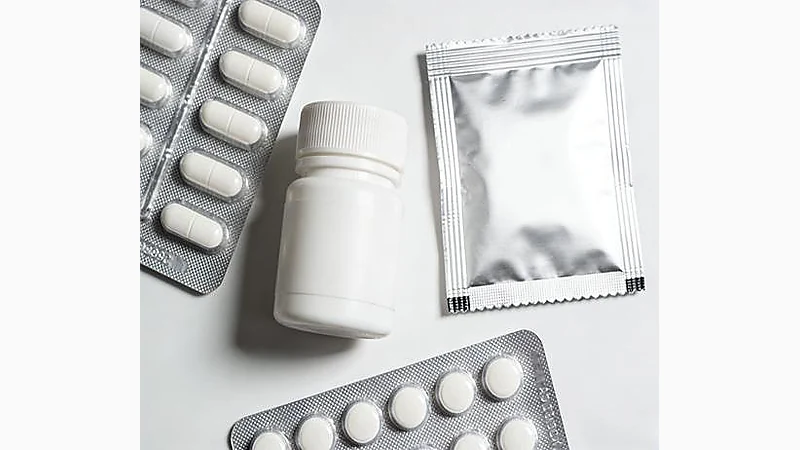
Moisture can affect the chemical stability or physical properties of susceptible pharmaceutical products. The response depends on the formulation, its physical form and the protection around it. A room humidity reading therefore indicates an environmental condition; it does not, by itself, tell the warehouse team whether a medicine has deteriorated.
Packaging is an important part of that distinction. An intact moisture-barrier package limits exposure differently from an open or damaged pack, and the RH outside a sealed container cannot be assumed to equal the RH inside it. ICH Q1A(R2) is guidance for stability studies, including evaluation in the intended container-closure system. It does not establish that a particular warehouse RH excursion has damaged a product.
Protective packaging still needs to be used within the product’s approved storage instructions. If room conditions move outside those requirements, the quality team needs to know which stock was affected, for how long and in what packaging condition. Stable RH helps maintain the required environment and reduces uncertainty about that exposure. That makes the product’s storage requirement the starting point for defining stable RH.
What stable RH means in a pharmaceutical storage room
Stable RH means maintaining the applicable humidity requirement throughout the room’s normal operating cycle. It does not require every sensor to show one unchanging number. There is no single RH limit that applies to all pharmaceutical storage rooms. The acceptance criteria should come from the approved storage requirements for the actual products and packaging, confirmed by the site’s quality team.
The operating band and alarms then help the facility maintain those criteria. The operating band guides day-to-day control; alarms prompt a response when conditions drift. Both need to account for measurement uncertainty and the time the system takes to respond. Sensor accuracy is not the same as the room’s allowable variation, and a tolerance used in a stability test is not automatically a warehouse allowance.
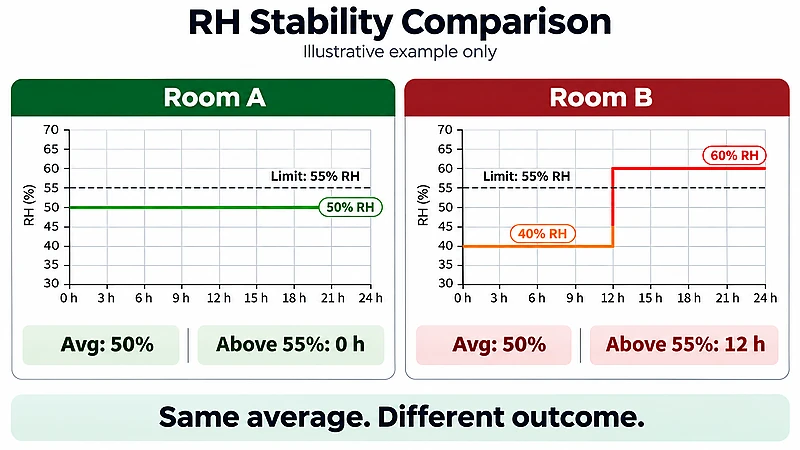
Once those limits are defined, stability can be judged from the record over time. A daily average alone can hide periods outside a limit. For example, imagine Room A stays at 50% RH for 24 hours, while Room B stays at 40% for 12 hours and 60% for 12 hours. Both average 50%. If a hypothetical site specification requires RH to remain below 55%, Room B is outside that requirement for half the day. These are illustrative numbers, not recommended pharmaceutical storage targets or a prediction of drug damage.
The useful questions are therefore how far RH moved, how long it remained outside the limit and where the affected stock was located. Answering them requires a record that covers normal warehouse activity. Understanding what changes RH during that activity helps the team interpret the record correctly.
Why RH changes during normal warehouse operations
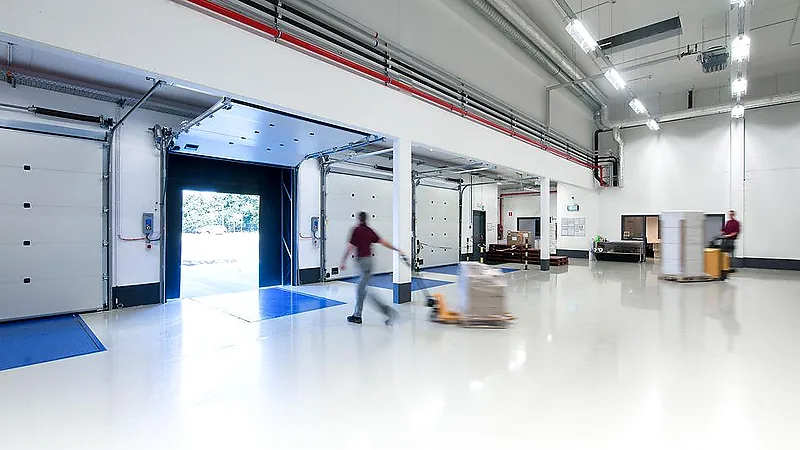
RH can change because water vapor enters or leaves the air, because the air temperature changes, or because both happen together. These different causes matter: an increase in RH does not automatically mean that the dehumidifier has lost moisture-removal capacity.
Receiving and dispatch can introduce humid outdoor air through open doors. Required ventilation also brings an air load that the system must handle. Depending on their condition, incoming materials and wet surfaces after cleaning may release moisture. These events can create a changing load even when the equipment’s settings remain the same.
Temperature adds another influence. Air cooled without adding or removing water vapor has a higher RH. As a calculated illustration, air at 22°C and 50% RH would reach approximately 64% RH if cooled to 18°C at essentially constant pressure. Heating it back up would lower RH without removing water vapor. An RH-based storage limit could still be exceeded during cooling, so the appropriate response may involve temperature control as well as dehumidification.
To distinguish these situations, read temperature and RH together at the same place and time. Dew point—the temperature at which air becomes saturated when cooled—can help: if RH rises while temperature falls and dew point stays similar, cooling may explain the rise. If dew point also rises, the air contains more water vapor at essentially constant pressure. The distinction helps the team decide whether to investigate temperature control, moisture entry or both.
Conditions can also differ between stocked locations because temperature and air movement are uneven. The room therefore needs to be checked where products are held and during the operating events that could challenge its storage requirements.
How to verify that storage conditions remain under control
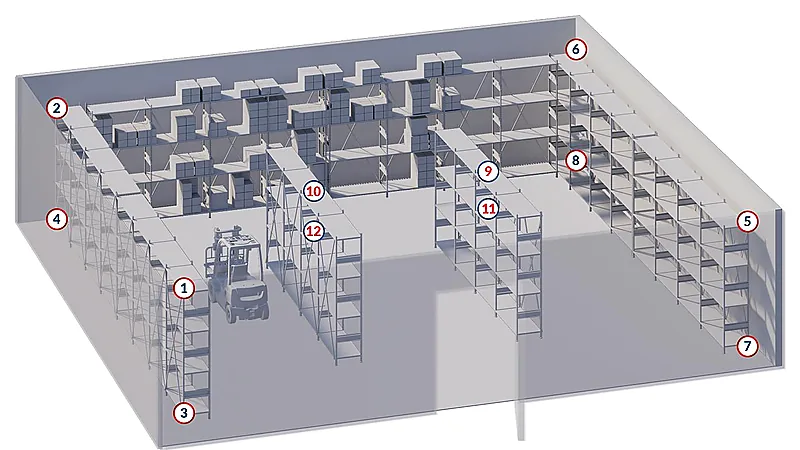
Verification should show what the stored products experience during normal use. A satisfactory trace from an empty room with closed doors does not establish how the room performs during receiving, cleaning, overnight operation or demanding weather. Monitoring locations and the review period need to reflect those conditions.
WHO TRS 1025 Annex 7, Sections 12.36–12.37 recommends temperature mapping and, where appropriate, RH mapping, along with regular monitoring, recorded data, record review and suitable calibrated instruments. For a humidity-sensitive storage room, the quality team should determine the need and scope of RH mapping from the products and their specified storage conditions. Mapping characterizes conditions across the storage space and helps identify representative monitoring locations; routine monitoring then tracks whether those conditions remain within the approved limits over time.
The equipment’s control sensor and the room’s monitoring records serve different purposes. A control sensor tells the dehumidifier when to act; monitoring provides evidence of conditions at the stored stock. Independent monitoring is a useful engineering safeguard when a satisfactory controller reading might otherwise conceal an out-of-limit storage location. The quality team should define suitable calibrated instruments, logging intervals and review procedures for the room’s risks and applicable requirements.
Review the relevant high and low readings, time outside approved limits, recovery after normal door activity, alarm delivery and any gaps in the data. Align timestamps with receiving, cleaning, HVAC and equipment records so the events can be compared. Recovery time shows how the room responds; it does not authorize an excursion. If the record reveals repeated departures from the requirement, it should also provide the starting point for finding their cause.
What to do when RH repeatedly leaves the required range
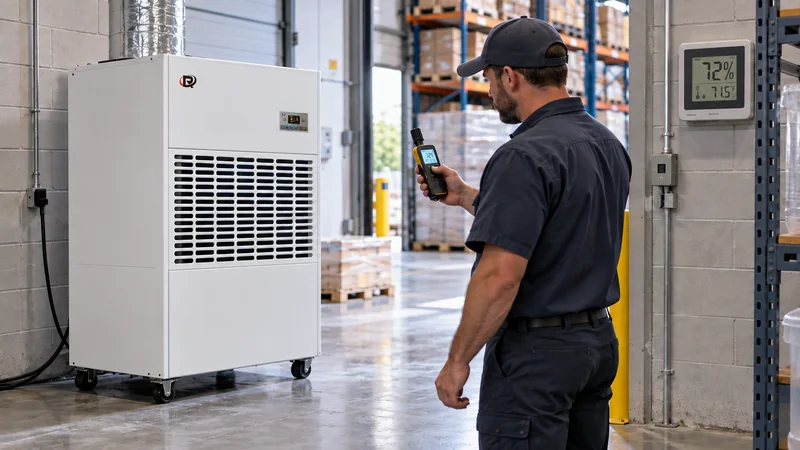
First confirm that the readings are reliable and identify the affected storage locations and times. Then compare the pattern with the operating events described above. This helps the facilities team choose a correction while the quality team handles any affected stock under the site’s deviation procedure.
| Pattern in the room record | What to investigate first | What the finding changes |
|---|---|---|
| RH rises as temperature falls; dew point stays similar | HVAC temperature schedule and local temperature differences | Coordinate temperature and humidity control before increasing extraction capacity |
| RH and dew point rise during receiving or cleaning | Door infiltration, ventilation, and moisture carried in with deliveries or released by wet surfaces | Identify and reduce avoidable moisture sources; include the remaining load in the equipment review |
| One stocked location remains humid while the control display is satisfactory | Sensor agreement and air movement through that storage location | Correct measurement or distribution before assuming the whole room needs more capacity |
| RH repeatedly overshoots after a unit switches off | Control settings, sensor response, air mixing and the equipment’s operating sequence | Review low-load control and restart behavior rather than judging only maximum output |
These patterns guide an investigation; they do not establish the cause. Match temperature and dew-point trends with receiving, cleaning, door and equipment records before deciding what to correct. Reduce avoidable moisture entry or correct local distribution problems where the evidence supports doing so, while retaining required ventilation.
If the pattern points to equipment operation, review how the installed system responds. With industrial dehumidifiers, recurring overshoot near the target calls for a check of the operating sequence and response when the moisture load is low. In a room already using an industrial desiccant dehumidifier, the review may include process airflow and regeneration conditions alongside the room records. Control changes should follow the site’s change procedure and the supplier’s operating limits.
After a correction, compare records at the affected stock locations under comparable door activity, temperature and weather conditions. A smoother controller trace is insufficient if the storage location still exceeds its limit. If the requirement remains unmet, the unresolved pattern gives an equipment review a specific problem to address.
Frequently asked questions
Is a pharmaceutical storage room the same as a stability chamber?
A pharmaceutical storage room holds inventory under its required storage conditions, while a stability chamber exposes study samples to defined test conditions. A stability-test temperature and RH combination should not be copied into a warehouse specification without a product-specific basis.
Does restoring room RH automatically clear an affected batch?
Restoring room RH does not automatically clear an affected pharmaceutical batch. The quality team must assess the exposure, packaging and relevant product information under the site’s deviation procedure before deciding its disposition.
Can room monitoring continue if the network connection fails?
Room monitoring can continue during a network failure only if the installed system has suitable local recording and power arrangements. Check separately whether data are buffered, alarms still reach responsible staff and records are recovered with their original timestamps; these functions must be verified for the actual system.
Must every pharmaceutical room have the same RH alarm delay?
Pharmaceutical storage rooms do not have a universal RH alarm delay. The delay and escalation should follow the relevant product limits, measurement response and approved site procedure, rather than being extended simply to silence recurring alarms.
Use the RH record to define the next step
Stable RH starts with the product’s storage requirement and is demonstrated by conditions where the stock is held. When recurring variation remains unresolved, use the approved limits, paired temperature/RH records and the timing of events to inform pharmaceutical dehumidifier selection. Share that evidence with Rinwang for a warehouse dehumidification review, with success judged against the room’s agreed operating conditions.