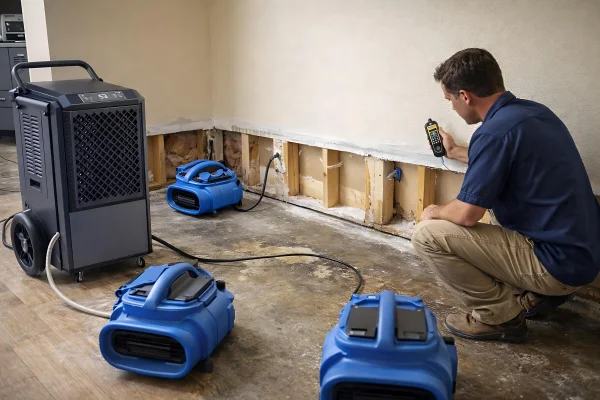
Water damage does not stop at the floor surface. Once moisture enters walls, insulation, subfloors, hardwood, or concrete, cleanup turns into structural drying. EPA guidance notes that many wet materials should be dried within 24 to 48 hours to help reduce mold risk. That is why restoration teams usually need faster and more controlled drying methods than ordinary room dehumidification can provide.
For contractors and procurement teams, the real question is not simply how much water a unit can collect. The better question is whether the equipment can support steady drying across wet materials, long operating periods, changing site conditions, and practical jobsite demands. In water damage work, equipment choice affects drying speed, project control, and how smoothly the next repair stage can begin.
Why Industrial Dehumidifiers Matter in Water Damage Restoration
Delayed Drying Increases Risk and Cost
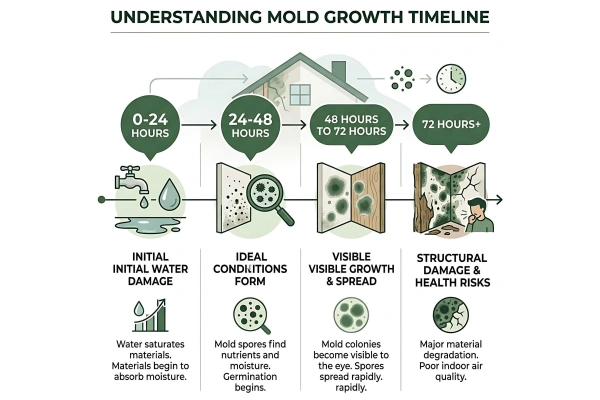
When drying is delayed, the problem usually becomes harder and more expensive to manage. Mold risk rises, wet materials can keep deforming or breaking down, and the overall project often takes longer to complete. On commercial jobs, slower drying can also mean more downtime, delayed repair decisions, and a higher chance of disputes over scope, progress, or responsibility.
That is why restoration teams treat drying as an active project phase instead of waiting for materials to dry on their own.
Standard Units Are Usually Not Built for Restoration Conditions
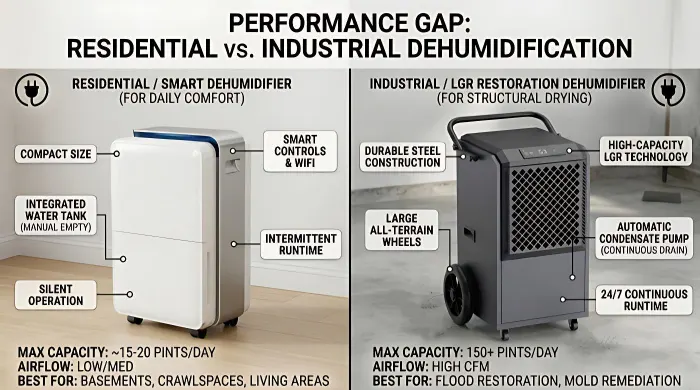
A standard dehumidifier and an industrial dehumidifier are designed for different workloads. Structural drying usually involves heavier moisture loads, longer runtime expectations, less forgiving site conditions, and more demanding drainage needs than ordinary indoor humidity control.
For restoration work, buyers usually need equipment that can run longer, handle wetter environments, and support more consistent drying across repeated jobs.
How Industrial Dehumidification Supports Structural Drying
Airflow, Temperature, and Humidity Reduction Work Together
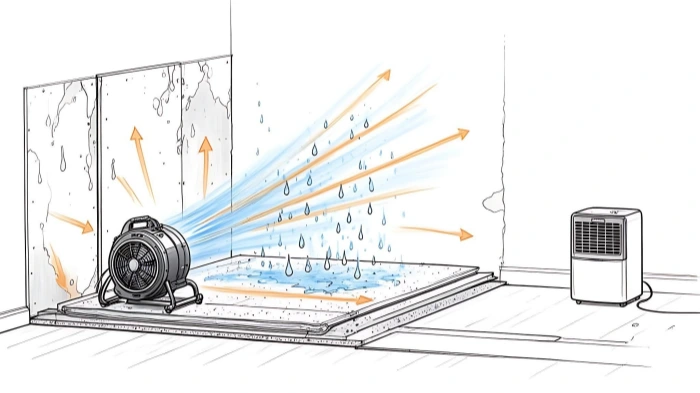
Structural drying works as a process, not as a single machine action. Moisture leaves wet materials, enters the air, and then has to be removed from the air so the cycle can continue. That is why dehumidifiers and air movers are commonly used together. Air movers help speed up evaporation at the material surface, while dehumidifiers help keep the surrounding air dry enough for drying to continue.
Why Drying Conditions Matter More Than a Single Water-Removal Number
On a restoration job, a dehumidifier is not only removing moisture from the air. It is also helping maintain the dry-air conditions needed for wet materials to keep releasing moisture. If that air condition is not maintained, drying can slow down even when equipment is still running.
For that reason, performance in restoration work should be judged by more than a single water-removal figure. Buyers also need to think about how well a unit can support consistent drying conditions across longer run times and changing site environments. That is also why professional restoration teams often rely on more structured references such as the IICRC approved calculation sheets.
Material Type Changes Drying Difficulty
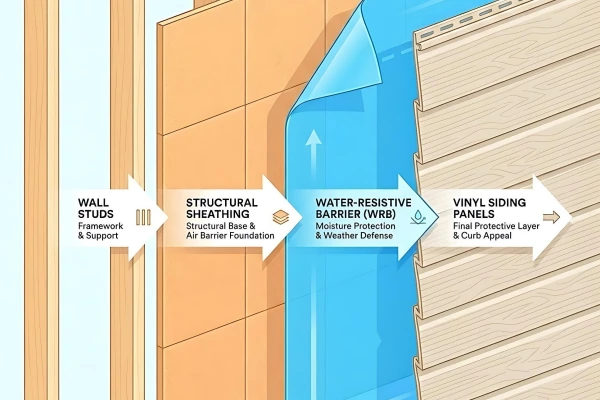
Different materials hold and release moisture differently. Drywall, hardwood, insulation, concrete, and layered flooring systems do not respond the same way once they become wet. Some dry faster. Some hold moisture deeper in the assembly. Some need drier ambient air before progress improves. That is why two jobs with similar floor area can still need different drying strategies.
Which Dehumidifier Type Works Best for Water Damage Restoration?
Conventional Refrigerant Units
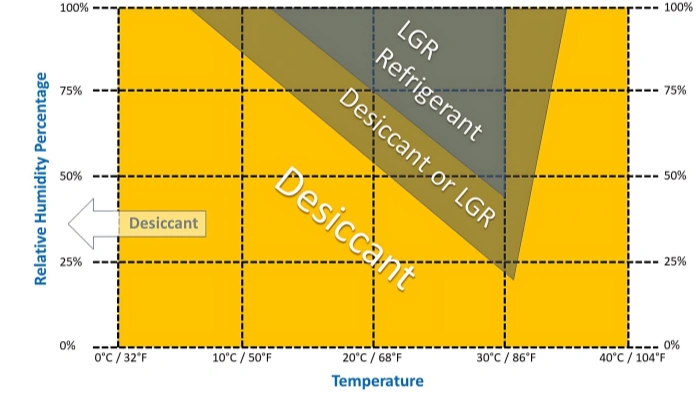
Conventional refrigerant dehumidifiers can still be useful on warmer jobs with lighter moisture loads or as support equipment in less demanding drying zones. But they are often less effective when the project needs deeper drying, steadier low-grain performance, or more reliable results across changing site conditions.
Why LGR Is Common in Restoration
LGR dehumidifiers are widely used in standard restoration work because they are better suited to low-grain drying in practical field conditions. For many contractors, they offer a strong balance between drying depth, operating stability, and deployment practicality. When temperature, target humidity, and layout constraints all shape the decision, it also helps to review the broader logic behind how to choose an industrial dehumidifier.
When Desiccant Becomes the Better Fit
Desiccant dehumidifiers are often more suitable when the job involves colder air, lower humidity targets, or materials that are slower to release moisture. In these conditions, maintaining deeper drying performance can matter more than using a standard refrigerant-based setup.
In practice, many standard restoration jobs lean toward LGR, while conventional units are more likely to support lighter-duty drying and desiccant systems are more often chosen for colder or more specialized conditions.
Quick Comparison of Restoration Dehumidifier Types
| Type | Better For | Limitation |
|---|---|---|
| Conventional Refrigerant | Warmer, lighter-duty drying | Less effective for deeper restoration drying |
| LGR | Most standard water damage jobs | Not always ideal for colder specialty drying |
| Desiccant | Colder or more difficult drying conditions | Higher setup and operating demands |
How to Size Industrial Dehumidification for a Water Damage Job
Sizing Starts with the Drying Conditions, Not Just the Floor Area
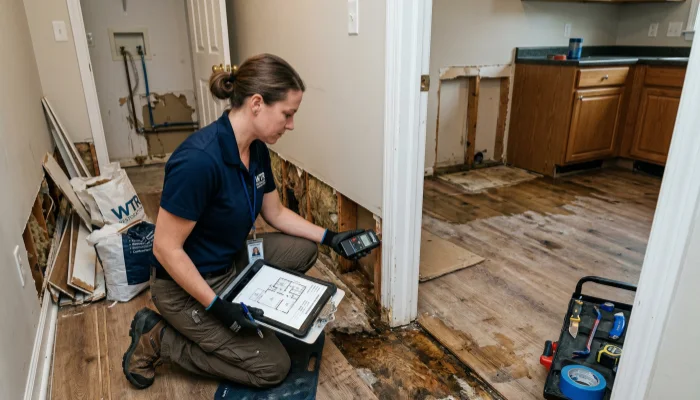
Restoration jobs should not be sized by floor area alone. Affected volume, material type, water damage class, layout complexity, temperature, humidity, and concealed wet areas all affect drying demand. In practice, the same square footage can require very different equipment setups once these conditions change.
A Practical Way to Assess a Restoration Job
A simple way to size a restoration project is to work through the site in this order:
- Define how far the moisture has spread.
- Identify the main materials involved.
- Review temperature and humidity conditions.
- Match the dehumidifier type to the drying target.
- Decide equipment count and placement based on the active work zone.
That same logic becomes even more useful when the job extends beyond one affected room or into a more complex layout. In those cases, broader sizing guidance on what size industrial dehumidifier you need can help teams compare their restoration setup against more complex project conditions.
Sizing Should Support a Drying System, Not a Stand-Alone Unit
Restoration drying usually combines extraction tools, air movers, dehumidifiers, and moisture meters. In some situations, air scrubbers may also be part of the work zone. That means sizing is not only about choosing one machine. It is also about building a setup that can support steady drying across the affected area.
| System Element | Main Role in Restoration Drying |
|---|---|
| Extraction tools | Remove bulk water first |
| Air movers | Accelerate evaporation |
| Industrial dehumidifier | Remove moisture from the air |
| Moisture meters / data loggers | Confirm drying progress |
| Air scrubbers | Support contaminated or more sensitive work areas |
How to Deploy Industrial Dehumidifiers on Water Damage Jobs
Define the Drying Zone Before Placement Begins
Drying usually becomes less efficient when equipment is placed before the affected area is clearly defined. On water damage jobs, the first step is to identify how far moisture has spread, which materials are involved, and whether the wet area should be treated as one drying zone or divided into smaller sections.
A clearly defined drying zone makes it easier to place equipment where it can work on the actual problem instead of conditioning unnecessary surrounding air.
Basic operating choices such as airflow direction, drainage handling, and continuous running still affect results after the drying zone is defined, which is why how to use a dehumidifier remains relevant even on more demanding restoration jobs.
Place Equipment Around the Wettest Materials, Not Just Open Space
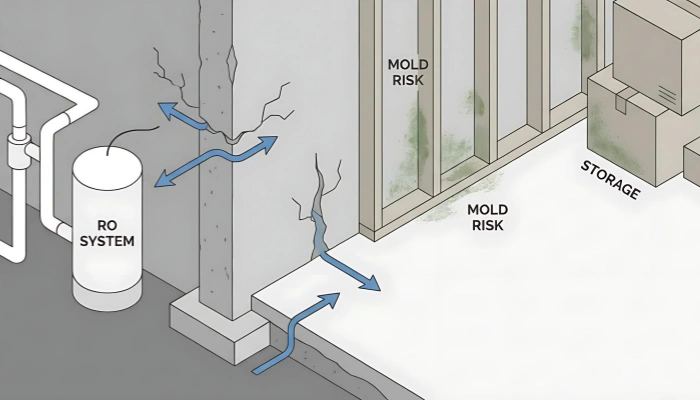
Dehumidifier placement should support the wettest parts of the job, not just the easiest areas to access. If airflow and drying effort are concentrated in the wrong part of the room, progress can slow down even when enough equipment is technically on site.
In practice, placement should consider:
- where moisture is most concentrated
- how air movers are directing airflow
- how condensate will be managed
- whether technicians can still access the area for readings and adjustments
Check Progress with Readings, Not Appearance
A surface can look dry before the structure is actually dry. That is why restoration teams rely on moisture readings, repeat checks, and progress tracking instead of visual judgment alone. This is also where the IICRC S500 standard becomes relevant, because professional water-damage restoration is built around structured drying decisions rather than guesswork.
Common Deployment Mistakes That Slow Drying Down
A few setup mistakes appear again and again on restoration jobs:
- placing equipment before the wet area is fully assessed
- using the wrong machine type for the site conditions
- weakening airflow coordination across wet materials
- removing equipment too early
- ignoring colder areas or hidden pockets of moisture
What Buyers Should Check Before Choosing a Restoration Dehumidifier
Focus on Performance in Real Drying Conditions
For restoration work, the most useful checkpoints usually go beyond a single capacity figure. Buyers need to know whether the unit can stay effective across longer drying periods, wet materials, changing site conditions, and practical jobsite constraints.
That usually makes operating range, drying depth, runtime stability, and drainage performance more useful than a top-line number alone.
Choose Equipment That Is Easier to Move and Set Up
Water damage work often involves fast response, repeated repositioning, and setup changes as drying zones are adjusted. That is why buyers usually benefit from equipment that is easier to move, easier to place, and easier to manage across multiple jobs.
In practice, this often includes:
- a footprint that fits tighter work areas
- handling that makes transport easier
- controls that are easy to read and adjust on site
- a design that supports practical setup under time pressure
Drainage Handling Matters on Multi-Day Jobs
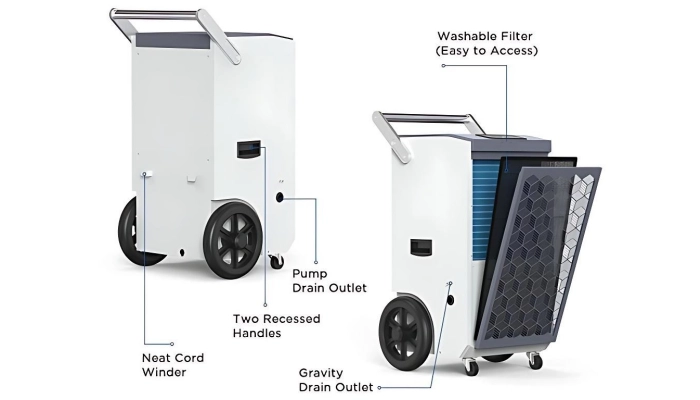
On longer restoration jobs, drainage handling can become a practical problem if the setup depends too heavily on manual emptying. In those conditions, some buyers prefer an industrial dehumidifier with pump because it supports longer uninterrupted operation and reduces the need for repeated water handling.
Durability and Service Access Affect Long-Term Value
Restoration sites can be wet, dusty, busy, and hard on equipment. Housing durability, filter access, service layout, and general maintenance convenience all affect uptime over repeated use.
For buyers planning repeat deployment, long-term value is often shaped as much by maintenance practicality and reliability as by the initial purchase price.
Buying Decisions Should Match Repeat-Use Needs
For teams sourcing equipment for repeated restoration work, the better question is not only which unit works on one job. It is which unit can keep working across different jobs with fewer interruptions, easier handling, and more predictable support over time.
That is also why some buyers review options from an industrial dehumidifier manufacturer when they need broader supply stability, project support, or longer-term procurement planning.
For restoration teams comparing options, the next step is usually to review dehumidifier type, drainage setup, deployment practicality, and supplier support together rather than as separate decisions.
Teams comparing restoration equipment against other commercial moisture-control scenarios can also review industrial dehumidifiers by application for a broader application-level view.
FAQ
Do dehumidifiers really help after water damage?
Yes. Dehumidifiers lower indoor humidity, speed evaporation, and help reduce mold risk. For severe losses, they work best with extraction, air movers, and moisture monitoring.
Can a dehumidifier dry walls after water damage?
It can help dry the air around wet walls, but it may not remove moisture trapped inside drywall or insulation. Hidden moisture often needs professional structural drying equipment.
Will a dehumidifier prevent mold after water damage?
It can help by lowering humidity after a leak or flood. But mold prevention still depends on complete drying, especially in carpets, walls, flooring, and other absorbent materials.
What is an LGR dehumidifier?
An LGR dehumidifier is a low-grain refrigerant unit designed to remove moisture more effectively than standard refrigerant models, especially when humidity drops during restoration drying.
Should drying equipment run continuously after water damage?
Yes. Flood-drying equipment is typically meant to run continuously during the drying phase. Stopping it too early can slow drying, interfere with moisture control, and extend restoration time.