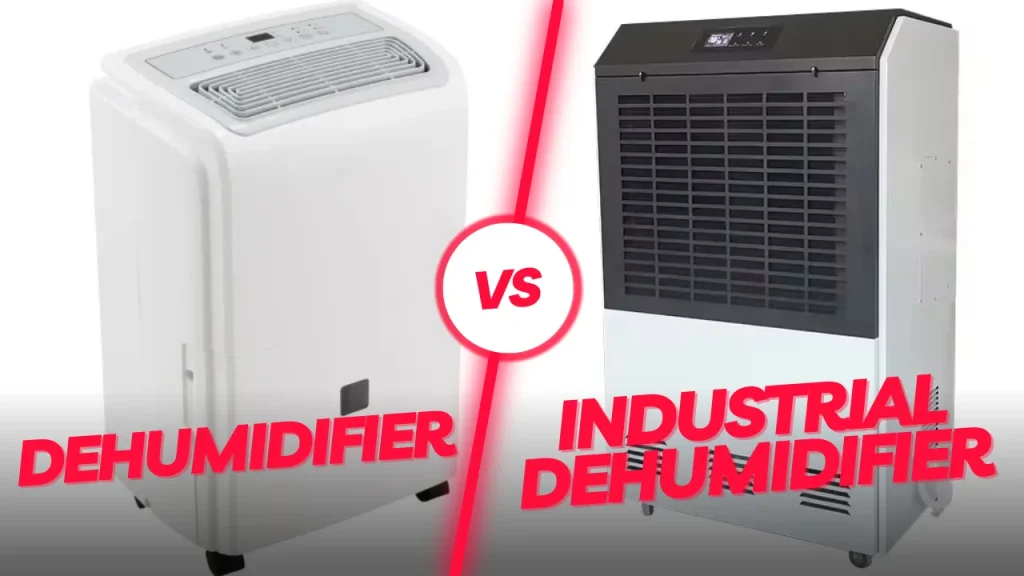
Choosing the wrong industrial dehumidifier size can cause problems long after installation.
In a warehouse, packaging room, cold storage area, production workshop, archive, greenhouse, or electronics storage zone, the wrong capacity may show up as wet floors, damp cartons, unstable door zones, coil frost, corrosion, mold risk, high energy use, and shorter equipment life.
An undersized industrial dehumidifier cannot remove moisture fast enough. It may run all day, but the room still stays above the target RH.
An oversized industrial dehumidifier may look powerful at first. It may lower the humidity sensor reading quickly, but in compressor-based systems, excessive uncontrolled capacity can cause short cycling, unstable RH control, poor effective moisture removal, and unnecessary equipment wear.
Correct sizing starts with room volume, target RH, operating temperature, air exchange, moisture sources, and required recovery time. A practical industrial dehumidifier sizing process should consider these site conditions before a model is selected.
Quick Answer: Oversized vs Undersized Dehumidifier Problems
| If the unit is… | What usually happens | What you may see on site |
|---|---|---|
| Oversized | It reaches the humidity setpoint too quickly | Frequent start-stop, RH swings, low drain output, uneven dry and wet zones |
| Undersized | It cannot remove moisture fast enough | Continuous running, RH stays high, damp cartons, condensation, corrosion |
| Wrong technology | Capacity may look enough on paper but fail in real conditions | Coil frost, poor low-temperature performance, unstable dew point control |
| Poorly installed | A correctly sized unit still performs badly | Short air circuits, dead zones, unstable door areas, sensor misreading |
The first question is not only whether the machine is big enough.
The better question is:
Does the dehumidifier capacity, technology, airflow layout, and control strategy match the real moisture load of the space?
Why Extra Capacity Is Not Always Safer
Many buyers worry more about undersizing than oversizing.
That is easy to understand. If the unit is too small, the room stays humid. Packaging remains damp. Condensation continues. Metal parts may start to rust.
So a larger model can feel safer.
But industrial humidity control does not reward unlimited capacity.
A reasonable capacity margin helps with rainy seasons, frequent door openings, wet goods entering storage, washdown, and higher production load. Oversizing becomes a problem when the extra capacity cannot be controlled, staged, or distributed properly.
A larger system is not automatically wrong.
The real risk is an oversized single unit with poor control, poor sensor placement, or poor airflow distribution.
Humidity control is also tied to building performance, moisture management, mold avoidance, and energy use. ASHRAE groups these issues under its humidity control resources.
When the Dehumidifier Is Oversized
An oversized industrial dehumidifier may not look wrong during a quick test.
It can start quickly. It can lower the nearby RH reading quickly. It may appear stronger than needed.
The warning signs usually appear later: RH swings, frequent start-stop operation, low drain output, damp areas far from the sensor, or local over-drying near the supply air.
The Unit Shuts Off Before the Whole Room Is Dry
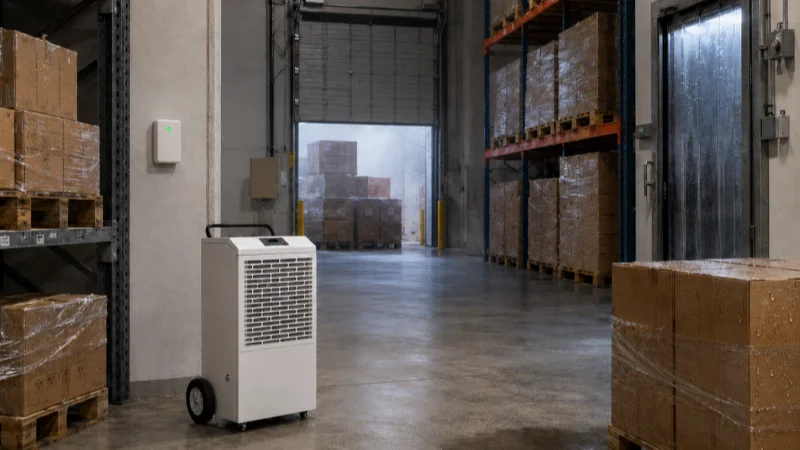
An oversized dehumidifier can satisfy the humidity sensor before the whole space is actually dry.
This often happens when the sensor is near the dry air supply or installed in a local dry zone.
The central reading may look acceptable, while other areas still have moisture problems:
- behind pallet racks
- near loading docks
- around cold-room entrances
- beside damp packaging
- near wet floors after cleaning
- inside weak return-air corners
- around high-moisture product zones
The controller stops the unit because the sensor says the target RH has been reached. But the far end of the warehouse, the door zone, or the packaging staging area may still be humid.
Fast RH drop near the sensor does not always mean stable humidity across the room.
Capacity, sensor location, return air, and supply direction must work together. Poor warehouse dehumidifier placement can make a correctly sized unit look wrong, and it can make an oversized unit cycle even more aggressively.
Short Cycling Reduces Moisture Removal and Stresses the Compressor
Short cycling mainly affects compressor-based or refrigerant industrial dehumidifiers.
When a compressor-based dehumidifier is oversized, it may run for a short time, reach the setpoint, shut down, and start again soon after humidity rises. This repeated start-stop pattern puts extra stress on the compressor, contactors, controls, and electrical components.
Short cycles can also reduce effective moisture removal. The unit uses energy to cool the coil and stabilize the refrigeration circuit, but it may stop before enough water drains away.
In some operating conditions, moisture left on the evaporator coil can re-evaporate into the air stream after the compressor stops.
NREL research on direct-expansion dehumidifier performance under cyclic operation found that when a dehumidifier cycles on, part of the energy is used before full moisture-removal performance is reached. The study is not an industrial sizing manual, but the mechanism helps explain why frequent cycling can reduce useful moisture removal.
On site, this may look like:
- the unit starts often
- RH drops and rebounds
- drain output is lower than expected
- the room still feels damp
- damp cartons or wet floors remain in some zones
Low drain output does not automatically prove oversizing. Blocked drainage, dirty coils, low temperature, poor airflow, or wrong sensor placement can create similar symptoms. A structured check for an industrial dehumidifier not collecting water can separate a sizing issue from a maintenance or installation issue.
Some Zones Stay Wet While Others Become Too Dry
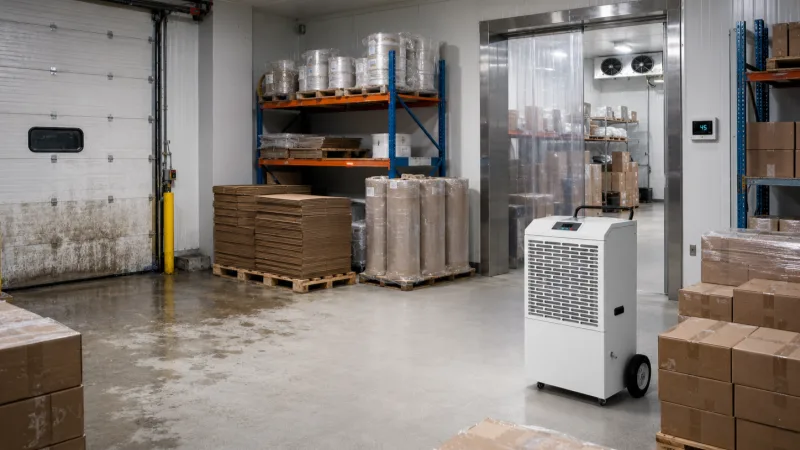
An oversized unit can create uneven humidity control.
The sensor area may dry quickly, while door zones, rack corners, packaging areas, or cold surfaces stay humid.
A packaging room is a common example.
The sensor near the dry air supply may reach the target RH quickly. But cartons near a loading door may still feel soft because humid air enters every time the door opens. The unit cycles off, the door zone rebounds, and packaging continues absorbing moisture.
This kind of RH fluctuation can affect:
- electronics storage, where reels, trays, PCBs, or packaging absorb moisture
- metal storage, where RH rebound increases corrosion risk
- cold storage transition zones, where warm humid air meets colder surfaces
- archives and document storage, where paper can deform or develop musty odor
- pharmaceutical storage, where unstable RH can affect storage conditions
The issue is rarely capacity alone. It is usually capacity plus airflow, sensor location, room layout, control deadband, and real moisture load.
Extra Capacity Can Raise Cost Without Improving Control
An oversized industrial dehumidifier usually costs more to buy, install, and operate.
The larger unit may require more space, higher electrical capacity, stronger airflow planning, larger duct connections, or more complex drainage. If the extra capacity is not used effectively, the project does not gain proportional value.
A high-capacity unit is not automatically inefficient. The problem appears when the capacity is too far above the real moisture load and cannot be staged, distributed, or controlled properly.
Energy cost should be checked together with run time, cycling behavior, and moisture removal. A practical calculation of industrial dehumidifier electricity use needs the operating pattern, not just the rated power.
When the Dehumidifier Is Undersized
An undersized industrial dehumidifier is usually easier to recognize.
The machine runs. The fan operates. The compressor or rotor may work. But the target RH is still not reached.
The Unit Runs Continuously but RH Stays High
An undersized industrial dehumidifier often fails by working continuously.
It may run for hours, but the room remains above the target humidity level. RH may drop slightly and then stop improving. In other cases, humidity stays high throughout the day.
Common site complaints include:
- “The dehumidifier keeps running.”
- “The humidity never reaches the setpoint.”
- “The machine is working, but the room is still damp.”
- “The packaging area is still humid.”
- “Condensation still appears near cold surfaces.”
- “The warehouse smells musty after rain.”
The unit may not be broken.
The real moisture load may simply be higher than the unit’s effective capacity.
The Room Recovers Too Slowly After Door Openings or Washdown
A room may stay close to target RH during normal hours, then become unstable during moisture peaks.
This is different from a room that is always out of control. In this case, the unit may look acceptable on a normal day but fail during peak load.
Peak moisture load can come from:
- frequent loading dock openings
- warm, wet goods entering storage
- rainy season or humid outdoor air
- cleaning, washing, or wet floors
- workers and production activity
- uncontrolled fresh air
- air leakage around doors or wall gaps
- cold-room door openings
- water-based processes or packaging operations
An undersized unit has no recovery margin.
After a door opens, after the floor is washed, or after wet materials enter the room, the unit cannot bring RH back down fast enough.
| Scenario | What Usually Happens |
|---|---|
| Cold storage transition area | Warm humid air enters a colder zone and condensation risk rises |
| Food packaging room | Damp cartons and wet floors affect packaging quality |
| Electronics storage | Opened reels, PCBs, and packaging absorb moisture |
| Metal parts warehouse | Long RH exposure increases corrosion risk |
| Archive or document storage | Paper absorbs moisture and may deform or develop mold |
| Pharmaceutical storage | RH instability affects storage control and audit confidence |
Moisture Damage Continues in Products and Packaging
When a dehumidifier is undersized, the biggest loss often happens to the materials inside the room.
Sustained high humidity can lead to:
- damp cartons
- softened corrugated boxes
- unstable pallet loads
- warped paperboard
- peeling labels
- condensation on cold surfaces
- corrosion on metal parts
- moisture absorption in electronics packaging
- mold risk in stagnant corners
- product rejection or rework
The U.S. EPA states that moisture control is the key to mold control, and wet or damp materials should be dried quickly to help prevent mold growth.
In industrial spaces, the risk is not limited to visible mold. Damp packaging, wet floors, and high-RH dead zones can affect storage quality before mold becomes visible.
Low-Temperature Rooms May Need a Different Technology
Low-temperature rooms add another sizing risk.
Compressor-based dehumidifiers are affected by operating temperature. In cold storage rooms, cold storage transition zones, and unheated industrial spaces, the selected technology and temperature range matter.
An undersized or wrongly selected refrigerant unit may spend more time near frosting conditions. The coil may frost more often or spend more time in defrost. Net moisture removal drops.
The loop can look like this:
- The room is humid.
- The unit runs continuously.
- The coil frosts or enters defrost more often.
- Net dehumidification drops.
- The room stays humid.
Coil frost is not always a sizing problem. Airflow restriction, dirty filters, low ambient temperature, and refrigeration faults can also cause icing. A practical check for an industrial dehumidifier freezing up should come before the capacity decision.
For low-temperature or low-dew-point rooms, the correction may not be a larger refrigerant unit. The right move may be a desiccant system, a different operating range, or a better control strategy. The difference between refrigerant and desiccant dehumidifiers matters most when temperature and dew point requirements are outside normal comfort conditions.
Symptoms: Is the Dehumidifier Oversized or Undersized?
| Site Symptom | More Likely Oversized | More Likely Undersized |
|---|---|---|
| Unit starts and stops frequently | Yes | Usually no |
| RH drops quickly, then rises again | Yes | Sometimes |
| RH never reaches target | Possible if sensor or airflow is wrong | Yes |
| Unit keeps running continuously | Usually no | Yes |
| Drain output is lower than expected | Possible due to short cycles or drainage issue | Possible due to low effective capacity |
| Wet floors remain after cleaning | Possible in poor airflow zones | Common |
| Damp cartons or labels continue | Possible if humidity fluctuates | Common |
| Condensation remains on cold surfaces | Possible due to uneven airflow | Common |
| Coil freezing or icing appears | Possible due to airflow or temperature issue | More common in low-temperature overloaded applications |
| Some zones are too dry while others stay humid | Possible | Possible, but airflow/layout should be checked |
| Energy cost is high | Capacity waste and inefficient cycling | Continuous full-load operation |
| Maintenance issues increase | Frequent start-stop stress | Long operating hours and full-load wear |
These symptoms are starting points, not final proof.
Dirty filters, blocked drainage, poor sensor placement, air leakage, wrong installation position, short air circuits, or poor return-air layout can create similar symptoms.
What Information Helps Prevent Sizing Mistakes?
Do not choose an industrial dehumidifier only by floor area or a nominal capacity number.
Capacity ratings depend on test conditions, and industrial sites rarely operate under one fixed condition.
Prepare these details before choosing a model:
| Information to Prepare | Why It Matters |
|---|---|
| Room size and volume | Defines the air volume that must be controlled |
| Current temperature and RH | Shows the starting condition |
| Target RH or dew point | Defines the performance goal |
| Operating temperature range | Helps choose refrigerant or desiccant technology |
| Door opening frequency | Adds infiltration and humidity peaks |
| Fresh air or exhaust volume | Affects moisture load |
| Moisture sources | Wet goods, packaging, washing, or process moisture add load |
| Required recovery time | Shows how fast RH must return after disturbance |
| Installation layout | Affects airflow, return air, and sensor placement |
| Existing HVAC influence | Cooling, heating, and ventilation can affect humidity control |
Two mistakes create many sizing problems:
- choosing by room area alone
- choosing the largest model to feel safe
Correct sizing starts with real operating conditions.
FAQ
Can a dehumidifier be too large if the room has heavy moisture peaks?
Yes. A larger capacity margin can help with heavy moisture peaks, but the extra capacity still needs proper control, staging, airflow distribution, and sensor placement. An oversized single unit can still short cycle or leave wet zones untreated.
Why does my dehumidifier run all day but RH stays high?
Common causes include undersizing, hidden air leakage, uncontrolled fresh air, wet goods, washdown moisture, dirty filters, blocked coils, poor drainage, weak airflow, or the wrong technology for the operating temperature.
Can one oversized unit replace several smaller units?
Not always. Large rooms, multiple door zones, uneven loads, or separated storage areas may perform better with staged or zoned dehumidification. One oversized unit may dry the sensor area quickly while leaving remote areas humid.
Does short cycling happen on desiccant dehumidifiers?
Not in the same way. Short cycling is mainly a compressor-based or refrigerant dehumidifier issue. Desiccant systems remove moisture through a different process and are often considered for low-temperature or low-dew-point conditions.