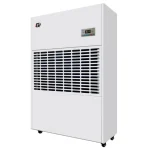
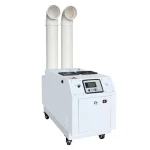
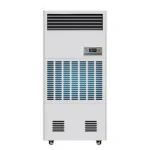
Moisture problems look different in a walk-in cooler and a walk-in freezer. In a cooler, they usually appear as condensation, wet floors, dripping surfaces and damaged packaging. In a freezer, the same incoming moisture becomes frost and ice on evaporators, door frames, floors and products. For many coolers, the equipment can operate inside the room; for typical −18 °C freezers, the better solution with standard industrial equipment is often to control humid air before it enters the box.
The solution is not simply to size a dehumidifier from the room volume. This guide explains what causes these moisture problems, why room RH alone is not enough for diagnosis, where the air should be dried, and when refrigerant or desiccant dehumidification makes sense. This article focuses specifically on individual walk-in coolers and freezers. For larger refrigerated rooms, multi-zone cold-storage facilities and warehouse-scale applications, see our cold storage humidity control selection guide.
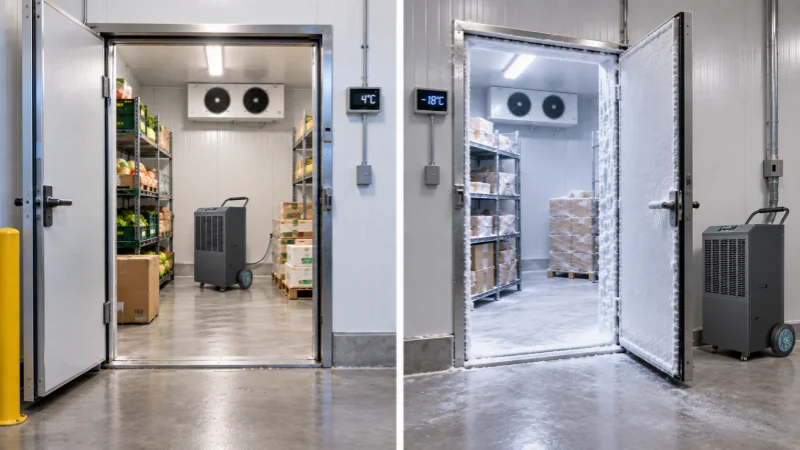
What Moisture Problems Look Like in Coolers and Freezers
A cooler and freezer can receive moisture from the same sources—door openings, air leakage, wet products, cleaning and surrounding humid spaces—but the visible result changes with temperature.
| Area | Walk-In Cooler | Walk-In Freezer |
|---|---|---|
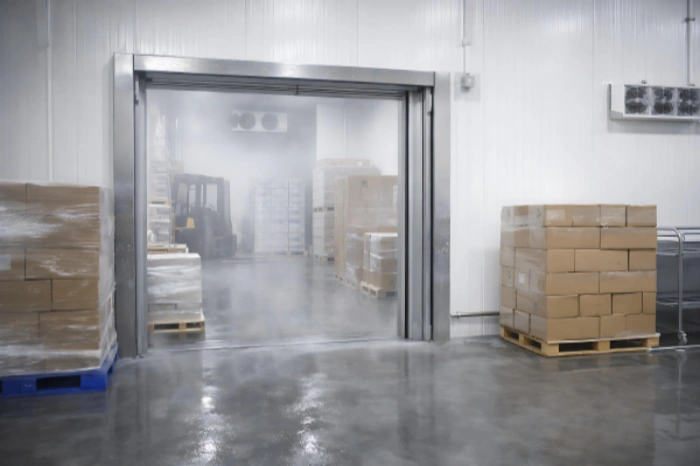
| Doorway | Wet threshold, dripping frame, fogging | Frosted frame, ice on floor, gasket icing |
| Evaporator | Heavy condensate, drain overflow | Rapid frost buildup, frequent defrost |
| Ceiling and panels | Droplets or wet seams | Frost and loose ice |
| Product | Soft cartons, lifting labels, surface condensation | Frosted packaging, iced barcodes |
| Operational effect | Slip risk, packaging damage, mould | Slip risk, blocked airflow, poor door sealing |
In food-storage applications, persistent condensation can also become a sanitation concern when water reaches food, packaging or food-contact surfaces. The FDA Food Code addresses contamination from dripping and condensing water, while USDA-inspected facilities also have requirements for controlling insanitary condensation conditions.
The location of the moisture is therefore useful diagnostic information. Frost concentrated around a freezer door points toward infiltration or sealing problems, while repeated water beneath a cooler evaporator may indicate drainage, defrost or refrigeration issues. Before adding dehumidification capacity, first identify where the water is coming from.
Why Condensation and Frost Cannot Be Judged by RH Alone
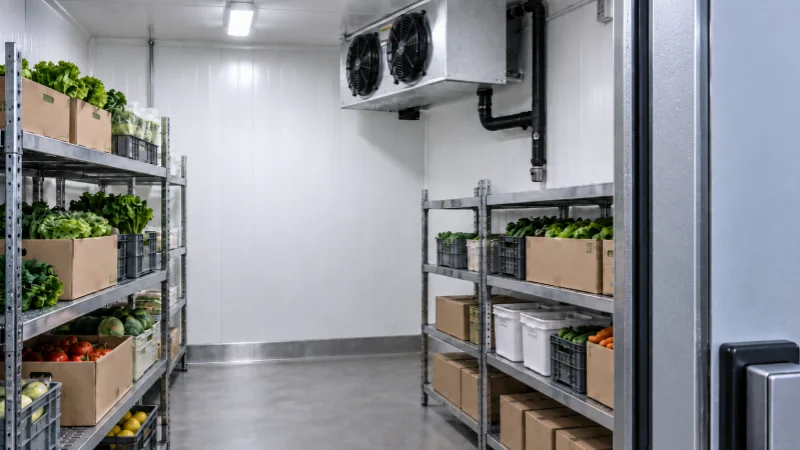
The symptoms above may appear in different places, but they all come back to the same question: is the air carrying enough moisture for water to condense or freeze when it reaches a colder surface? That cannot be answered reliably from room RH alone, especially inside refrigerated spaces where temperature varies sharply between the room air, evaporator, door frame and product surface.
Relative humidity tells you how close the air is to saturation at its current temperature. Dew point describes the moisture condition of the air more directly and helps explain why one surface stays dry while another develops condensation or frost.
For example, air inside a cooler can show an apparently acceptable RH while the evaporator, door frame or chilled product remains colder than the air’s dew point. Those surfaces can still collect condensation even though the room-average reading looks normal.
In a freezer, RH is even less useful as a standalone diagnostic number because very cold air contains little water vapour and RH can change significantly with small changes in temperature. When investigating repeated frost, it is more useful to look at the moisture condition of the incoming air, where that air enters, and which cold surfaces it reaches. Our relative humidity and dew point guide explains this relationship in more detail.
Where Should the Air Be Dried?
The U.S. Department of Energy classifies walk-in coolers and freezers at the 32 °F (0 °C) boundary under 10 CFR Part 431. That is a regulatory classification, however, not a universal technology boundary between refrigerant and desiccant dehumidification.
The actual choice depends on air temperature, required dew point, moisture load and the operating range of the equipment.
Walk-In Coolers
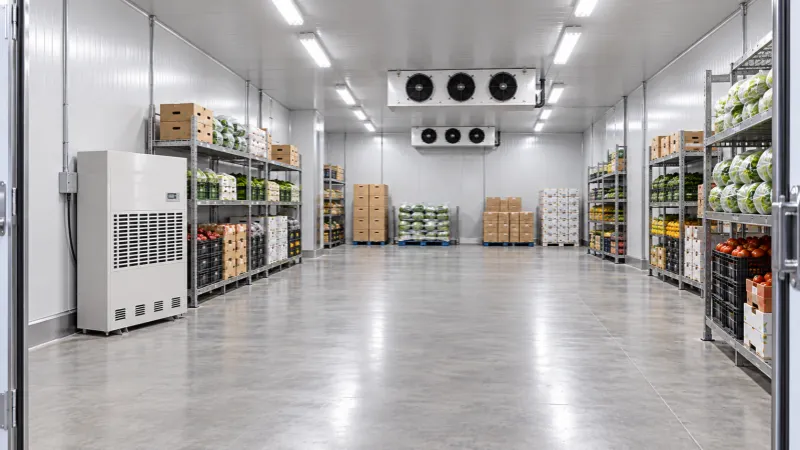
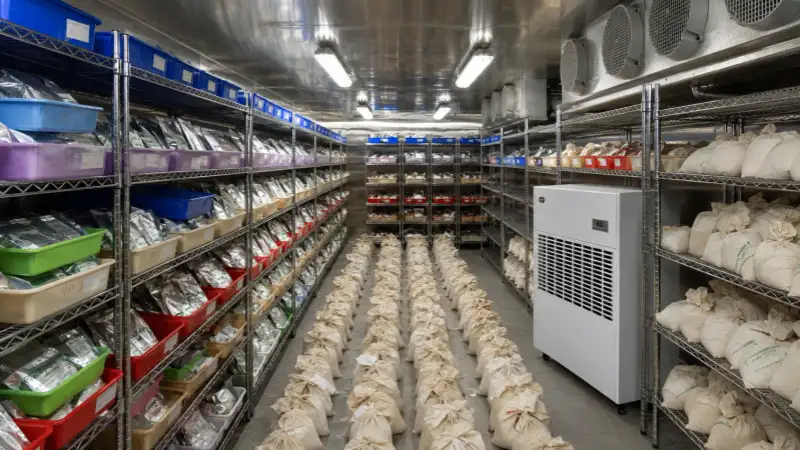
Many walk-in coolers operate between approximately 0 °C and 5 °C. When the room temperature stays within the equipment’s rated operating range, a purpose-built low-temperature refrigerant dehumidifier can often be installed directly inside the cooler.
Refrigerant equipment removes moisture by cooling air below its dew point and draining the condensed water. As intake temperature falls, however, the evaporator becomes more prone to frosting and more operating time is required for defrost. Capacity therefore drops significantly compared with the same machine operating under warm standard rating conditions.
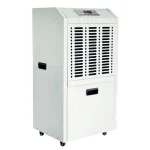
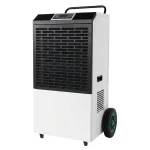
Rinwang’s low-temperature dehumidifier can operate from approximately 2 °C and uses reverse-cycle defrost. For a cooler near this temperature, the important specification is not only the nameplate L/day value but the actual moisture-removal performance at the expected intake condition.
Installing equipment inside the cooler also adds heat from the compressor, fan and condensation process. That additional load has to be removed by the refrigeration system, so external installation may still make sense where the room is small or refrigeration capacity is limited.
Walk-In Freezers
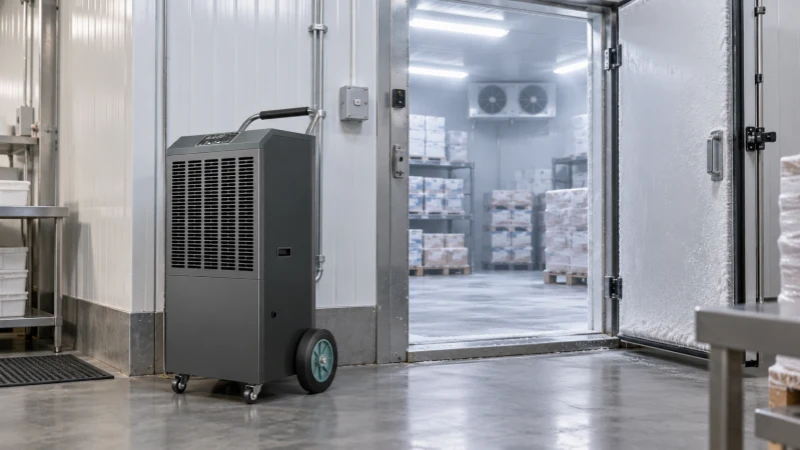
A typical walk-in freezer may operate around −18 °C or below. Specialised desiccant systems do exist for direct operation inside sub-zero cold stores, so there is no engineering rule that freezer dehumidification must always happen outside the room. The specific equipment simply has to be rated for that environment.
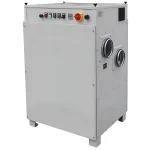
Rinwang’s current desiccant dehumidifier range is designed for approximately −10 °C to +50 °C. A −18 °C freezer is therefore outside that operating range.
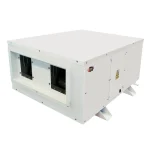
For this type of project, it is more useful to treat the air entering the freezer than to put the dehumidifier inside it. The equipment can be installed in a warmer adjacent space and used to dry a vestibule, supply low-dew-point air toward the doorway, or deliver dry air through insulated ductwork. This reduces the amount of water vapour entering during door openings without requiring the dehumidifier itself to operate at freezer temperature.
The important point is not that every freezer needs external dehumidification. It is that equipment placement has to match the machine’s operating envelope and the main moisture source.
Doorway Moisture Is Often the Load to Control

In many walk-in freezers, repeated door opening is one of the largest variable moisture loads. Warm air from a kitchen, production area, corridor or loading dock enters the freezer and releases moisture onto colder surfaces. The result may be frost around the door, increased evaporator icing or ice on floors and nearby products.
This is why two identical 30 m³ freezers can behave very differently. A freezer opened five times per hour into an air-conditioned room has a very different moisture load from one opened thirty times per hour into a humid food-preparation area. Room volume alone cannot describe that difference.
A vestibule can reduce this load by creating a dry transition space between the freezer and the surrounding room. Where no vestibule exists, externally installed equipment can supply dry air toward the doorway instead. Ducts serving cold areas should be properly insulated and vapour-sealed, and the dehumidifier’s available external static pressure must be considered during design.
Door infiltration is not the only possible source. Wet pallets, warm products, washdown, panel leakage, penetrations, blocked drains and incorrect defrost operation can all add moisture. Their importance should be checked before additional drying capacity is specified.
Check Correctable Moisture Sources Before Sizing a Dehumidifier
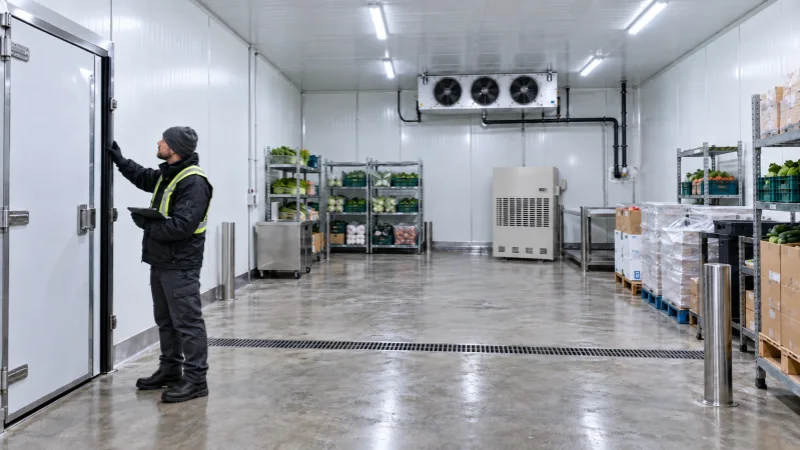
Doorway infiltration may be a major moisture load, but it is not the only one. A damaged gasket, failed panel seal, blocked drain or poorly controlled defrost cycle can create a continuous moisture problem that no dehumidifier should be expected to compensate for permanently.
Before calculating dehumidification capacity, check the sources that can be corrected directly. Door gaskets should seal evenly, closers should work properly, and excessive door-open time should be reduced where possible. Panel joints, pipe penetrations and cable entries should also be inspected for air or vapour leakage.
The refrigeration and drainage systems need the same attention. Persistent evaporator icing may come from airflow, refrigerant or defrost problems, while a blocked or freezing drain can return water to the room after the refrigeration system has already removed it.
Only after these faults are corrected does the remaining moisture load become a useful basis for selecting dehumidification equipment.
What Information Is Needed to Select the System?
Square footage alone is not enough to size a walk-in dehumidification system. A supplier should know the cooler or freezer setpoint, internal dimensions, door size, number of doors, adjacent-room temperature and RH, opening frequency and typical open duration.
The project should also identify what is stored, whether product arrives warm or wet, where condensation or frost currently appears, whether equipment can be installed outside the room, and whether ductwork and drainage are available. These details show both the moisture load and the most practical equipment location.
For an in-room cooler installation, low-temperature moisture-removal capacity and the heat added to the refrigeration system are particularly important. For an externally installed freezer system, airflow, duct pressure, dry-air delivery location and the condition of the adjacent space become more important.
Our industrial dehumidifier sizing guide explains how these inputs are converted into an equipment capacity range.
FAQ
What humidity should a grocery produce cooler hold?
There is no single RH target for every cooler. Produce generally requires higher humidity than packaged goods, so the stored product should determine the appropriate humidity range.
How often should a walk-in freezer defrost?
There is no universal schedule. Defrost frequency depends on evaporator design, door traffic, ambient humidity and controls; recurring heavy frost suggests the underlying load or system needs checking.
Can blocked airflow cause freezer ice?
Yes. Restricted evaporator airflow can create uneven coil temperatures and accelerate frost buildup. Check product stacking, fan operation and return-air paths before changing defrost settings.
Can refrigeration faults cause icing?
Yes. Fan failures, control problems, refrigerant-feed issues or unusually low evaporating temperatures can contribute to icing. Persistent coil frost should be diagnosed by a refrigeration technician.
Can condensation damage insulation?
Yes. Persistent moisture entering failed panel joints or vapour barriers can reduce insulation performance and cause internal deterioration. Repair the moisture-entry path before adding dehumidification.
Choosing the Right Arrangement
Walk-in cooler and freezer moisture control should start with where the moisture enters and where it causes problems, not with room area alone.
For a moderate-temperature cooler, an in-room low-temperature refrigerant dehumidifier may be practical if its actual capacity at the operating condition is sufficient. For a typical −18 °C freezer where the available dehumidifier cannot operate inside the room, drying the air on the warm side—through a vestibule or ducted dry-air supply—is usually the more practical arrangement.
If you are evaluating a project, provide the room temperature, dimensions, door details, adjacent-space conditions, door-opening frequency and photographs showing where condensation or frost appears. These inputs allow the dehumidification method, installation position and equipment capacity to be matched to the actual moisture problem rather than a generic room-size calculation.