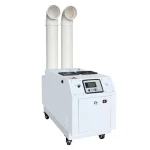
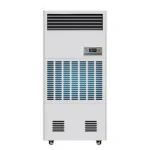
Rust on steel coils, water stains between aluminum sheets, and moisture trapped inside galvanized bundles are common concerns in metal storage facilities. Although these problems may appear similar, they can develop for different reasons, and lowering warehouse humidity is not always the complete solution.
Industrial dehumidification can help protect stored metal by controlling airborne moisture and reducing condensation risk. However, its effectiveness depends on the materials being stored, the warehouse environment, and how moisture reaches vulnerable surfaces.
This guide explains when industrial dehumidification is needed for metal storage, how moisture-control priorities differ between common metals, and how to select, position, and evaluate dehumidification equipment for actual warehouse conditions.
When Does Metal Storage Need Industrial Dehumidification?
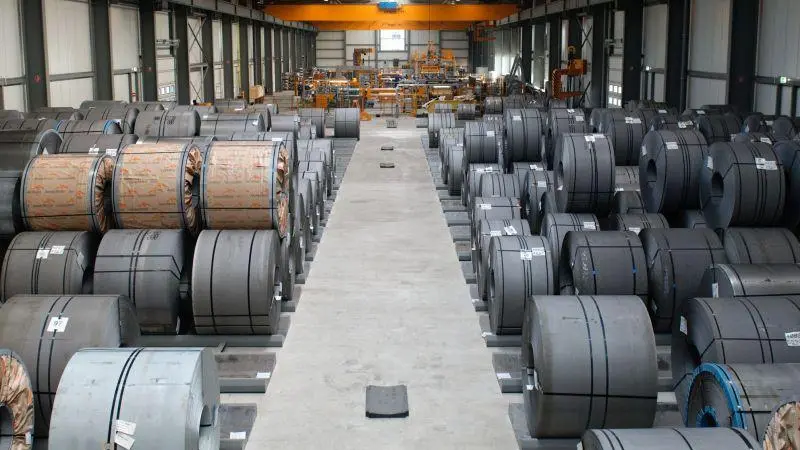
Industrial dehumidification is worth considering when moisture in the surrounding air contributes to recurring condensation or corrosion and existing building controls cannot reliably maintain suitable storage conditions. This may happen during prolonged humid weather, frequent loading operations, or extended storage of moisture-sensitive inventory.
For example, a warehouse storing unprotected steel may need more consistent humidity control during humid seasons. A metal service center receiving cold coils may need to reduce condensation risk during unloading, while a precision-parts warehouse may require stable conditions throughout a longer storage period. In these situations, industrial dehumidifiers can maintain an agreed RH or dew-point target instead of relying on changing outdoor conditions.
When Dehumidification Is Not the Main Solution
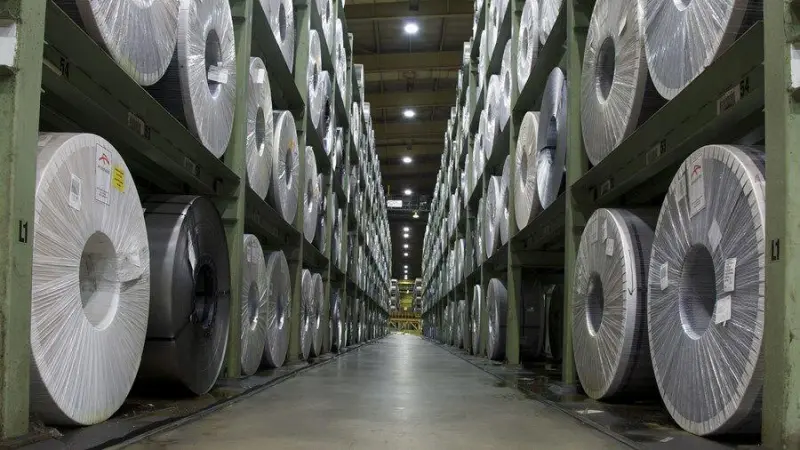
Not every moisture problem requires additional dehumidification equipment. Roof leaks should be repaired, wet materials should be properly dried, and water trapped between tightly packed components may require separation and drainage. Corrosion associated with salts, fingerprints, or processing residues also requires suitable cleaning and material protection.
Surface contamination can also accelerate corrosion, as described in the Canadian Conservation Institute’s guidance on storing metal with different contamination risks. Although that guidance concerns collections rather than industrial inventory, the distinction between contaminated and clean metal remains relevant.
The main question is whether airborne moisture is a significant contributor to the problem. If it is, and the required conditions cannot be maintained consistently, industrial dehumidification is a reasonable solution to evaluate. Where liquid water, contamination, or improper storage practices are the primary causes, those issues should be corrected first. Some facilities require both environmental control and improved material handling.
Why Dew Point Matters for Stored Metal
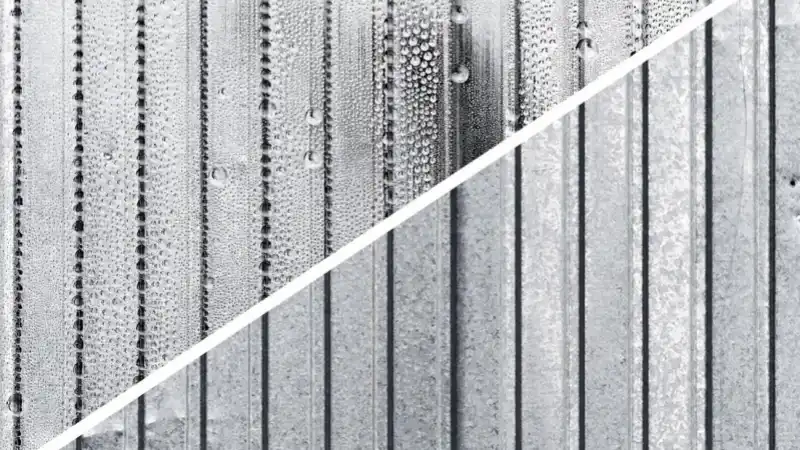
Even when warehouse humidity appears acceptable, condensation can still form on cold metal. This commonly occurs when steel coils or aluminum sheets arrive from a colder environment and are exposed to warmer, more humid warehouse air.
The reason is dew point. If the metal surface temperature is at or below the surrounding air’s dew point, moisture can condense on it. For example, air at 25°C and 50% RH has a calculated dew point of approximately 13.9°C. A metal coil arriving at 8°C may therefore develop condensation when exposed to that air, even though the warehouse humidity reading is only 50%.
This means that controlling room RH alone may not protect cold incoming stock. Warehouse operators should also check material temperatures and conditions near loading bays or other colder locations. Understanding how dew point relates to surface condensation is especially important during receiving: where the risk is significant, a dehumidifier can lower the air’s dew point, while an appropriate staging or acclimation procedure can reduce exposure during the temperature transition.
Humidity Control for Steel, Aluminum, and Galvanized Metal
Different metals require different moisture-control priorities. Carbon steel may need protection against prolonged humid exposure, aluminum requires particular attention during receiving and temperature changes, and galvanized products can develop wet storage stain when water remains trapped between stacked surfaces.
The table below summarizes the main risks and where industrial dehumidification can contribute.
| Metal | Main storage risk | Dehumidification application |
|---|---|---|
| Carbon steel | Corrosion during prolonged humid exposure or condensation | Maintain suitable warehouse humidity and reduce condensation risk |
| Aluminum sheets and coils | Water staining after cold-to-warm transitions | Control the receiving-area dew point where necessary |
| Galvanized steel | Wet storage stain from trapped water | Control ambient moisture alongside suitable drainage and ventilation |
Steel Storage: Maintain Stable Warehouse Conditions
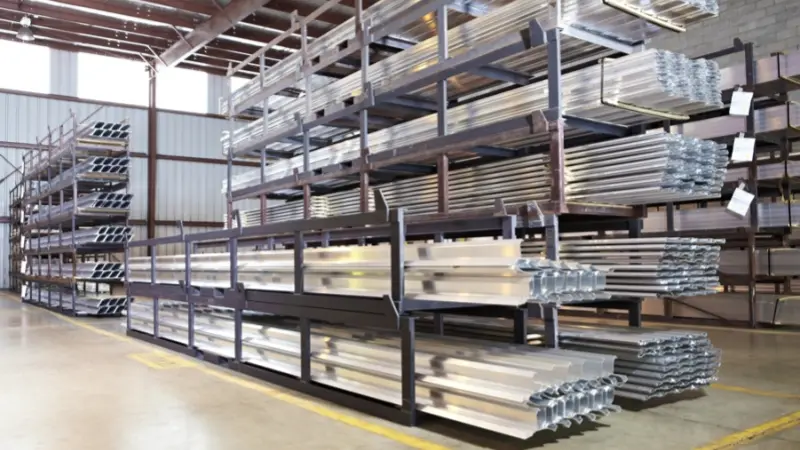
Carbon-steel coils, sheets, and structural components can corrode during prolonged exposure to moisture, particularly when surfaces are unprotected or contaminated. Warehouses storing clean, dry steel may therefore need consistent humidity control, especially during humid seasons or extended storage periods.
The appropriate RH target depends on surface condition, existing protection, and expected storage duration. A warehouse holding lightly protected steel for several months may require more consistent environmental control than one handling short-term, appropriately packaged inventory. No universal RH value guarantees corrosion-free storage under all conditions.
For warehouses experiencing recurring humid-air exposure, an industrial dehumidifier can maintain a more stable storage environment. The equipment should be arranged to serve the stock locations that require protection, including colder wall-side racks or other vulnerable areas, rather than controlling only the conditions around a central sensor.
Aluminum Storage: Control the Receiving Environment
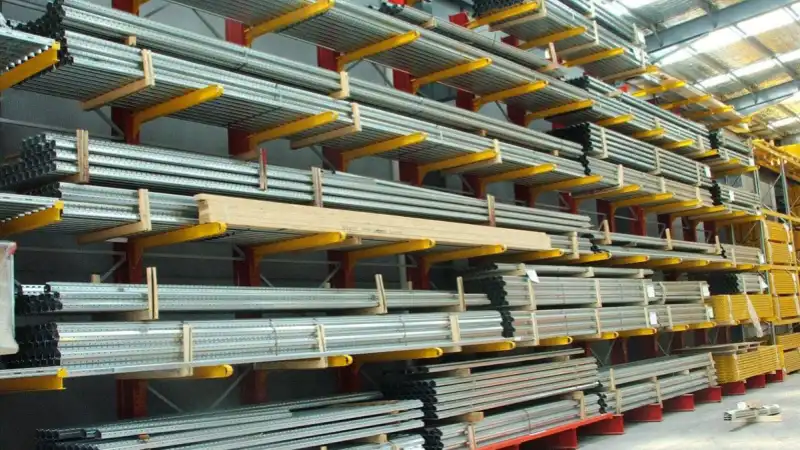
For aluminum sheets and coils, a major risk occurs when cold material enters warmer, humid air. Condensation may develop during unloading and enter the spaces between sheets or coil wraps, where retained moisture can cause water staining.
The Aluminum Association documents how water staining develops during aluminum transport, unloading, and storage, including moisture entering closely packed surfaces. Once water becomes trapped between them, reducing warehouse humidity may not remove it quickly enough.
For facilities regularly receiving cold aluminum, the receiving area may therefore need separate attention from the main warehouse. If the existing environment cannot prevent condensation, a dehumidifier may be used to maintain a sufficiently low receiving-zone dew point. A protected staging area or approved acclimation procedure may also be necessary before moving the material into general storage.
This does not automatically mean installing a separate dehumidifier for every receiving bay. The appropriate arrangement depends on whether the receiving and storage areas require different conditions, how much outdoor air enters during unloading, and whether a shared system can reliably serve both zones.
Galvanized Steel: Combine Air Control With Proper Storage
Galvanized products can develop wet storage stain when water remains between tightly stacked or nested components. Unlike general exposure to humid air, this problem is often closely related to restricted circulation, inadequate drainage, and moisture retained at contact surfaces.
Proper storage and handling of galvanized steel involves separation, drainage, and ventilation, as emphasized by the American Galvanizers Association. These measures should take priority where water is already trapped inside the material arrangement.
Industrial dehumidification can help maintain suitable ambient conditions and reduce additional condensation, particularly in warehouses exposed to persistent humidity. However, dry room air cannot protect inaccessible surfaces if water remains trapped between them. For galvanized stock, equipment-based humidity control should support proper stacking and drying practices rather than replace them.
Choosing the Right Dehumidification System for Metal Storage
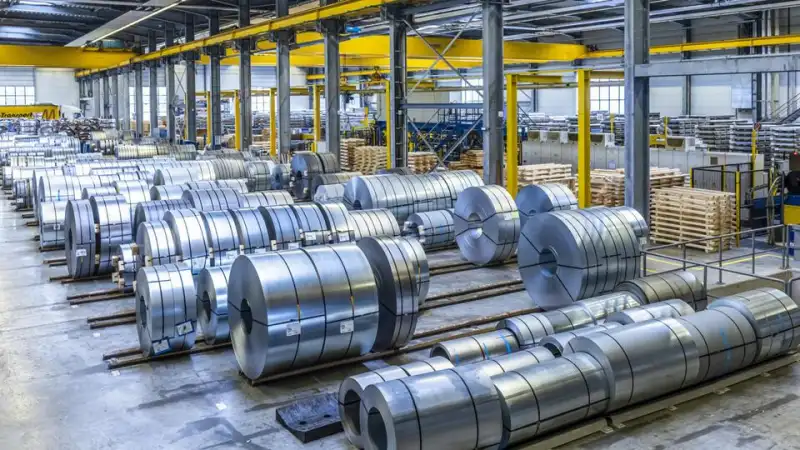
Once the moisture risks are understood, the next decision is which areas need controlled air and what condition each area must maintain. A metal warehouse does not always require the same humidity-control approach throughout the building.
For example, a steel and aluminum service center may have a warm main warehouse where the goal is to maintain moderate RH over extended storage periods. Its receiving bay, however, may frequently handle cold coils that require a lower air dew point to avoid condensation. Maintaining the general warehouse target may not be enough to protect those incoming materials.
The first step is therefore to decide whether the main warehouse and receiving area can operate under the same environmental conditions. If their requirements differ, separate control zones may be appropriate. These zones could be served by independent units, a shared ducted system, or another engineered arrangement, depending on the required capacity and control flexibility.
Refrigerant or Desiccant Dehumidification?
For warm metal warehouses with moderate RH requirements, refrigerant dehumidification is usually a practical first option to evaluate. However, a low-dew-point receiving area or specialized dry-storage enclosure may require performance beyond the efficient range of conventional refrigerant equipment, making desiccant dehumidification worth considering.
| Metal storage condition | Equipment direction |
|---|---|
| Warm steel or mixed-metal warehouse with moderate RH requirements | Evaluate refrigerant dehumidification first |
| Cooler warehouse with seasonal humidity problems | Compare low-temperature refrigerant and desiccant performance |
| Receiving area handling cold metal | Determine the required air dew point before choosing equipment |
| Specialized dry storage requiring lower dew points | Evaluate desiccant equipment where appropriate |
The choice should be based on actual operating temperature, required RH or dew point, and verified moisture-removal performance. The type of metal alone does not determine which technology is suitable, and a high catalogue L/day rating does not guarantee sufficient capacity at the intended storage conditions.
The broader refrigerant versus desiccant technology trade-offs also matter when comparing operating costs and installation requirements. For a warehouse that genuinely needs a lower dew point, an industrial desiccant dehumidifier may be evaluated, provided the selected model can deliver the required condition at the design airflow.
How to Size and Position Dehumidifiers in Metal Warehouses
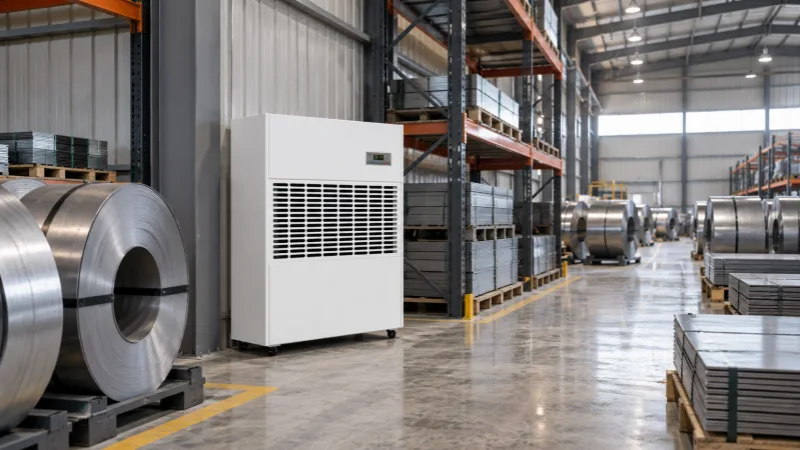
Selecting equipment for metal storage involves more than calculating capacity from warehouse floor area. The dehumidifier must remove moisture under actual operating conditions, maintain the required environment, and deliver conditioned air to vulnerable stock.
Three decisions deserve particular attention: which areas need protection, how much moisture the system must handle, and whether dry air can reach the stored material.
Define the Areas That Need Humidity Control
A warehouse used only for storing clean, dry steel may have relatively uniform environmental requirements. A metal service center combining storage, unloading, and temporary staging may need different conditions in different areas.
Before selecting equipment, determine whether humidity control is required throughout the warehouse or primarily in specific zones, such as receiving bays or precision-material storage rooms. Where practical, separating these areas from uncontrolled outdoor air or nearby wet operations can reduce the moisture load the system must handle.
The objective is not necessarily to dry the largest possible space, but to maintain the required conditions where the metal is exposed.
Account for Actual Moisture Loads
Loading doors can introduce substantial moisture during humid weather, particularly when they open frequently or remain open for extended unloading operations. Ventilation replacement air, building leakage, and nearby wet processes can add to the load.
Metal receiving operations also require attention to the temperature of incoming stock. Cold material may create a condensation risk even without introducing a large amount of water into the warehouse air. The design therefore needs to consider both the moisture-removal duty and the air condition required to protect incoming metal.
Equipment suppliers should provide performance data at the expected entering-air temperature and RH, rather than relying solely on nominal capacity figures measured under warmer, wetter test conditions. Those entering-air conditions, infiltration loads, and operating hours are also essential inputs when sizing an industrial dehumidifier for the space.
Position Equipment to Reach Vulnerable Stock
Even a correctly sized dehumidifier may deliver poor results if dry air circulates mainly through empty aisles while vulnerable racks receive little conditioned air. Supply and return locations should therefore be planned around the storage layout, including lower rack levels, wall-side stock, and receiving or staging positions.
Concept layout separating metal receiving, dry storage, and processing, with air and surface measurement points
Air circulation fans may improve distribution, but they do not remove water vapor or guarantee airflow inside tightly packed bundles. Where the layout includes high racks, closely spaced coils, or separated storage zones, the airflow arrangement should be checked to ensure the required environment can be maintained at representative stock locations.
The installation must also accommodate the selected equipment’s airflow, drainage or regeneration connections, service access, and any relevant site restrictions. Areas containing combustible metal dust, corrosive fumes, or classified hazards require a separate equipment-suitability review.
How to Verify Dehumidification Performance
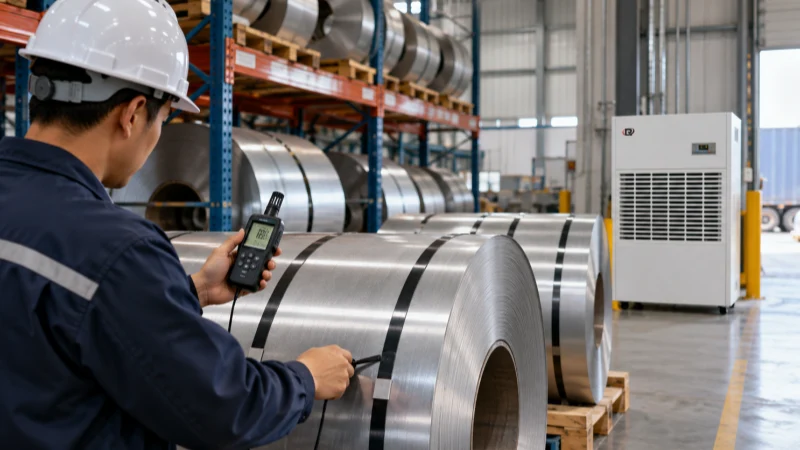
A metal-storage dehumidification system should be evaluated by the conditions maintained at vulnerable stock, not only by the RH reading beside the equipment or at a central wall sensor.
During commissioning, measure local air temperature and RH at representative storage positions and compare the calculated dew point with the temperature of relevant metal surfaces. The checks should include normal operating conditions and events known to create risk, such as receiving cold material or opening loading doors during humid weather.
For example, a system may maintain the warehouse’s RH target while the doors are closed but struggle during frequent unloading. Whether this creates a material protection problem depends on the duration of the disturbance, the temperature of the exposed metal, and the agreed storage requirements. Equipment performance should therefore be reviewed through representative operating cycles rather than a single measurement taken in an empty warehouse.
The project should define suitable measurement locations, acceptance limits, and test periods. Where humidity control has been lost during an equipment fault, affected stock may require inspection before release. Returning room RH to its target does not by itself prove that condensation or material damage was avoided.
What Information Should You Provide When Requesting a Dehumidifier?
A complete engineering design is not required for an initial inquiry, but equipment selection becomes more useful when the manufacturer understands the storage conditions and the material being protected.
Start by providing the warehouse layout or dimensions, types of metal, storage arrangements, and expected holding periods. Include any observed corrosion, condensation, or water-staining problems, along with available temperature and humidity readings.
For facilities with regular deliveries, describe the receiving process, loading-door activity, and incoming material temperatures if known. Any specified storage RH or dew-point requirements, available power supply, and potential equipment locations should also be included. Missing measurements can then be identified during the technical review.
Based on this information, the equipment proposal can address the required humidity-control zones, moisture-removal capacity, operating range, and air-distribution needs. Facilities combining receiving and stored inventory can apply the same zone-based assessment used in warehouse dehumidification projects, rather than treating the entire building as a single uniform space.
Conclusion
Industrial dehumidification can help protect metal inventory by maintaining suitable storage conditions and reducing condensation risk. However, the most effective solution depends on the material, the location of the moisture problem, and how the warehouse operates.
For metal-storage projects, equipment selection should begin with the areas that need protection, the required RH or dew point, and the actual moisture load. Rinwang provides industrial refrigerant and desiccant dehumidification options that can be evaluated against these conditions. Share your warehouse details and material protection requirements to discuss a suitable configuration.
Frequently Asked Questions
What humidity level should a steel storage warehouse maintain?
There is no universal RH limit that guarantees corrosion-free storage. The appropriate target depends on the steel’s surface condition, existing protection, contamination, storage duration, and condensation risk.
Can an industrial dehumidifier prevent condensation on cold metal?
A dehumidifier can reduce condensation risk by lowering the surrounding air’s dew point below the relevant metal surface temperature. Receiving conditions, material handling, and air distribution must also be considered.
Does a metal warehouse need separate dehumidifiers for receiving and storage?
Not necessarily. Separate control zones may be useful when receiving and storage require different air conditions, but a shared system may also be feasible if it can maintain both targets.
Can warehouse dehumidification prevent aluminum water staining?
It can help prevent condensation when receiving and storage air conditions are properly controlled. However, water already trapped between aluminum sheets or coil wraps requires appropriate handling and drying procedures.
Does industrial dehumidification replace rust-preventive oil or VCI packaging?
No. Dehumidification controls moisture in the surrounding air, while rust-preventive oil and volatile corrosion inhibitor (VCI) packaging provide material- or package-level protection. Both may be required depending on the storage conditions.