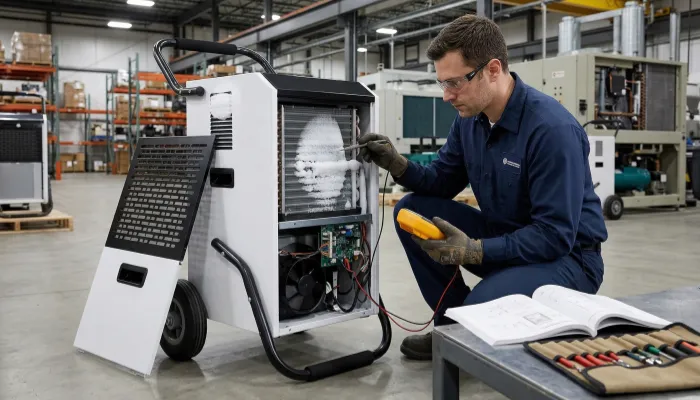
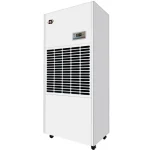
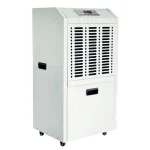
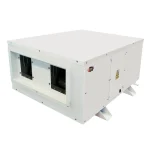
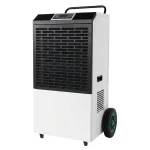
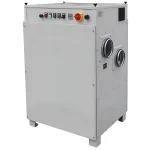
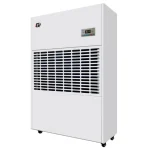
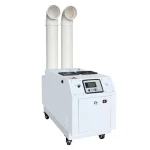
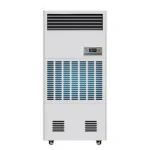
An industrial dehumidifier may run through an entire shift while a storage area remains humid, stop unexpectedly, develop persistent ice, or leak water. These symptoms can point to a component fault, but they can also result from airflow restrictions, control settings, unsuitable inlet conditions, or a change in the site’s moisture load. Treating every symptom as a failed part can lead to unnecessary repairs without addressing the underlying problem.
This guide helps facility teams, contractors, and equipment buyers identify eight common industrial and commercial dehumidifier problem groups. It covers the first evidence to collect, how to interpret it, and when to choose authorized maintenance, qualified service, or a wider system assessment. It addresses both refrigerant and rotary desiccant equipment, whose moisture-removal paths are different.
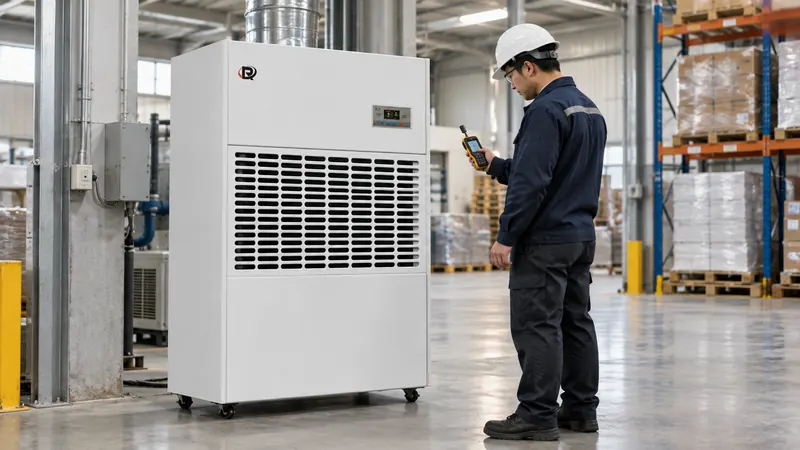
Before Troubleshooting: Safety and Equipment Type
Smoke, a burning smell, damaged electrical connections, severe mechanical impact, or water reaching electrical parts require action under the site’s emergency isolation procedure. Repeated breaker trips also require qualified investigation; never bypass a protective device or repeatedly reset a tripping breaker. Before accessing filters or service areas, follow the manufacturer’s shutdown and isolation instructions. Heated desiccant systems may require a controlled cooling sequence, while internal electrical, refrigeration, and heating work belongs to qualified personnel.
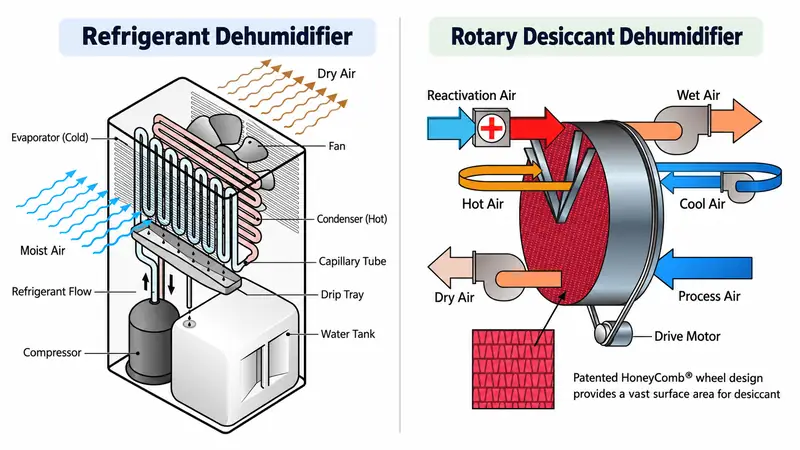
A refrigerant dehumidifier cools air so that moisture condenses and drains away. Its diagnosis often involves the active refrigeration stage, evaporator airflow, defrost, and condensate route. A rotary desiccant dehumidifier captures vapor in a rotor and, in common wet-exhaust designs, expels it through a separate heated reactivation airstream. Its diagnosis also involves rotor movement, regeneration airflow, seals, and wet-air discharge. Some desiccant installations include cooling or condensate modules, so the amount of water collected is not a universal performance test.
Industrial Dehumidifier Troubleshooting Chart
Start with the observed symptom rather than a suspected component. The causes below are categories to investigate, not confirmed diagnoses or a ranking of how often failures occur.
| Symptom | Possible causes | First evidence to collect |
|---|---|---|
| No start or unexpected shutdown | Supply, absent drying demand, interlock, protection | Controller status, complete alarms, operating mode |
| Fan runs but drying appears weak | Standby, inlet conditions, airflow, drying-stage fault | Drying demand, inlet temperature/RH, component status |
| Water drains but the room stays humid | Added moisture load, poor distribution, measurement, capacity | Representative humidity trends and recent site changes |
| Persistent refrigerant-coil ice | Cold inlet, airflow restriction, defrost, refrigeration | Inlet temperature and recovery after defrost |
| Water leak or high-water stop | Drain restriction, routing, pump, pan | Leak location and drainage arrangement |
| Frequent cycling or abnormal control | Sensor placement, external commands, protection | Which component cycles, alarm and timing records |
| Weak airflow, noise, vibration | Filters, duct resistance, fan, supports | Accessible restrictions and recent modifications |
| Desiccant unit misses dew-point target | Reactivation, rotor, seals, air paths | Process-air readings, controller status, exhaust routing |
The same restriction can appear under several symptoms. For example, reduced airflow can lower a refrigerant unit’s drying performance and, in some conditions, contribute to coil icing. That does not mean a restricted filter should be diagnosed from either symptom alone.
Four Checks Before Assigning a Fault
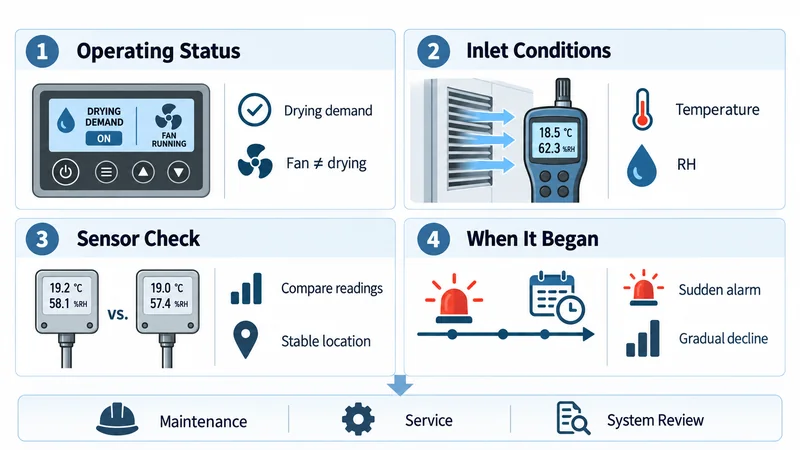
First, confirm that drying has actually been requested. A powered display or turning fan may coexist with compressor delay, standby, defrost, or an external building-management command that disables drying. Read the model’s permitted status screens and distinguish fan operation from operation of the active drying stage. The sequence matters because the distinction between a normal delay and an unexpected stop depends on the installed controls; how an industrial dehumidifier is operated and controlled provides the context for these operating states.
Second, record the actual inlet temperature and relative humidity (RH). Conditions near a loading dock or cold boundary can differ substantially from a central room sensor. Compare inlet readings and operating mode with the installed model’s performance data; an allowable temperature range does not promise rated moisture removal everywhere within that range.
Third, verify surprising humidity readings at representative locations. Compare a calibrated or recently checked instrument with the control sensor under comparable conditions and allow the readings to stabilize. Warm discharge air can have a lower RH without necessarily containing less water vapor. As Vaisala’s guidance on humidity-measurement errors explains, temperature differences and condensation at a sensor can distort the comparison.
Finally, identify when the problem began. A sudden alarm after normal operation calls for a different investigation from a slow decline between maintenance visits. A complaint that began after new ductwork, controls, or production changes also raises installation and load questions. If the system has never achieved the specified condition since commissioning, checking the original design duty may be as important as checking equipment faults.
1. The Unit Will Not Start or Stops Unexpectedly
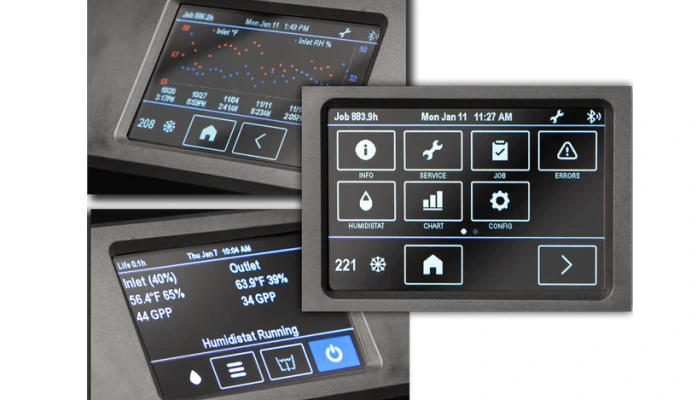
A completely unresponsive unit and a unit with a powered controller but no drying demand are different cases. An external disconnect or electrical protection issue may prevent startup, while standby, an external interlock, a prescribed delay, or a high-water safety input can keep a functioning controller from allowing the drying stage to run. Some three-phase systems also have phase-related protections.
Check accessible supply indications and the controller’s permitted operating screens, then record the complete alarm message before any authorized reset. A high-water indication directs the initial investigation toward condensate discharge; a controller showing satisfied demand suggests there may be no fault at all. Repeated electrical trips or protective stops need qualified diagnosis because an alarm identifies a detected condition, not necessarily the damaged part. Do not change breaker ratings or defeat interlocks to restore operation.
2. The Fan Runs but Moisture Removal Is Weak
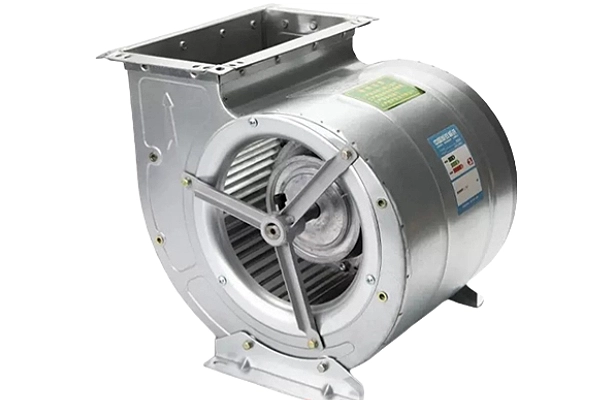
The first distinction is between a fan that runs while drying is inactive and a machine that is actively drying but producing less water than expected. A refrigerant unit operating with relatively dry inlet air may produce little condensate without malfunctioning. Restricted airflow can also reduce processed air volume and heat transfer, while faults in the refrigeration stage or, on desiccant units, the reactivation stage can reduce actual water-vapor removal.
Use the earlier operating-state and inlet-condition checks to separate these possibilities. If the drying stage is commanded on, inspect only permitted external air-path restrictions and compare available performance evidence with the manufacturer’s data. For a refrigerant unit, confirm that condensate is not being held up by its drain route before treating low discharge as low production. The more detailed question of whether water is being condensed, collected, or discharged is addressed in diagnosing an industrial dehumidifier that is not collecting water.
Outlet RH by itself does not establish drying performance. At suitable measurement points and reasonably stable operating conditions, inlet and outlet temperature/RH can be used together to compare dew point or humidity ratio; the interpretation must account for the actual duct and air-mixing arrangement. If effective removal remains below expectation while the unit is commanded to dry, qualified performance diagnosis is preferable to assuming refrigerant loss from its sound or discharge temperature.
3. Water Drains but Room Humidity Remains High
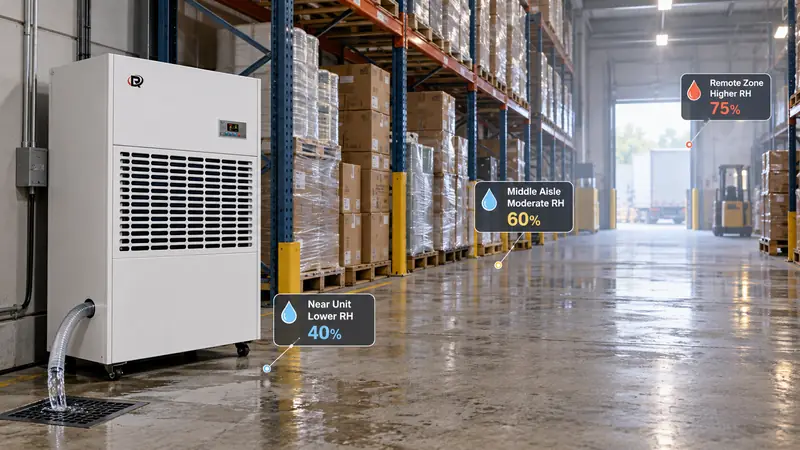
Water leaving a refrigerant dehumidifier confirms that some moisture is being removed, not that removal is keeping pace with the building’s current load. Loading-door traffic, wet products, washdown, humid makeup air, or process changes can raise the incoming moisture load. Meanwhile, poor air distribution can leave distant aisles damp even when conditions close to the unit have improved.
Look at the pattern across the controlled area. A drier zone near the machine and wetter remote areas suggests investigating distribution and sensor coverage; humidity spikes that follow door openings or washing suggest checking the added load and recovery behavior. If readings remain high across the entire area, verify actual drying and controls before deciding that capacity is insufficient. These are the first distinctions in investigating why industrial humidity stays high despite dehumidifier operation, where the deeper assessment of moisture sources, measurement, and distribution belongs.
4. Ice Continues to Build on a Refrigerant Coil
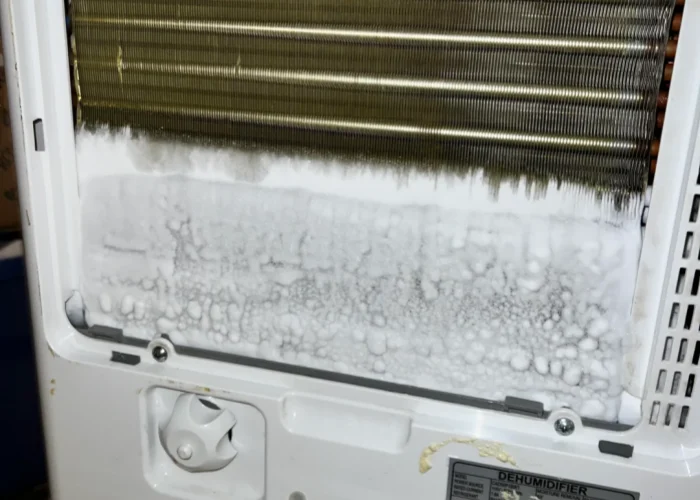
Some refrigerant dehumidifiers form frost in certain inlet conditions and remove it during their intended defrost sequence. The concern is ice that fails to clear, recurs quickly, or prevents airflow and drying from recovering. Low inlet temperature, restricted airflow, a defrost-control problem, or a refrigeration fault can lead to similar visible symptoms, so coil ice alone does not identify a damaged component.
Record inlet temperature, accessible airflow restrictions, and what happens over the model’s prescribed defrost cycle. If frost clears and performance recovers as intended, the behavior may be normal for that installation. If ice persists after permitted maintenance and conditions have been verified, escalate to qualified service; the causes and checks for repeated industrial dehumidifier freezing explain the deeper diagnostic distinctions. Never chip ice from the coil or apply unapproved heating.
5. Water Leaks or a High-Water Alarm Stops the Unit
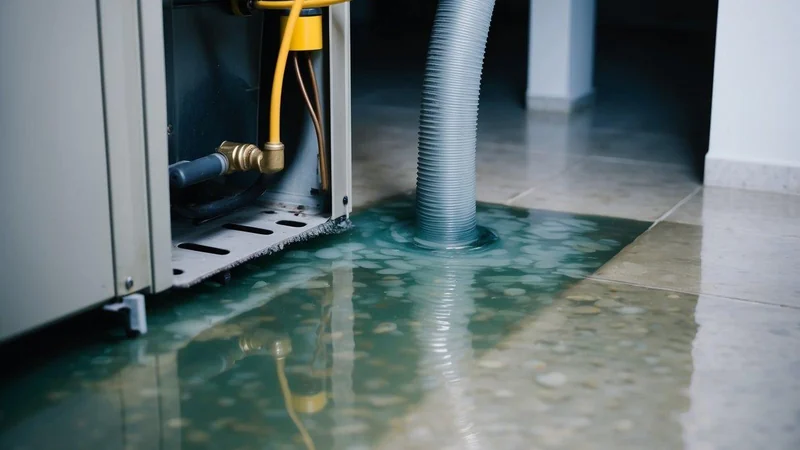
A leak can begin at a blocked external discharge, a poorly routed gravity line, a pump arrangement, a loose fitting, or a damaged pan. On some ducted installations, pressure at the drain pan affects drainage, and condensation on external cold surfaces or wet-air exhaust ducts can be mistaken for a leaking pan. The source matters more than where the puddle is first noticed.
Trace the visible water path and record the alarm and installed drainage arrangement. An obstruction at an accessible hose suggests a different response from an internal pump or pan problem. Gravity fall, pumped lift, and model-specific trap requirements are installation questions discussed in industrial dehumidifier drainage and discharge arrangements; adding an arbitrary trap may make a drain problem worse. Only perform maintenance authorized by the equipment instructions, and isolate or escalate promptly if water threatens electrical parts.
6. Frequent Cycling or Unexpected Control Behavior

First establish what is cycling. A fan that remains on while the compressor follows a normal humidity setpoint is different from an entire unit that repeatedly stops on protection. Unstable cycling may also arise when a sensor is too close to dry discharge air, an external BMS conflicts with local controls, or a controller setting does not suit the operating sequence. Compare the timing of starts and stops against the setpoint, humidity trend, and alarm history rather than assuming the unit is oversized.
Unexpected humidity readings deserve a measurement check before parts are replaced. Sensor drift, contamination, placement, or communication faults can all produce an apparent disagreement with room conditions. Verify which sensor controls the unit and whether readings remain inconsistent at comparable locations. Continuous operation, meanwhile, is not inherently a fault: a high ongoing load or a continuous-fan strategy may explain it. The key is whether the specified condition is maintained and whether the active drying stage follows its intended control logic. Never disable protective delays to conceal cycling.
7. Airflow Weakens or Noise and Vibration Increase
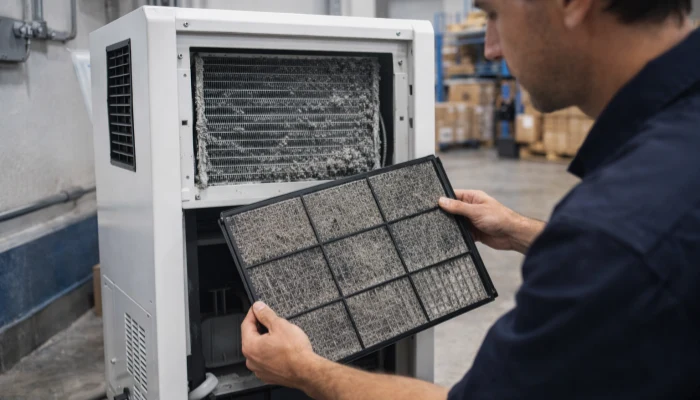
Filters, grilles, dampers, and ducts can restrict the air passing through a functioning dehumidifier. A filter replacement or duct modification can also change resistance enough to move the fan away from its intended operating point. Consequently, a turning fan is not proof that the required airflow reaches the equipment or protected area.
Check accessible restrictions and note whether the change followed installation work or developed gradually. A technician may need airflow and external-static-pressure measurements rather than relying on visual inspection alone. New scraping, impact, or severe vibration also calls for mechanical inspection; note where and when the sound occurs, but do not remove guards or reach near moving equipment while it operates. Restore only the external items covered by approved maintenance procedures before checking whether performance has recovered.
8. A Desiccant Unit Cannot Reach Its Target Dew Point
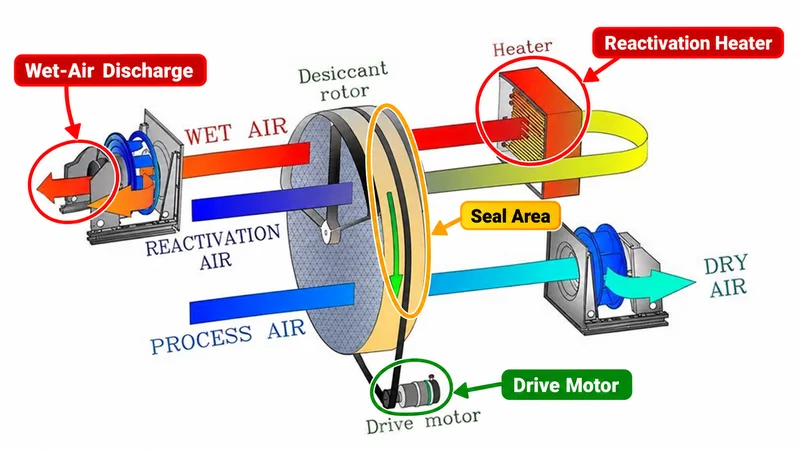
A rotary desiccant machine depends on two interacting air paths. Process air passes through the moisture-adsorbing rotor, while a separate reactivation stream removes moisture from another rotor sector and exhausts it outside the controlled space. Process airflow alone therefore cannot establish successful drying; inadequate reactivation heat or airflow, a rotor-drive problem, worn seals, or a restricted wet-air discharge can each affect the delivered dew point.
Collect accessible controller status and alarms, representative process inlet/outlet conditions where measurement points are provided, and photographs of external process and wet-air paths. A moving rotor does not prove adequate regeneration, just as warm reactivation air does not prove effective moisture removal. Condair’s desiccant dehumidifier troubleshooting documentation illustrates why heater, rotor drive, airflow, and leakage require separate checks. Internal adjustments and regeneration settings are model-specific and should be handled by qualified personnel.
Equipment Fault, Maintenance Issue, or System Problem?
Before blaming insufficient capacity, reasonably verify the controller’s demand, measurement reliability, permitted airflow conditions, and effective moisture-removal performance against the installed model’s data. A high room RH is an outcome to investigate, not proof that the equipment is undersized. This distinction is especially important if the equipment has never reached the specified target or the site’s moisture load has changed since commissioning.
| Finding after initial checks | Appropriate next step |
|---|---|
| Accessible filter or drain needs attention | Authorized maintenance, followed by verification |
| Protection recurs or a commanded component fails to operate | Qualified equipment diagnosis |
| Sensor location, duct arrangement, or control coordination is incorrect | Installation correction and recommissioning |
| Equipment dries properly but distant areas remain humid | Air distribution and zone-control review |
| Equipment output is verified but site moisture input has increased | Address sources and reassess residual load |
| Required temperature or dew point has changed | Capacity and technology reassessment |
A warehouse dock, a washdown area, and a low-dew-point production room may require different control boundaries even inside the same facility. Existing ventilation and process requirements must still be met. Where the machine is healthy but the duty has changed, matching an industrial dehumidifier to its actual operating conditions becomes a selection and system-design question rather than a component repair.
What to Record for Technical Support
A concise fault record lets the manufacturer, service contractor, or project engineer decide which information is missing without requiring a full engineering survey at the first enquiry. Start with the equipment identity, symptom, and operating conditions, then add evidence specific to the fault.
| Information | What to provide |
|---|---|
| Equipment identity | Model, serial number, nameplate photograph |
| Symptom and timing | What happened, when it began, intermittent or continuous |
| Controller state | Mode, setpoint, full alarms, timestamps |
| Actual conditions | Inlet temperature/RH, representative room readings, target |
| Equipment behavior | Drying-stage status, defrost, cycling, condensate or exhaust observations |
| Installation | Photographs of accessible ducts, filters, drains, wet-air exhaust |
| Changes and actions | New ductwork, ventilation, production, maintenance, corrective steps |
The responsible response depends on the finding. A manufacturer can clarify model specifications and operating expectations; qualified personnel handle internal electrical, refrigeration, and heater faults; and a project engineer evaluates installation or changing site requirements. These are related but distinct responsibilities.
Verify the Correction and Prevent Recurrence
A unit restarting does not establish that its original problem has been resolved. After the approved action, check the operating sequence, the relevant condensate or wet-air discharge path, and the absence of recurring alarms. Compare humidity and equipment behavior under reasonably similar inlet conditions and site loads, then observe a representative operating period that includes normal production or door activity. Acceptance should be based on the installation’s requirements, not a universal test value.
Keep the verified operating record as a baseline. Filter and drain access, approved replacement parts, and documented control changes make future diagnosis more reliable. The inspection tasks and preventive intervals belong in an industrial dehumidifier maintenance checklist, rather than being duplicated as another full maintenance procedure here.
Frequently Asked Questions
Are Industrial Dehumidifier Error Codes the Same Across Brands?
No. A code’s meaning depends on the manufacturer, controller, and model revision. Record the full code and message and check the applicable manual; the code may indicate a detected condition rather than the failed part.
Should Refrigerant Be Topped Up During Routine Maintenance?
No. Refrigerant top-up is not routine maintenance for a properly functioning sealed system. Suspected loss requires qualified diagnosis of the cause, appropriate correction, and the manufacturer’s service procedure.
Does Continuous Operation Mean an Industrial Dehumidifier Is Undersized?
Not necessarily. Continuous drying may be appropriate for a sustained moisture load, and some controls operate fans continuously. Capacity is a later question after verifying target conditions, actual drying performance, load, and control sequence.
When to Request a New Humidity-Control Assessment
If the equipment is operating as intended but the controlled space still cannot meet its required conditions, gather the target RH or dew point, inlet conditions, process moisture sources, operating schedule, air-distribution constraints, and findings from the checks above. Those details help distinguish a recoverable maintenance or service issue from a new application requirement.
For example, a warehouse with changing door activity and uneven humidity across storage zones may require a distribution and load review rather than another attempt to repair a healthy unit. Rinwang’s warehouse humidity-control approach addresses this type of application-level planning. For other industrial environments, the same operating brief can support a discussion of equipment capacity, refrigerant or desiccant technology, and the most suitable control arrangement.