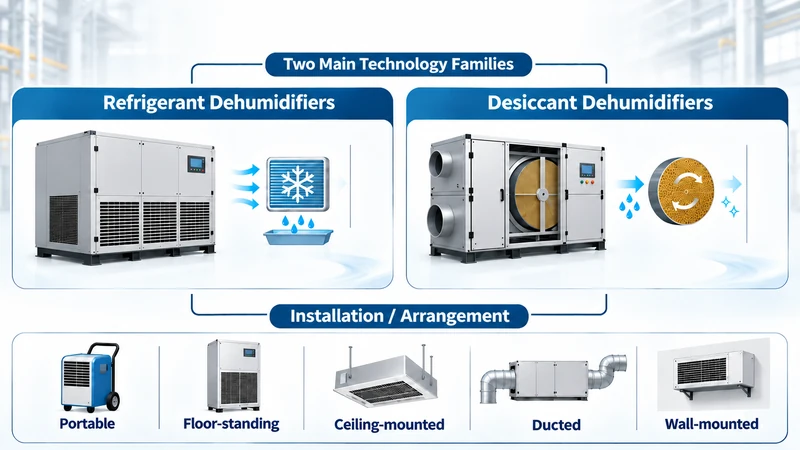
Refrigerant and desiccant are the two main technology families buyers encounter when comparing industrial dehumidifiers. Names such as LGR, rotary, portable and ducted describe more specific designs or installation arrangements. Understanding how these terms fit together helps explain what a machine does and whether two quotations are describing comparable equipment.
The starting point is how moisture is removed from the air. Equipment layout, air distribution and environmental protection then add further detail. This article focuses on those categories for room and process-air humidity control.
1. How the Main Categories Fit Together
Industrial dehumidifiers can carry several descriptions at once. A machine may use refrigerant technology, stand on the floor, connect to ductwork and include protection for a corrosive environment. These descriptions answer different questions about the same unit.
| Classification | Common descriptions | What the description tells you |
|---|---|---|
| Moisture-removal technology | Refrigerant; solid or liquid desiccant | How the equipment captures water vapor |
| Equipment design or system combination | LGR, rotary, fixed-bed, hybrid | How the drying components or treatment stages are arranged |
| Mobility, mounting and air distribution | Portable, floor-standing, wall-mounted, ceiling-mounted, ducted | Where the equipment is placed and how air moves through the installation |
| Heat management | Air-cooled, water-cooled, heat recovery | Where heat is released or reused |
| Operating range and protection | Low-temperature, high-temperature, corrosion-resistant, hazardous-area rated | Which environmental conditions the equipment is designed to accommodate |
The distinctions also apply within a row. Portable describes mobility, floor-standing describes position, and ducted describes an air connection. A portable unit can stand on the floor and have duct connections without becoming three different kinds of dehumidifier.
2. Refrigerant Dehumidifiers and Related Designs
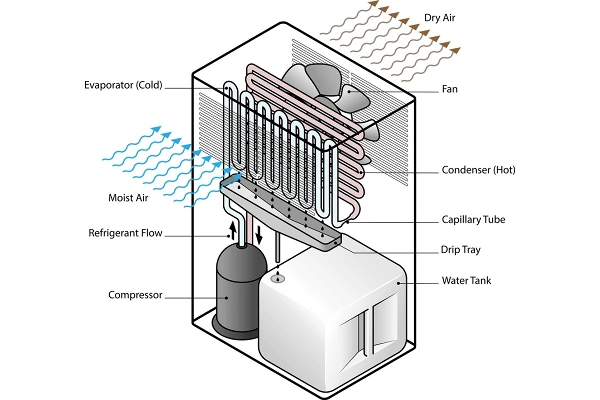
Conventional Refrigerant Dehumidifiers
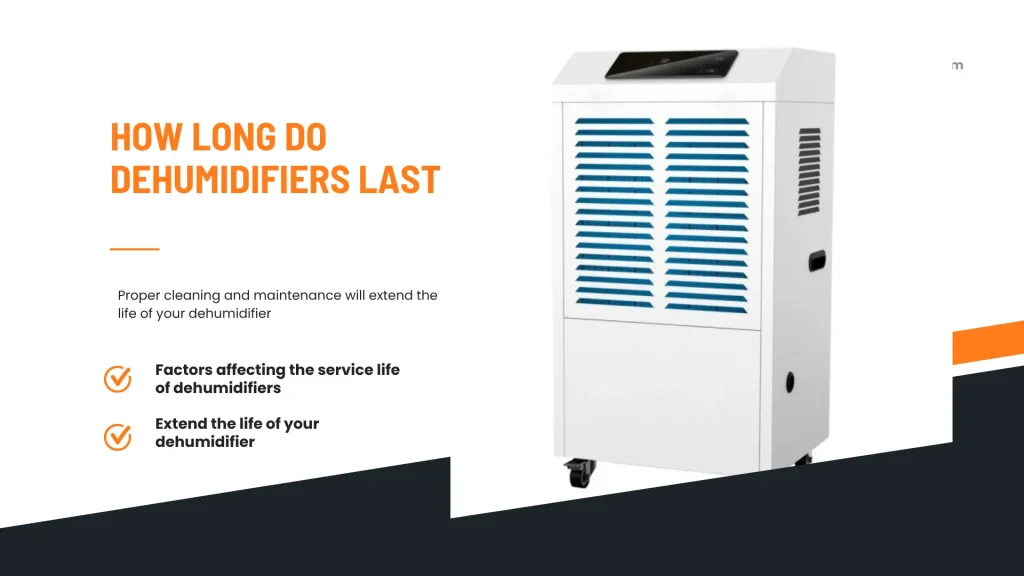
Refrigerant dehumidifiers remove moisture by cooling air below its dew point, collecting the condensed water and draining it away. In a typical self-contained machine, the air is reheated by the condenser before returning to the space.
These units are widely used for general humidity control in warehouses, workshops and storage areas where conditions suit condensation-based drying. Their useful operating range depends on the particular design. The practical differences between refrigerant and desiccant systems become especially important when the space is cold or the required air condition is very dry.
LGR Dehumidifiers
LGR means Low-Grain Refrigerant. These machines belong to the refrigerant family but are designed to maintain useful moisture removal as the air becomes drier. They are particularly associated with restoration work, where the conditions change as a drying job progresses.
The distinction matters when drying wet building materials: the objective is to maintain air conditions that allow moisture to keep leaving walls, flooring or other affected materials. The low-grain label concerns air moisture content, not a promise of low-temperature operation. LGR does not mean desiccant, and it does not establish a universal minimum dew point. Individual models still have different performance limits.
Heat-Pump, Air-Cooled and Water-Cooled Descriptions
Many conventional refrigerant dehumidifiers already operate on a heat-pump cycle. The term “heat-pump dehumidifier” therefore does not automatically identify an additional moisture-removal technology. Heat recovery describes a further arrangement for using recovered heat, rather than simply releasing it without another useful purpose.
Air-cooled and water-cooled identify how the condenser transfers heat: into an airstream or into a water circuit. Neither label alone tells you whether heat ultimately remains inside the treated space. That depends on the complete equipment arrangement, including the location of the condenser and the destination of the cooling air or water.
3. Desiccant Dehumidifiers: Solid and Liquid Systems
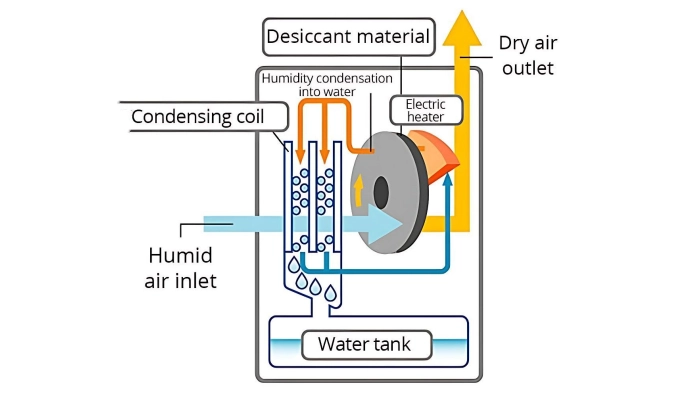
Desiccant equipment captures water vapor using moisture-attracting materials. The material is regenerated so it can continue removing moisture. Within this family, the important distinctions are the material used and the way it moves through, or remains within, the drying system.
Solid Desiccant: Rotary and Fixed-Bed Designs
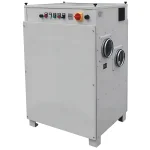
Solid desiccant systems use adsorbent materials, such as silica gel or molecular sieves. A common industrial design is the rotary wheel, which moves through a process-air section and a regeneration section. One part dries the incoming air while another releases collected moisture into a separate regeneration stream.
Fixed-bed systems keep the material in stationary beds. Depending on the arrangement, beds alternate between drying and regeneration. Rotary and fixed-bed therefore describe structures within the solid-desiccant category, rather than competing basic technologies.
These arrangements can serve demanding drying requirements, but the word “desiccant” alone does not guarantee a particular dew point. Material selection, regeneration conditions and the complete system design determine the result.
Liquid Desiccant Systems
Liquid desiccant equipment uses a hygroscopic solution, such as lithium chloride, to absorb water vapor. The solution becomes diluted as it collects moisture and is regenerated to restore its drying capability.
ASHRAE distinguishes liquid absorption from solid adsorption, which helps explain why a liquid-desiccant system has different components from a desiccant wheel. Solution circulation, concentration and temperature control are central to the liquid arrangement; its performance should not be inferred from the specifications of a rotary unit.
4. Hybrid Dehumidification Systems
Hybrid systems combine treatment stages within an integrated air-handling process. One example is cooling followed by desiccant drying, an arrangement described by ASHRAE. Cooling removes part of the incoming moisture load, and the desiccant stage provides further drying. Additional cooling may then be used to reach the required supply-air temperature.
This makes hybrid a system description. It does not establish a third basic moisture-removal principle or guarantee lower energy consumption. A meaningful hybrid specification identifies the combined stages and the duty of each one; placing unrelated machines in separate rooms does not describe the same arrangement.
5. Installation and Air-Distribution Formats
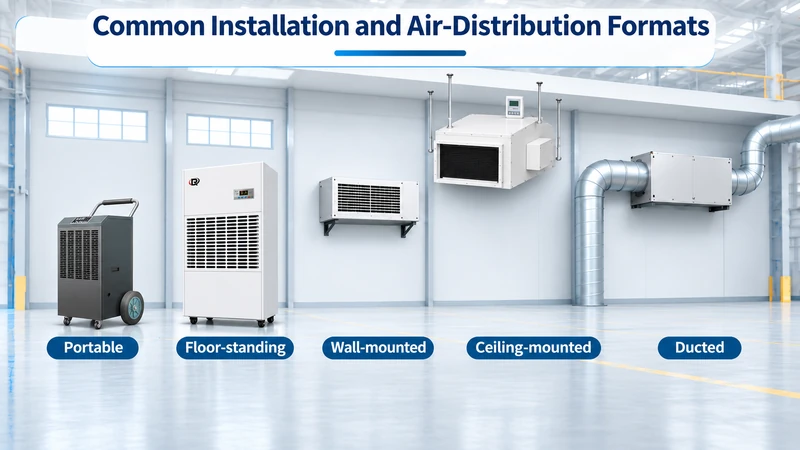
The installation format determines how equipment occupies the building and serves the treated area. It can be considered separately from the drying technology, although the selected technology affects connections such as condensate drainage or regeneration exhaust.
Portable Industrial Dehumidifiers
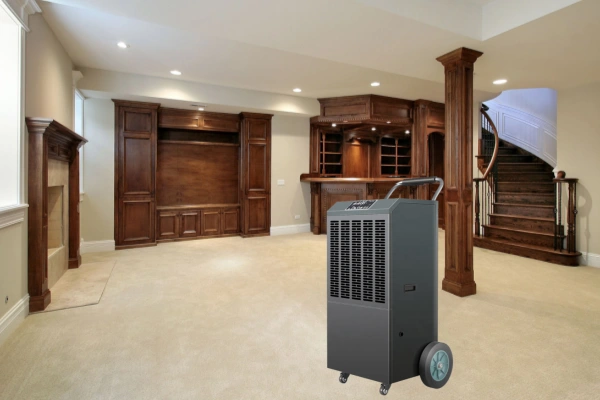
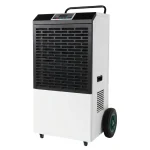
Portable units are designed for relocation between work areas. Wheels, handles or a transportable frame make them useful for temporary drying, equipment rental and changing maintenance needs. Portability describes how the unit can be deployed; it does not mean that every location will have the power, drainage or exhaust arrangements the machine needs.
Floor-Standing Industrial Dehumidifiers
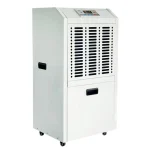
Floor-standing machines are positioned on the floor or an equipment base. They can discharge directly into the surrounding space or connect to ducts. This format makes sense where the equipment can remain accessible without obstructing storage, production or movement through the building.
Wall-Mounted Industrial Dehumidifiers
Wall-mounted units keep the cabinet off the floor and can suit smaller rooms or areas where floor-level equipment would be inconvenient. Their defining feature is the supporting wall structure. Service access and a suitable drain route remain part of the installation, even though the unit occupies less floor space.
Ceiling-Mounted Industrial Dehumidifiers
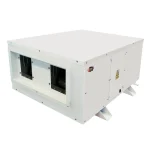
Where floor space needs to remain available, a dehumidifier can be installed above the working area. Ceiling-mounted equipment may supply air directly or through ductwork. The arrangement saves usable floor space, but it still needs structural support and access for filters, drainage components and repairs.
Ducted Industrial Dehumidifiers
Ducted equipment uses connected ducts to supply treated air, receive return air or both. It allows the machine to be located away from the area being controlled and can distribute air to more than one location. A ducted unit may be floor-standing, ceiling-mounted or installed in a separate plant area.
Its distinguishing requirement is the ability to move air through the connected system. Ducts, filters and outlets introduce resistance, so the fan must provide the intended airflow at the relevant external static pressure. Supplying several rooms from one unit also requires suitable air paths and controls; duct connections alone do not provide independent humidity control in each room.
6. Operating Ranges and Protective Configurations
Low-Temperature Dehumidifiers
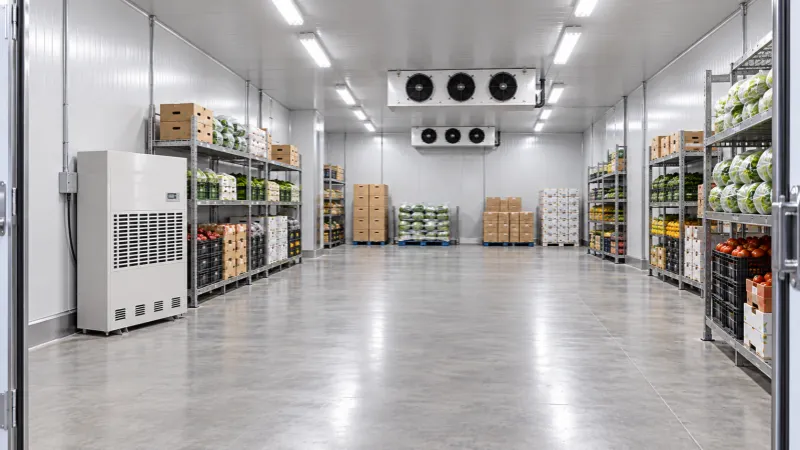
Low-temperature describes an operating capability. It may refer to a refrigerant unit with an appropriate defrost arrangement or a desiccant system selected for cold conditions. The designation should be read together with the specified temperature range and performance at the required air condition. A minimum operating temperature is not a promise that full rated capacity is maintained there.
High-Temperature Dehumidifiers
High-temperature designs accommodate air or surroundings beyond the limits of a standard model. For example, equipment intended for heated drying rooms must be evaluated at the process temperature. The temperature of the air entering the machine and the temperature around its cabinet may differ, so the relevant limits need to be identified separately.
Corrosion-Resistant Dehumidifiers
Corrosion-resistant configurations protect equipment exposed to substances such as salt, cleaning chemicals or process contaminants. They may use compatible materials and protective treatments for coils, cabinets, fasteners and drainage components. The protection required depends on the substance and exposure conditions.
This label describes the durability of the machine, not a separate drying method. A stainless-steel cabinet does not establish the resistance of every internal component, and corrosion resistance should not be confused with suitability for an explosive atmosphere.
Hazardous-Area Rated Dehumidifiers
A classified hazardous area may require equipment with specific ignition-protection measures and supporting certification. IECEx addresses equipment used where flammable gases or combustible dusts may occur. The relevant equipment rating must match the location and applicable requirements; a general industrial or corrosion-resistant description is insufficient.
Hazardous-area protection is separate from both moisture-removal technology and chemical resistance. A particular project may need all three to be specified together.
7. Reading a Complete Equipment Description
Consider the description “floor-standing, ducted rotary desiccant dehumidifier.” It identifies a solid-desiccant wheel, a floor-level installation and ducted air distribution. It does not, by itself, state moisture-removal capacity, supply-air temperature or suitability for corrosive exposure. Those are additional specifications.
The same approach works when reading product listings. Identify the technology first, then the design, installation arrangement and environmental limits. Choosing between the resulting options depends on the operating conditions and constraints of the project, rather than how many descriptive labels appear in the product name.
Frequently Asked Questions
Why do some suppliers list three main types of dehumidifiers?
They may be grouping conventional refrigerant, LGR and desiccant equipment as three product categories. That can be useful commercially, but LGR remains a refrigerant design. Other lists separate refrigerant, solid desiccant and liquid desiccant equipment. The number depends on the classification being used.
Do R32 and R410A identify different dehumidification technologies?
No. They identify refrigerants used within refrigeration systems. Machines using different refrigerants can still belong to the refrigerant dehumidifier family. The refrigerant specification does not replace the model’s capacity, operating range or installation requirements.
Does a built-in pump make a dehumidifier a different type?
A condensate pump is a drainage feature. It moves collected water where the installation cannot rely on gravity drainage alone. It does not change the way the machine removes moisture from the air.