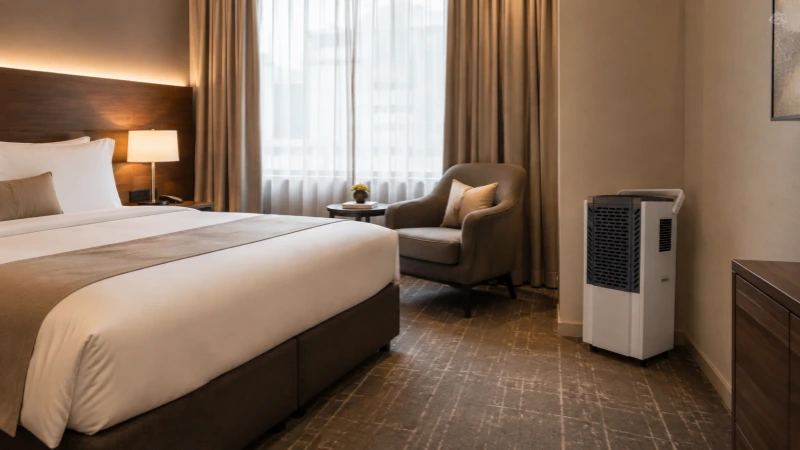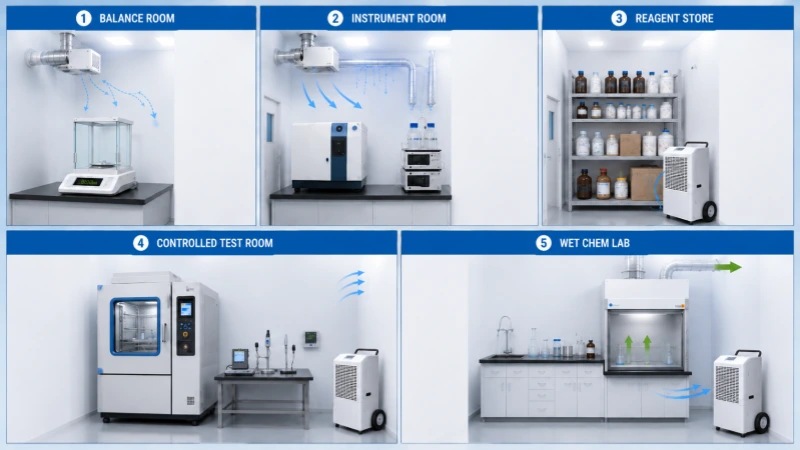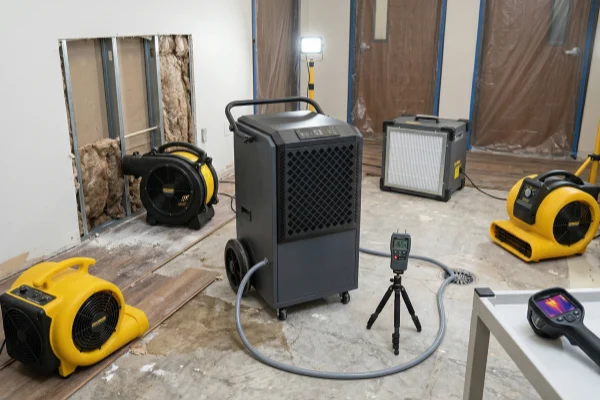
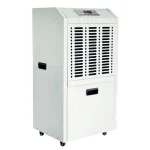
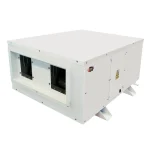
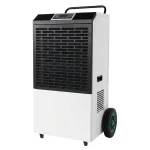
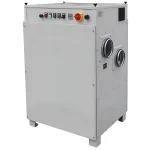
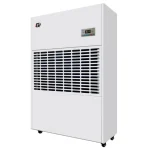
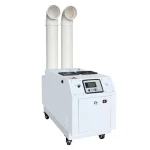
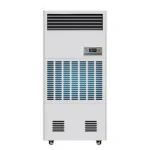
Water and wastewater treatment plants are not single humidity environments. A wet well, dry well, chlorine feed room, blower building and MCC room may all experience moisture-related problems, but the causes and risks can be completely different. Some areas are dominated by outdoor ventilation and below-grade moisture, others by corrosive chemical exposure, while wastewater process zones may also involve H₂S, methane and hazardous electrical classifications. For this reason, dehumidifier selection should not begin with floor area or a single plant-wide RH target.
This guide explains how humidity and corrosion risks differ across the main treatment-plant zones, why hazardous-area classification and ventilation must be considered before equipment selection, and how to distinguish situations that require corrosion-resistant standard equipment from those that may require hazardous-location construction. It also covers the operating conditions and project information needed to size and specify a dehumidifier correctly for water and wastewater applications.
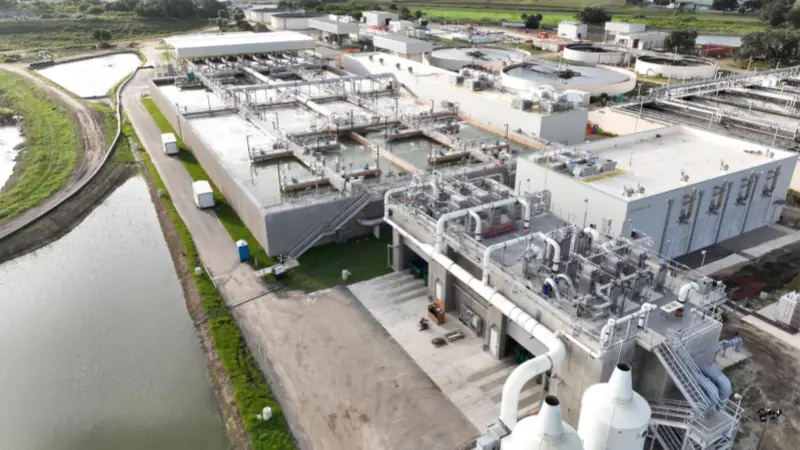
Why Humidity Problems Are Different in Water and Wastewater Treatment Plants
Humidity in a treatment plant rarely comes from one source. Open water or wastewater surfaces create continuous evaporation, below-grade structures may receive moisture from groundwater and seepage, and sludge handling or washdown can introduce large intermittent loads. In mechanically ventilated areas, outdoor air can become another major source of moisture, particularly when a large volume of humid summer air is brought into the building.
At the same time, humidity may interact with H₂S-derived contaminants, chlorine compounds and other corrosive substances. This means the practical problem is often not simply high room RH, but condensation or a persistent moisture film forming on concrete, coils, electrical contacts, cabinets and other vulnerable surfaces.
| Load source | Typical areas | Why it matters |
|---|---|---|
| Open water or wastewater surfaces | Wet wells, tanks, clarifiers | Continuous evaporation creates a persistent latent load |
| Outdoor ventilation air | Wet wells, dry wells, blower rooms | High outdoor dew point can introduce a large moisture load |
| H₂S and wastewater gases | Wet wells, screenings, sludge areas | Can contribute to corrosion and hazardous-area requirements |
| Chemical vapor or aerosol | Chlorine and hypochlorite rooms | Can aggressively attack coils, cabinets and metal components |
| Groundwater and seepage | Below-grade dry wells and electrical rooms | Creates a steady background moisture load |
| Washdown and wet processing | Dewatering and process rooms | Produces short-duration but potentially high moisture loads |
In concrete wastewater structures, moisture is also part of the environment that enables biogenic sulfuric acid corrosion. H₂S released from wastewater can enter the damp surface layer, where sulfur-oxidizing microorganisms can ultimately produce sulfuric acid that attacks cementitious material. For metal and electrical equipment, the corrosion mechanisms differ, but condensation can again make conditions worse by creating a conductive or chemically aggressive surface film.
This is why the objective should not simply be to “keep the wastewater plant dry.” The first step is to identify where the moisture comes from, what equipment or structure is actually at risk, and whether reducing airborne moisture will meaningfully reduce that risk.
Drinking water facilities and wastewater facilities also need to be distinguished. Drinking water treatment normally does not include raw sewage or anaerobic sludge digestion, so humidity problems are more commonly associated with cold pipes and tanks, filter areas, below-grade structures, chemical handling and outdoor-air infiltration. Wastewater facilities may additionally contain methane and H₂S-producing processes, which can make hazardous electrical classification an important part of equipment selection.
Hazard Classification Comes Before Dehumidifier Selection
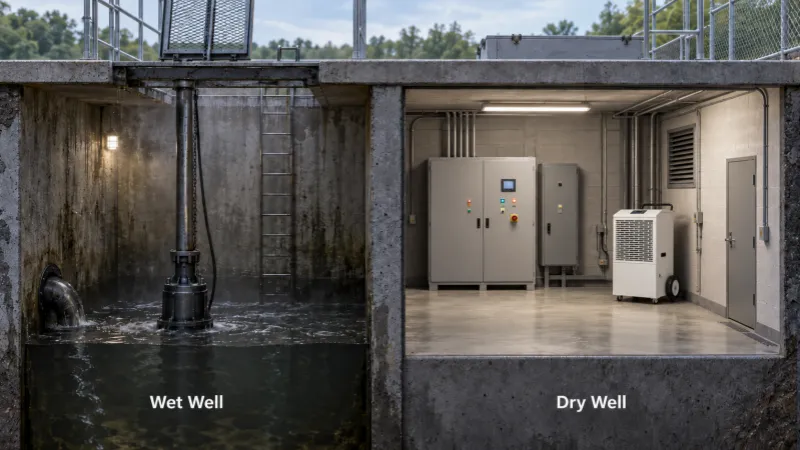
Where combustible gases may be present, the first question is not how many liters per day a dehumidifier should remove. It is what type of electrical equipment is permitted in that location.
The Recommended Standards for Wastewater Facilities, commonly known as the Ten States Standards, treats electrical systems in raw wastewater wet wells and certain enclosed spaces where hazardous concentrations of flammable gases may occur as hazardous-location installations. It also separately requires equipment installed in wet wells to be suitable for corrosive conditions.
That distinction is important because explosion protection and corrosion resistance solve different problems. A heavily coated cabinet is not automatically suitable for a Class I hazardous location, while explosion-protected electrical construction does not automatically mean that the coil, cabinet, fasteners and drain components will withstand continuous chlorine or H₂S-related corrosion.
Dry wells need similar care. Physical separation from a wet well is important, but the room name alone does not determine its classification. Depending on the ventilation arrangement, process layout and applicable project standard, a dry well may require different electrical treatment. Several wastewater design standards also require separate wet-well and dry-well ventilation systems and specifically call for dehumidification in below-grade dry wells.
For any zone where combustible gases could influence equipment selection, the correct sequence is therefore: Confirm the project classification → review ventilation and process conditions → establish the permitted electrical construction → select the dehumidification equipment
A dehumidifier manufacturer can build or select equipment around a defined hazardous-area requirement, but the supplier should not be expected to determine the plant’s electrical-area classification simply from a description such as “wet well” or “pump room.”
Ventilation Does Not Automatically Solve the Humidity Problem
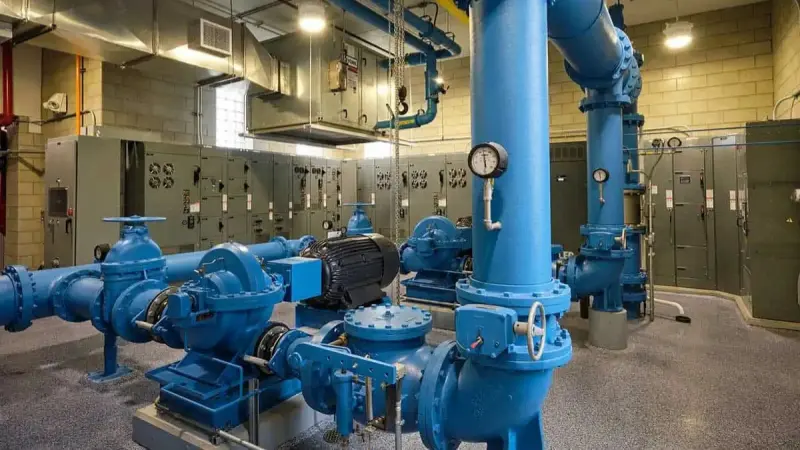
Wastewater facilities create an important distinction between ventilation and dehumidification. Ventilation may be required to dilute hazardous or toxic gases, but that does not mean it will reduce the moisture content of the room.
For wet wells, commonly referenced wastewater design standards specify high fresh-air ventilation rates. The Ten States Standards, for example, calls for at least 12 air changes per hour for continuous ventilation or 30 air changes per hour for intermittent ventilation, based on fresh air. Similar requirements appear in current state wastewater design rules.
Whether that outdoor air dries or wets the room depends on its moisture content. When outdoor dew point is lower than the indoor condition, ventilation can help remove moisture. When hot, humid outdoor air has a higher dew point than the desired indoor condition, increasing ventilation can instead add a substantial latent load. In other words, ventilation may improve gas safety while simultaneously increasing the amount of water vapor the HVAC or dehumidification system must remove.
For dehumidifier sizing, the useful relationship is therefore not simply “more air changes equals drier air.” The ventilation moisture load depends on both airflow and the difference between the moisture content of the outdoor and indoor air.
This distinction is particularly important in warm, humid climates. Two treatment buildings with the same dimensions, process and target RH may need very different dehumidification capacities if one receives cool, relatively dry outdoor air and the other receives high-dew-point summer air.
A dehumidifier should also not be used as a substitute for gas detection, hazardous-gas ventilation, H₂S treatment, chlorine leak control, odor treatment or protective coatings. It controls water vapor; it does not remove every hazardous or corrosive constituent from the room air.
Zone-by-Zone Dehumidification Guide
There is no single useful RH target for an entire treatment plant. Equipment should instead be selected according to the process zone, moisture source, corrosion exposure, surface-temperature conditions and confirmed electrical classification.
| Zone | Main concern | Dehumidification direction |
|---|---|---|
| Wet wells / raw wastewater lift stations | Gas safety, corrosion and hazardous classification | Ventilation and gas management first; humidity control is secondary |
| Dry wells | Condensation, below-grade moisture and ventilation load | Active dehumidification is often appropriate after classification is confirmed |
| Chlorine / hypochlorite rooms | Chemical corrosion | Emphasize material compatibility and condensation control |
| Blower / dewatering rooms | Heat, wet processing, washdown and outdoor air | Size according to actual latent load rather than floor area |
| Digester / biogas areas | Methane release and hazardous classification | Gas safety first; dehumidification only after electrical requirements are established |
| MCC / control rooms | Condensation and corrosion of electrical components | Control dew point relative to vulnerable surface temperature |
Wet Wells and Raw Wastewater Lift Stations
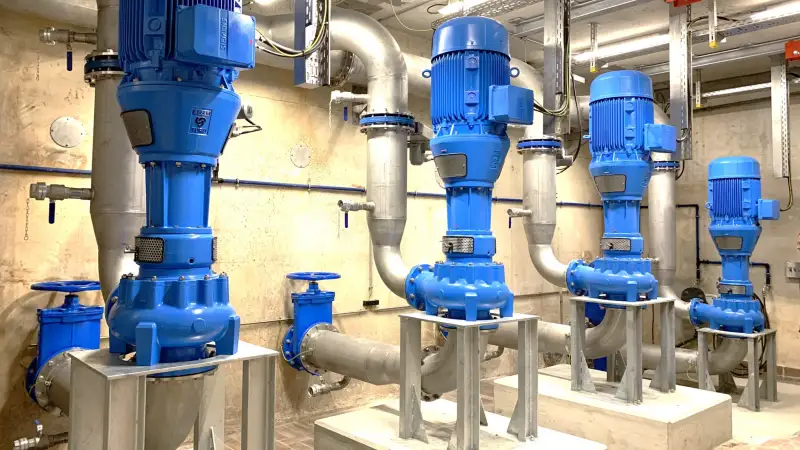
A raw wastewater wet well should first be treated as a gas-safety and corrosion environment rather than as a room requiring a specific relative humidity. Ventilation, gas monitoring and hazardous-location requirements take priority, and electrical equipment installed in the space has to comply with the classification established for that project.
Where active humidity control is genuinely required within a classified area, an explosion-proof dehumidifier may form part of the solution. The required Class/Division or Zone, gas group, temperature class and destination-market certification should be provided before final model selection rather than relying on the general term “explosion-proof.”
It is also worth asking whether the dehumidifier actually needs to be located inside the wet well environment. Where the process and duct arrangement allow it, providing humidity control from an adjacent unclassified area may reduce both equipment complexity and long-term exposure to highly corrosive air.
Dry Wells
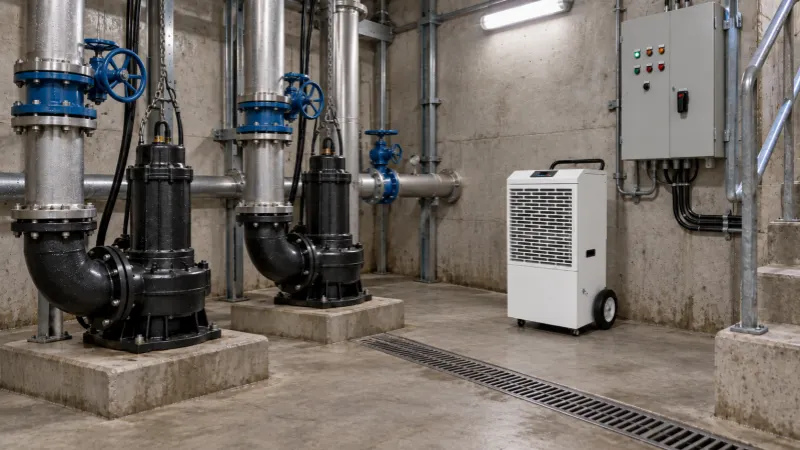
Dry wells are one of the clearest wastewater applications for active humidity control because they can combine below-grade construction, groundwater moisture, equipment heat and outdoor ventilation. Wastewater design guidance such as the Ten States Standards specifically calls for automatic heating and dehumidification in dry wells, while some current state rules explicitly require dehumidification in below-ground dry wells.
This does not mean that every dry well needs the same dehumidifier or the same RH setpoint. Classification should still be confirmed before electrical equipment is selected, and the humidity target should be based on condensation risk, equipment limits and actual operating conditions.
For many projects, maintaining conditions roughly around 50–60% RH may be a reasonable starting point, but it should not be treated as a universal regulatory requirement. More important is whether surfaces, pipes, equipment or structural elements are approaching the local dew point.
Drainage also needs to be planned early because below-grade installations may not have sufficient gravity fall. A condensate pump, high-level alarm or other protection may therefore be part of the system rather than an accessory added after installation. Our industrial dehumidifier drainage guide explains this part of the design in more detail.
Chlorine and Hypochlorite Feed Rooms
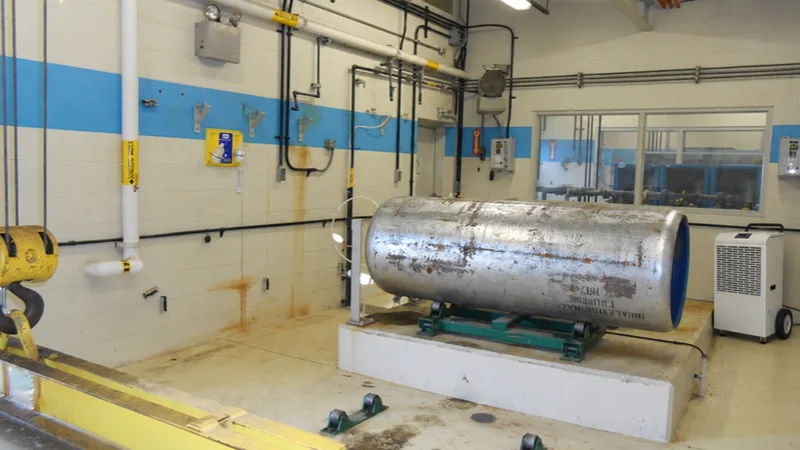
Chlorine and hypochlorite rooms should not automatically be treated in the same way as methane-bearing wastewater zones. Chlorine is nonflammable, although it is highly toxic, oxidizing and corrosive, so the primary dehumidifier concern is usually chemical compatibility rather than methane-style ignition protection.
Humidity control can help by reducing condensation and persistent moisture films, but the equipment still has to survive the actual chemical environment. Depending on exposure, this may affect the evaporator and condenser coils, protective coatings, cabinet, fasteners, drain pan, fan components and exposed electrical hardware.
This is also why an RFQ should identify the actual chemical rather than simply stating “chemical feed room.” Some wastewater facilities use flammable carbon sources such as methanol or ethanol, which introduce different fire and electrical considerations. The correct equipment specification should therefore follow the real chemical inventory.
Blower Buildings and Dewatering Rooms
Blower buildings and dewatering rooms can both require substantial humidity control, but the reason is not the same. Blower rooms may carry high sensible heat from motors and compression equipment, while dewatering areas can receive moisture from sludge processing, washdown, exposed wet materials and frequent door openings.
In both cases, the existing ventilation system can have a major effect on the required dehumidifier capacity. A room with large exhaust and make-up air volumes cannot be sized reliably from square meters alone, particularly if outdoor summer dew point is high.
The supplier should therefore know the ventilation airflow, outdoor design conditions, process moisture sources, room operating temperature and any washdown schedule. The objective is to determine the total latent load that the equipment must remove while coordinating the dehumidifier with the existing ventilation and heat-rejection system.
Digester and Biogas Areas
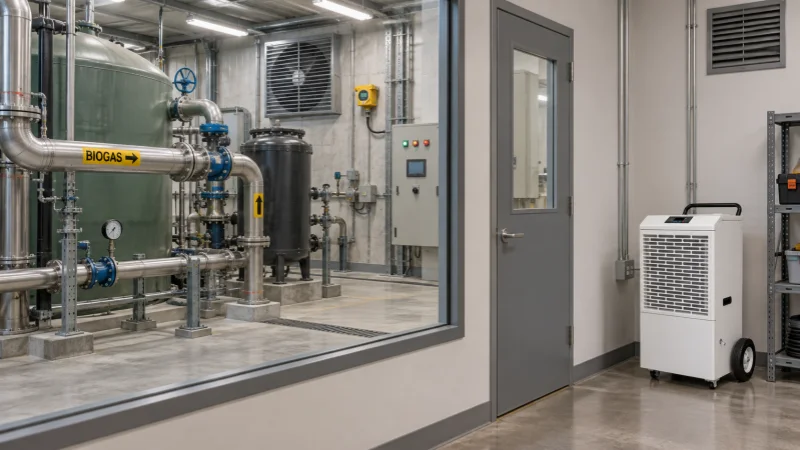
Anaerobic digesters produce methane-containing biogas, so these areas need to be approached primarily from gas safety and area-classification requirements. Fire risk depends on what happens when released gas mixes with air around leak points, valves, vents or equipment, rather than simply on the methane concentration inside the biogas stream.
Gas detection, ventilation and process interlocks therefore remain the primary protection systems. Humidity control is secondary and should be considered only after the electrical classification and equipment-location strategy are established.
Where moisture control is needed, designers should again consider whether dehumidification equipment can be located outside the classified space. If equipment must be installed inside the hazardous area, its complete electrical construction has to match the project requirement.
MCC Rooms and Control Rooms
MCC and control rooms are generally more straightforward dehumidification applications, but the cost of condensation-related failure can be high. The important design variable is not room-average RH alone; it is the relationship between the air dew point and the coldest vulnerable surface.
Condensation forms when warm, humid air reaches a surface below its dew point. Inside electrical enclosures, cooler cabinet walls, conduits, cable entries and temperature cycling can therefore create localized condensation even when the overall room does not appear extremely humid. Schneider Electric describes the same dew-point mechanism in electrical enclosures and notes that condensation can lead to corrosion, short circuits and equipment failure.
A practical room target around 45–55% RH may provide useful margin in many applications, but the engineering objective should be to maintain conditions that keep vulnerable surfaces above the local dew point while remaining within the electrical equipment manufacturer’s permitted temperature and humidity range.
Where the room is confirmed unclassified, a standard commercial or industrial refrigerant dehumidifier is normally the more straightforward solution.
What Should Be Specified in the Dehumidifier?
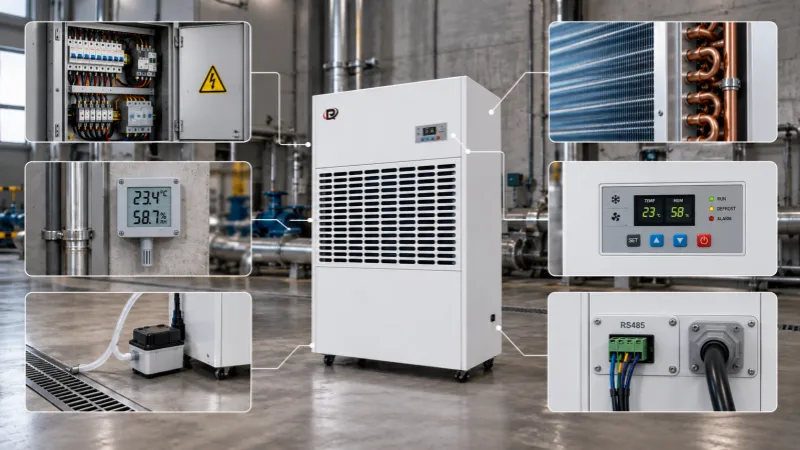
Once the process zone and electrical requirements are known, capacity is only one part of the specification. For treatment-plant projects, four areas deserve particular attention.
Hazardous-Area Requirements and Corrosion Resistance
For classified areas, provide the required Class/Division or Zone, gas group, temperature class and applicable certification system. Avoid using “explosion-proof” as the entire specification because equipment accepted in one market or classification is not automatically suitable for another.
Corrosion resistance should then be specified separately. A machine intended for a relatively clean MCC room does not necessarily have the same coil, coating and cabinet requirements as one operating around chlorine compounds or wastewater gases. Conversely, specifying every unit in the facility to the harshest material standard may add unnecessary cost.
Capacity Based on Moisture Load
Industrial dehumidifier capacity should not be selected only from floor area. The calculation should include room volume, outdoor conditions, ventilation airflow, process evaporation, door opening, wet materials, washdown, groundwater or seepage and the required indoor condition.
This is especially important for treatment plants because the outdoor ventilation load may exceed the internal moisture generation in some zones. For the general calculation method, see our industrial dehumidifier sizing guide.
Controls and Monitoring
Water and wastewater facilities commonly use PLC, SCADA or BMS monitoring, so the required control interface should be agreed before production. Projects may need run and fault status, high-humidity alarms, remote start/stop, temperature and RH feedback or RS485/Modbus communication.
If communication is required, “RS485” by itself is not a complete integration specification. The protocol, register requirements and control logic should be checked with the system integrator.
Drainage and Electrical Supply
Continuous humidity control also depends on reliable condensate removal. Below-grade locations may require pumped drainage and overflow protection, while long drain runs can introduce additional design considerations.
Electrical supply should likewise be confirmed before the equipment is built, including voltage, phase, frequency, connection method and destination-market requirements. Our drainage planning guide and industrial dehumidifier power supply guide cover these two subjects separately.
Information to Provide Before Requesting a Quote
A useful RFQ for a treatment-plant dehumidifier should allow the supplier to understand both the moisture load and the installation environment. Instead of providing only room area and the desired liters per day, include the following information:
- Process zone: wet well, dry well, MCC room, blower room, chlorine room, dewatering room, digester area or another space.
- Room dimensions: length, width, height and whether the room is above or below grade.
- Hazard classification: Class/Division or Zone classification where applicable.
- Ventilation conditions: airflow, air changes per hour and percentage of outdoor air.
- Indoor conditions: normal operating temperature and required RH or dew-point condition.
- Outdoor design conditions: summer temperature together with dew point, wet-bulb temperature or humidity ratio.
- Chemical exposure: H₂S, chlorine, hypochlorite or other process chemicals.
- Moisture sources: open liquid surfaces, sludge, washdown, groundwater, seepage or wet materials.
- Utilities: drainage arrangement, voltage, phase and frequency.
- Controls: standalone operation, dry contacts, Modbus, PLC or SCADA requirements.
For a classified location, the project hazard classification should be available before final equipment selection. Once these inputs are known, the manufacturer can determine not only capacity but also the appropriate equipment construction and operating configuration.
Frequently Asked Questions
What size dehumidifier do I need?
Industrial sizing should use moisture load rather than square footage alone. Include ventilation, outdoor humidity, process moisture, temperature and the required indoor condition when calculating capacity.
What is the difference between a desiccant and refrigerant dehumidifier?
Refrigerant units remove moisture by cooling air below its dew point. Desiccant systems adsorb moisture and generally perform better at lower temperatures or lower dew-point requirements.
Does a dehumidifier work in freezing temperatures?
Technology matters. Refrigerant performance decreases as temperature falls and coils may frost, while desiccant dehumidifiers can continue removing moisture at much lower temperatures.
Can a dehumidifier run continuously?
Many units can remain enabled continuously when designed for the duty. A humidistat normally cycles moisture removal as needed, while continuous drainage prevents condensate storage from limiting operation.
How much electricity does a dehumidifier use?
Consumption depends on unit capacity, technology, operating conditions and actual runtime. For project comparison, use rated input power together with expected duty cycle rather than capacity alone.
Where to Start
For water and wastewater treatment projects, dehumidifier selection should follow the process conditions rather than begin with a generic RH number or room area. A useful sequence is Process → Hazard Classification → Ventilation → Corrosion Exposure → Moisture Load → Condensation Target → Equipment Specification. Following this order helps avoid both over-specifying hazardous-area equipment where corrosion resistance is the main requirement and installing ordinary electrical equipment where a classified construction is required.
Once these conditions are established, the required capacity, materials, electrical construction, drainage and controls can be selected around the actual environment. Rinwang can review your zone conditions, temperature and humidity data, ventilation load and confirmed hazardous-area requirements against our industrial dehumidifier options. For EPC contractors and equipment integrators requiring project-specific electrical, control or communication configurations, we also support custom OEM/ODM dehumidifier configurations.