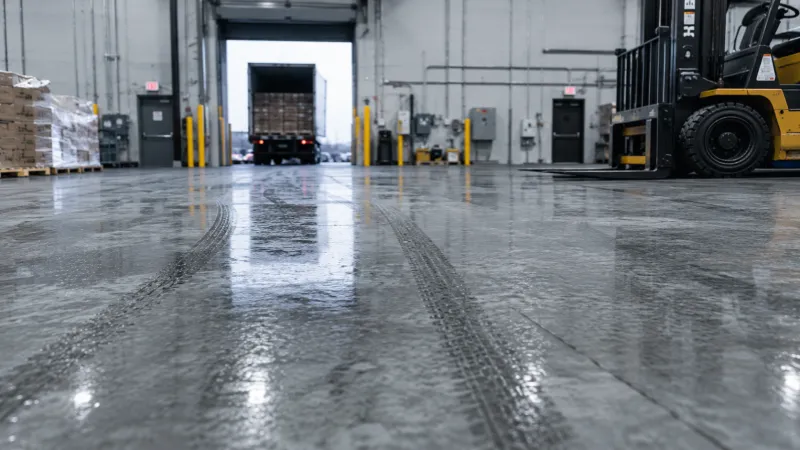
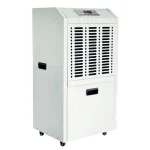
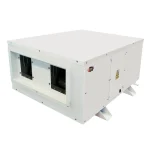
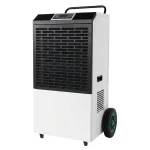
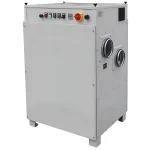
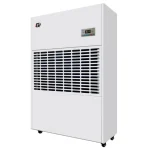
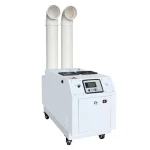
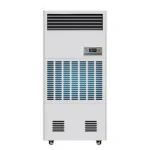
Ice rink humidity problems usually appear as visible operating issues first. Fog hangs above the ice. Water drips from the ceiling. Glass panels sweat. Entrances stay wet. Steel structures begin to rust. The ice becomes soft, slow, or frosty. In a curling rink, the tolerance is even lower. A small moisture change can affect the pebble and change how the stone travels.
The real selection question is not only “how many liters per day can this dehumidifier remove?” The better question is: Can the dehumidifier hold the required dew point under low-temperature, high-infiltration rink conditions?
Compared with many other commercial and industrial dehumidifier applications, ice rinks are more demanding because moisture has to be controlled around cold surfaces, not only removed from warm room air.
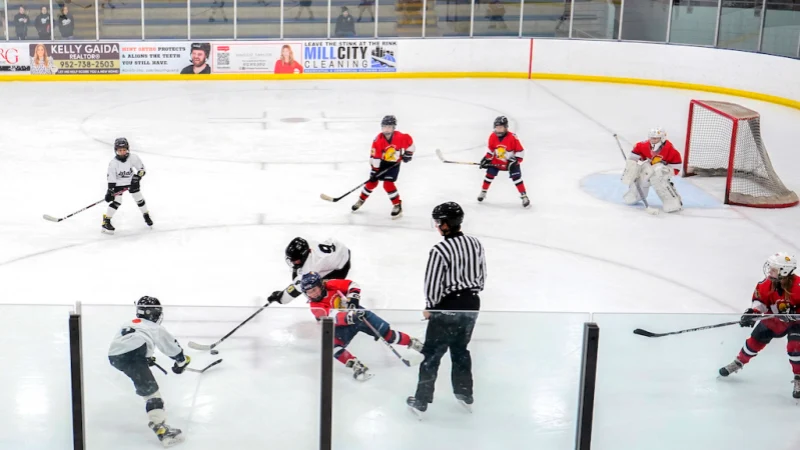
Common Humidity Problems in Ice Rinks
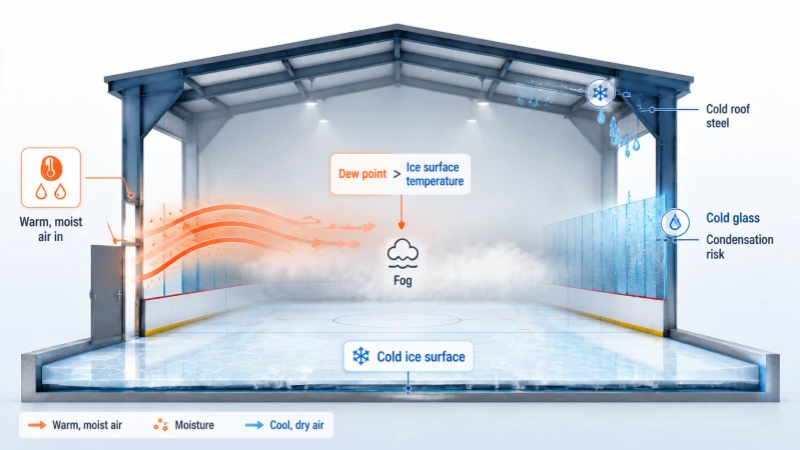
Ice rinks combine cold ice, warmer room air, outdoor air, moving people, wet entrance zones, and frequent door openings. When moisture reaches cold surfaces, visible problems appear quickly.
| Current Problem | First Check | Possible Cause |
|---|---|---|
| Fog over the ice | Dew point near the ice zone | Capacity is too low, return air is misplaced, or humid air enters too quickly |
| Ceiling dripping | Roof surface temperature and upper-air humidity | Moist air is collecting near the ceiling |
| Glass condensation | Glass temperature and nearby air dew point | Cold glass is below the condensation point |
| Soft or slow ice | Ice temperature and moisture load | Moisture and heat are affecting ice quality |
| Curling ice frost | Dew point stability and airflow over the ice | The unit may not hold stable low moisture conditions |
| Unit runs all day | Actual low-temperature capacity | Rated capacity may not apply at rink temperature |
| Coil icing | Room temperature, airflow, and coil condition | Refrigerant unit may be operating outside its best range |
Most rink humidity problems do not come from one source alone. Outdoor air, door openings, spectators, players, resurfacing, wet entrance zones, and building leakage often happen together during operation.
A dehumidifier can only control the air it can reach. If humid air enters faster than it can be removed, fog, dripping, and frost can continue even while the unit is running.
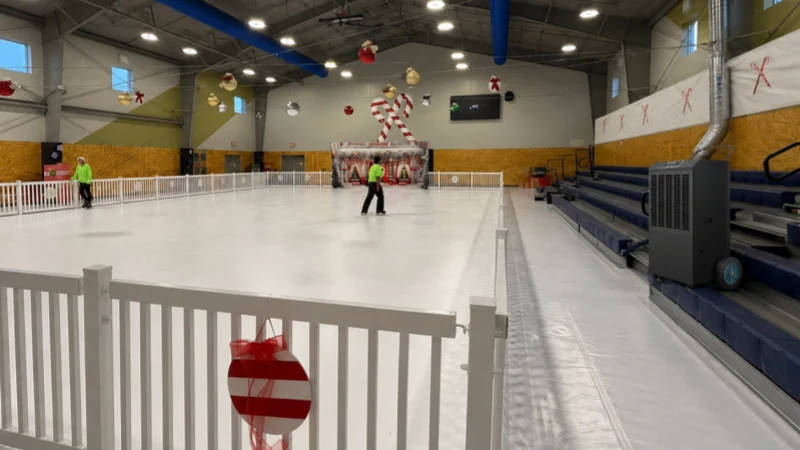
Why Curling Rinks Need More Stable Humidity Control
A standard skating rink can tolerate some variation in ice condition. A curling rink has much less tolerance.
Curling depends on a prepared ice sheet with pebble. The stone travels across this pebbled surface, and small changes in surface condition affect speed and curl. World Curling publishes official rules and sheet requirements, which helps explain why curling clubs treat ice condition as a controlled performance factor, not just a comfort issue.
Curling Ice Needs Stable Dew Point and Gentle Airflow
For a curling club, the main humidity problem may not be dramatic fog. The bigger issue can be slow changes in the playing surface.
If the dew point is too high, moisture can freeze on the pebble. If airflow is too strong, or if moisture control is pushed without considering the ice condition, the surface may change faster than expected.
| Curling Rink Requirement | What the Buyer Should Check |
|---|---|
| Stable dew point | Can the unit hold a consistent low-moisture condition? |
| Low-temperature performance | Is the capacity valid at rink operating temperature? |
| Controlled airflow | Can dry air be distributed without strong direct airflow over the ice? |
| Continuous operation | Can the unit run reliably through long operating periods? |
| Proper sensing | Are sensors placed where they reflect ice-level risk, not only average room RH? |
For curling rinks, stable dew point and controlled airflow often matter more than headline capacity.
Why Dew Point Matters More Than Relative Humidity in Ice Rinks
Many rink operators ask what humidity level an ice rink should maintain.
Relative humidity is useful, but it can mislead in cold-surface environments. Dew point gives a clearer warning for condensation and frost risk. The NOAA National Weather Service dew point glossary defines dew point as the temperature air must be cooled to reach saturation when pressure and moisture content are constant.
Why RH Alone Can Mislead Rink Operators
Relative humidity changes when temperature changes. An ice rink is not one uniform air zone. The air near the ice, the spectator area, the roof structure, the entrance zone, and the return air path can all have different temperatures. A wall sensor may show an acceptable RH value while fog is forming near the ice surface or condensation is forming on cold steel.
Dew Point vs Ice Surface Temperature
The practical control question is:
Is the air dew point lower than the ice surface and other cold surfaces?
If the answer is no, condensation or frost can occur.
A rink may appear stable at the same room temperature for several hours. Then fog appears. The dry-bulb temperature may not be the cause. The moisture content may have increased because of outdoor air, spectators, door openings, or resurfacing. For rink operators, the next check should be dew point, moisture source, air path, and actual dehumidifier performance at low temperature.
Refrigerant vs Desiccant Dehumidifiers for Ice Rinks
Not every dehumidifier performs well in a cold rink. A unit that works in a warm warehouse or indoor pool area may lose capacity in a colder ice rink. The basic technology decision is usually refrigerant vs desiccant dehumidifier, but ice rinks add one more question: can the unit maintain the required dew point at low temperature?
When a Refrigerant Dehumidifier May Be Enough
A refrigerant dehumidifier removes moisture by cooling air below its dew point so water condenses on a cold coil. It may be suitable for some rink projects.
| Project Condition | Why Refrigerant May Work |
|---|---|
| Small community rink | Moisture load may be moderate |
| Mild climate | Outdoor air is less humid |
| Moderate dew point target | The unit does not need to reach very low dew point |
| Seasonal operation | Fewer high-humidity operating hours |
| Budget-sensitive retrofit | Lower initial equipment complexity may matter |
The limitation is low-temperature operation. If the coil becomes too cold, ice can build up and reduce airflow. Repeated icing is a sign that the unit, airflow, or operating condition needs to be checked, especially when an industrial dehumidifier is freezing up in a cold environment.
When to Choose a Desiccant Dehumidifier for a Cold Rink
A desiccant dehumidifier removes moisture by adsorption rather than relying mainly on cold-coil condensation. That makes it a stronger fit for many low-temperature and low-dew-point environments. In ice rinks and curling rinks, desiccant systems are often considered when the project requires:
- Low-temperature operation
- Lower dew point control
- Stable performance during humid seasons
- Continuous operation
- Curling ice protection
- Less dependence on coil condensation and defrost cycles
For rink projects where the main challenge is cold-room performance, a low-temperature dehumidifier is usually more relevant than a standard commercial unit selected by nameplate capacity.
Which Dehumidifier Type Fits Your Rink Condition?
| Rink Condition | Suggested Direction |
|---|---|
| Mild climate, small rink, moderate humidity target | Refrigerant dehumidifier may be enough |
| Low-temperature operation | Desiccant or low-temperature industrial unit is safer |
| Curling rink | Stable dew point control should be prioritized |
| Frequent door opening | Higher moisture-load capacity is needed |
| High outdoor humidity season | Low-temperature performance must be checked |
| Existing fog or dripping | Recheck dew point, airflow, and actual capacity |
| Unit runs but humidity remains high | Check sizing, return air path, and sensor location |
Final selection should still be based on the rink’s operating temperature, target dew point, moisture load, and installation conditions.
How to Size an Ice Rink or Curling Rink Dehumidifier
Sizing should start from the moisture load, not from room area alone.
The question is not only “what size dehumidifier do I need?” The better question is: how much moisture must be removed under the rink’s real operating conditions?
In ice rink applications, what size industrial dehumidifier do I need becomes a project calculation instead of a capacity label.
Moisture Sources That Change the Required Capacity
| Moisture Load | Why It Changes the Sizing Result |
|---|---|
| Outdoor air | Humid summer air can add a large moisture load |
| Door opening and infiltration | Entrances and loading doors create sudden moisture spikes |
| Spectators and players | Occupancy changes between practice and events |
| Ice resurfacing | Creates short-term heat and moisture disturbance |
| Operating hours | Year-round rinks need more stable control |
| Target dew point | Lower dew point requires stronger equipment capability |
| Existing ventilation | Air exchange affects how much moisture enters the rink |
Research on ice hockey arenas treats them as complex energy systems where indoor air, ice pad temperature, humidity, heat flux, and resurfacing all affect operation. The study Energy analysis in ice hockey arenas supports why rink conditions should not be treated like a simple commercial room.
Project Data a Supplier Needs Before Sizing
| Data Needed | Why It Matters |
|---|---|
| Rink type | Hockey, figure skating, curling, training, or multi-use |
| Ice surface area | Helps estimate moisture load and airflow needs |
| Room volume | Affects air distribution planning |
| Ice surface temperature | Defines condensation and frost risk |
| Indoor air temperature | Needed for dew point and RH evaluation |
| Target RH or target dew point | Defines the control goal |
| Outdoor design condition | Critical for humid-season sizing |
| Spectator capacity | Changes people load and ventilation need |
| Door opening frequency | Shows infiltration risk |
| Operating hours | Determines intermittent or continuous operation |
| Existing humidity problems | Helps diagnose capacity, airflow, or control issues |
| New build or retrofit | Affects ducting, drainage, exhaust, and maintenance access |
Why Nameplate Capacity Is Not Enough
Many dehumidifiers are rated under warm, humid test conditions. A cold rink can be very different.
Refrigerant units may lose capacity or spend time in defrost. Desiccant units should be evaluated by target dew point, process airflow, regeneration demand, and actual rink condition.
A rink can show the same sizing problems seen when an industrial dehumidifier is over- or undersized: one unit may run constantly without reaching the target, while another may control poorly because airflow and sensing do not match the room.
Before selection, ask:
- What is the capacity at the rink’s operating temperature?
- Can the unit reach the target dew point?
- What airflow is required?
- Where should return air be taken from?
- Does the unit need drainage, ducting, or regeneration exhaust?
- Can it run continuously during peak humidity periods?
Installation and Running Cost Factors That Affect Dehumidifier Performance
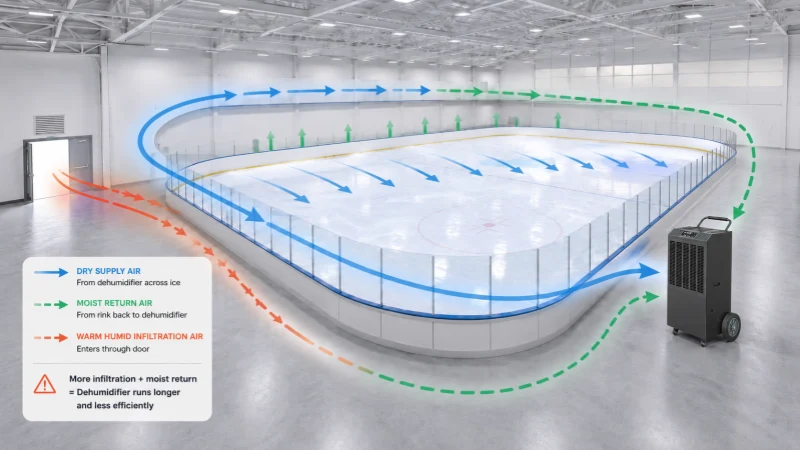
A correctly sized dehumidifier can still fail if the air path is wrong. Dry air should reach the zones where moisture causes problems. Return air should represent the real moisture load. If return air is taken from a dry corner, the unit may shut down while fog continues near the ice or entrance.
Curling rinks need more careful airflow. Strong direct air over the ice can disturb surface conditions. Stable dry air distribution is better than aggressive blowing.
Some rink projects require the dehumidifier to connect with existing ventilation or air distribution. The dehumidifier does not need to replace the HVAC system. The main requirement is that moisture-laden air returns to the unit and dry air reaches the correct zone.
Installation Checks by Dehumidifier Type
| Dehumidifier Type | Installation Checks |
|---|---|
| Refrigerant dehumidifier | Condensate drainage, drain line freeze risk, defrost operation, coil access, filter access, low-temperature range |
| Desiccant dehumidifier | Regeneration air exhaust, heat source, duct connection, maintenance space, filter access, process and return air routing |
What Makes an Ice Rink Dehumidifier More Expensive to Run?
| Factor | Impact on Running Cost |
|---|---|
| Operating hours | Year-round rinks use more energy than seasonal rinks |
| Outdoor humidity | Humid climates require more moisture removal |
| Target dew point | Lower dew point usually requires more energy |
| Equipment type | Refrigerant and desiccant systems use energy differently |
| Defrost frequency | Refrigerant units may lose effective runtime in cold conditions |
| Regeneration energy | Desiccant units need energy to dry the wheel |
| Airflow layout | Poor layout makes the unit run longer without solving the problem |
A realistic energy review looks at actual moisture removal under rink conditions, not only whether an industrial dehumidifier is energy efficient on paper.
Poor humidity control can also create hidden costs: fog-related complaints, ceiling dripping, ice repair, steel corrosion, mold, odor, unstable ice quality, extra maintenance, and downtime during humid periods.
Ice Rink Dehumidifier Selection Checklist
Use this checklist before choosing an ice rink or curling rink dehumidifier.
| Question | Why It Matters |
|---|---|
| What type of rink is it? | Hockey, figure skating, curling, and multi-use rinks have different needs |
| What is the ice surface area? | Affects moisture load and airflow planning |
| What is the room volume? | Helps estimate air distribution needs |
| What is the target ice temperature? | Determines condensation and frost risk |
| What indoor temperature and RH are required? | Needed to calculate dew point |
| Is there a target dew point? | More useful than RH alone in cold-surface environments |
| What is the outdoor climate condition? | Humid climates create larger moisture loads |
| How many spectators are expected? | People load affects moisture and ventilation |
| How often are doors opened? | Door infiltration can be a major hidden load |
| How often is resurfacing performed? | Creates short-term disturbance |
| Is this a new build or retrofit? | Affects installation space and duct routing |
| What problem is happening now? | Fog, dripping, frost, corrosion, or soft ice point to different causes |
| Is drainage available? | Important for refrigerant units |
| Is regeneration air exhaust available? | Important for desiccant units |
| Is duct connection possible? | Helps deliver dry air to the correct zone |
With these details, a supplier can review the actual moisture load instead of guessing from room size alone.
FAQ
What causes condensation in an ice rink?
Condensation forms when moist air reaches cold ice, glass, roof steel, or other surfaces below the air’s dew point. In frozen areas, this can become frost.
Why is there frost on curling ice?
Frost can form when water vapor deposits onto a freezing surface. On curling ice, this can affect pebble condition, speed, and stone movement.
Can dehumidifiers work in cold temperatures?
Yes, but technology matters. Refrigerant dehumidifiers can lose efficiency or freeze in cold conditions, while desiccant dehumidifiers are generally better suited for colder spaces.
Why do dehumidifier coils freeze up?
Coils freeze when a refrigerant dehumidifier operates in conditions where ice forms on the evaporator coil, blocking airflow and reducing moisture removal.
Is dew point more important than relative humidity?
For ice rinks, yes. Dew point shows when condensation or frost may occur on cold surfaces, while RH changes with temperature and can mislead operators.
The right ice rink dehumidifier is the unit that matches the rink’s real operating condition. For rink projects, Rinwang usually starts by checking operating temperature, target dew point, moisture source, air route, and installation conditions before recommending a unit. This helps avoid selecting a dehumidifier only by nameplate capacity.
Prepare the ice surface area, indoor target condition, target dew point if available, outdoor climate data, spectator capacity, operating hours, and current humidity problems. Then contact Rinwang so the dehumidifier can be matched to the rink instead of selected from nameplate capacity alone.