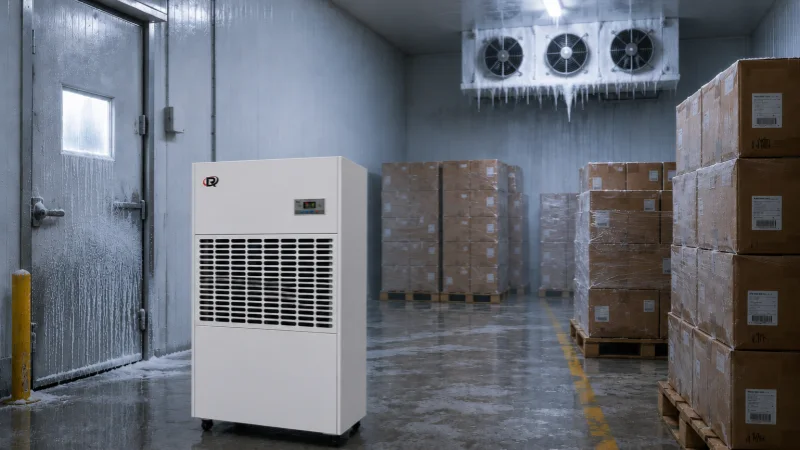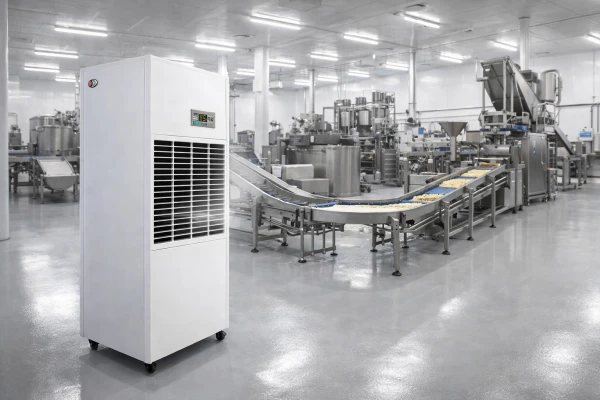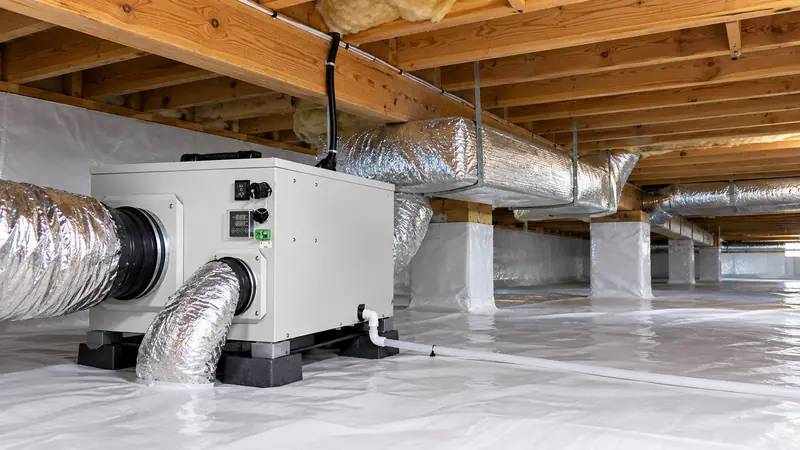
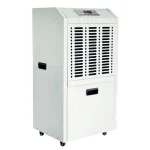
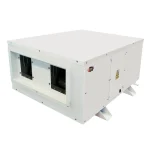
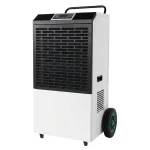
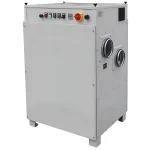
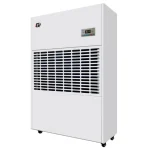
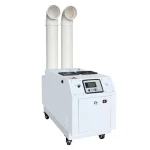
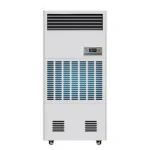
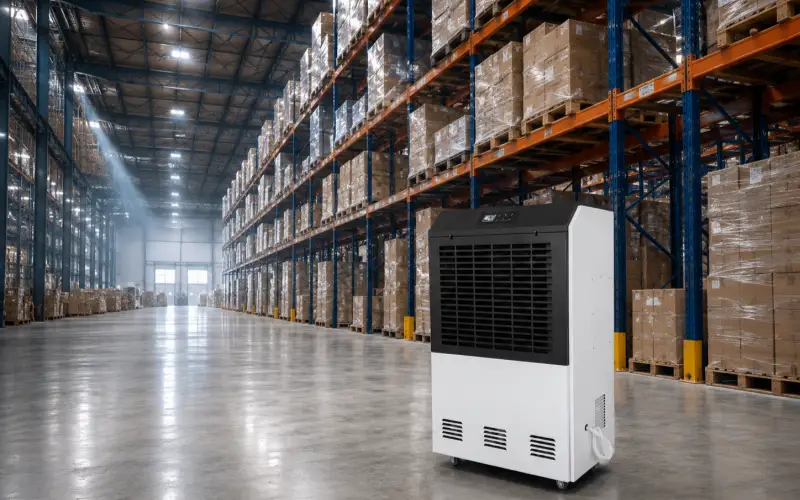
A warehouse can still have damp cartons near pallet racks, wet floors near dock doors, or condensation around cold room entrances even when the dehumidifier is running. In many cases, the problem is not only capacity. It is placement.
A correctly sized industrial dehumidifier can underperform if humid air cannot reach the unit, dry discharge air short-cycles back into the intake, or the humidity sensor reads only one local condition instead of the wider storage zone.
If your warehouse already needs humidity control, placement becomes the next practical decision: where the unit should pull humid air from, where dry air should be delivered, how condensate will drain, and which zones need separate monitoring.
For teams still deciding whether the issue requires industrial dehumidification for warehouse humidity control, that decision should come before final equipment placement. Once the facility has confirmed what humidity level the warehouse should maintain, the placement plan should focus on airflow coverage, drainage, and sensor zoning.
Map Moisture Sources and Airflow
Before choosing a location, mark where humid air enters, where air already moves, and where damp spots appear first.
A useful placement plan starts with three checks:
- Where does humid air enter the warehouse?
- How does air naturally move through the space?
- Which areas stay damp even when the main warehouse looks stable?
Map Moisture Entry Points First
Moisture is rarely distributed evenly across a warehouse. In most industrial storage spaces, the highest moisture load is concentrated around doors, docks, transition zones, wet process areas, cold surfaces, and moisture-sensitive products.
| Area to Check | Why It Matters | Placement Implication |
|---|---|---|
| Loading docks and roll-up doors | Outdoor humid air enters during loading | Place coverage near the dock influence zone |
| Cold room doors or ante-rooms | Warm humid air can condense near cold surfaces | Control moisture before it enters the cold zone |
| Wet cleaning or washdown areas | Moisture is added inside the warehouse | Place capacity near the wet process path |
| Exterior walls, roof panels, or cold bridges | Local condensation may appear first here | Add verification or alarm sensors |
| Pallet racks with paper, textile, food, or wood products | Goods can absorb and release moisture | Check rack depth, not only aisle air |
| Low-level or floor-slab damp zones | Moisture may accumulate near lower pallet levels | Confirm low-level airflow and drainage access |
This mapping helps the facility team decide which zones should influence the warehouse dehumidifier layout before equipment locations are finalized.
Check Existing Airflow Before Adding Equipment
A dehumidifier treats air, not square footage.
If air from a damp dock area cannot reach the unit intake, the unit cannot remove that moisture efficiently. If dry discharge air is blocked by racks or returns directly to the intake, the warehouse may look controlled near the unit while remote storage zones remain damp.
Check:
- Existing HVAC supply and return locations
- Main forklift aisles
- Rack direction and rack height
- Partition walls or separated storage bays
- Dead-end aisles or low-airflow corners
- Exhaust fans or fresh air systems
- Pressure changes near open doors
A placement plan should follow the air loop, not just the floor plan.
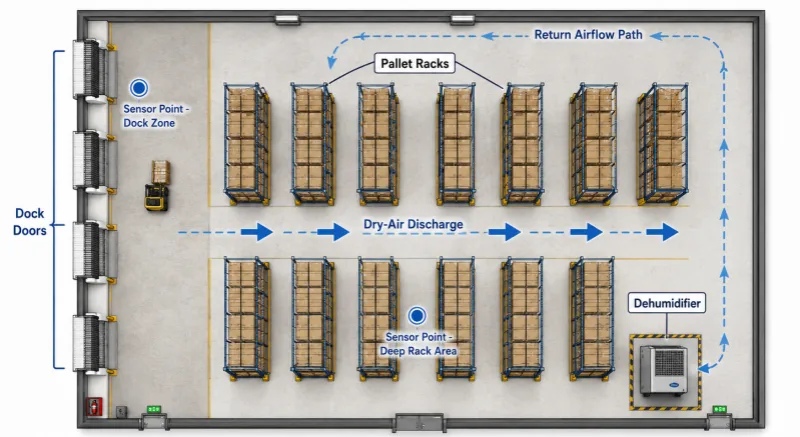
Mark Repeated Damp or Condensation Areas
Repeated damp areas often show where the airflow plan is not reaching the real problem.
Common examples include cold room door frames, dock slabs, metal racks near exterior walls, roof panels, shaded corners, low-airflow pallet zones, and transition areas between warm and cold rooms.
If the same location repeatedly shows water droplets, damp packaging, or unstable readings, do not only increase capacity. First check whether air is reaching that area and whether the nearest sensor is reading a representative condition.
If wet areas remain after airflow paths, rack dead zones, and sensor locations are checked, the installed system may need to be reviewed against the warehouse moisture load and industrial dehumidifier sizing.
Choose the Right Dehumidifier Position
The best place to put a warehouse dehumidifier is not always the middle of the warehouse.
A better question is:
Can the unit intercept humid air, discharge dry air into the right path, and pull return air from the target zone without short-cycling?
Avoid Blocked Center Placement
If the center is surrounded by pallet racks, stacked inventory, temporary storage, or internal partitions, the unit may only dry the air immediately around itself. The dock area, rack ends, lower pallet levels, or far wall corners may still remain damp.
| Site Condition | What It Usually Means for Placement |
|---|---|
| Open center with clear airflow | A central or near-central placement may work |
| Center blocked by racks or inventory | The unit may short-cycle near itself |
| Main moisture source near dock doors | Place coverage closer to the dock influence path |
| Warehouse divided into bays | One central unit may not represent every zone |
| Damp areas appear far from the unit | Check airflow reach before increasing capacity |
Stay Near Moisture Paths
For warehouses with frequent door openings, the placement priority is often moisture interception.
That does not mean placing the unit directly in front of the door. A unit placed in forklift traffic, door swing zones, or pallet staging lanes can create safety and maintenance problems.
In a warehouse with forklifts, pallet staging, and dock traffic, the best airflow location still has to work with daily material movement. OSHA’s warehousing safety guidance highlights powered industrial trucks, material handling, and slip/trip/fall risks as common warehouse hazards, so dehumidifier placement should not create a new obstacle in the same traffic zones.
Practical checks:
- Is the unit outside forklift turning radius?
- Is the intake clear of pallets and packaging?
- Does the discharge air move toward the storage zone?
- Is the unit close enough to intercept dock moisture?
- Can maintenance staff access the filter, drain, and control panel?
- Does a floor-mounted unit need guard rails or bollards?
If the unit has to sit inside a forklift route to reach the wettest air, the location is not ready. Change the position, add protection, or consider a ducted or suspended approach.
Build a Complete Intake-and-Discharge Loop
The unit should pull humid air from the target zone, remove moisture, and discharge dry air into a path that reaches the warehouse area being controlled.
Avoid these short-cycle patterns:
- The unit is placed tight against a wall.
- Dry discharge air immediately returns to the intake.
- Discharge air hits a rack face and bounces back.
- The unit is surrounded by stored goods.
- One unit blows dry air directly into another unit’s humidistat.
- The sensor reads dry discharge air instead of warehouse air.
Good placement creates a sweep across the zone. Poor placement dries only the air around the machine.
Plan Around Racks, Aisles, and High-Bay Areas
Pallet racks change airflow. In a warehouse with dense racking, dry air usually follows the easiest path: open aisles, rack ends, and wide traffic lanes. It may not penetrate deep into loaded rack positions unless the airflow plan is designed for it.
Racks Can Create Airflow Dead Zones
A main aisle can feel dry while the inside of a rack bay remains damp. This is common when goods are stored tightly, racks run perpendicular to the unit discharge, temporary inventory blocks airflow, or sensitive products are stored near exterior walls.
For these spaces, warehouse dehumidifier positioning should be checked by aisle and storage depth, not only by total floor area.
A practical sign of poor coverage is uneven product condition: dry cartons near the open aisle, but damp cartons at the back of the rack or near the floor.
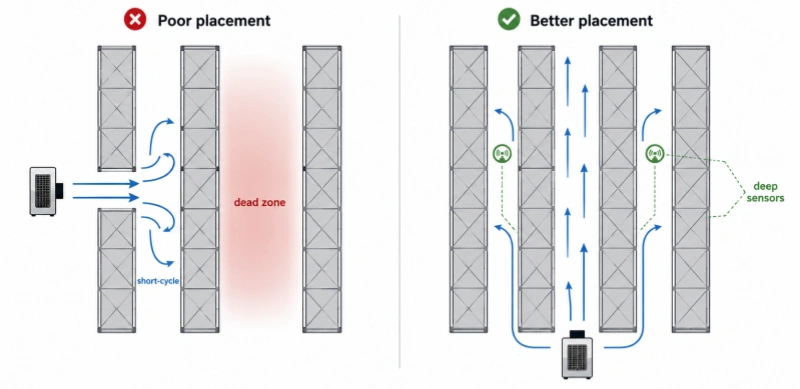
Align Discharge Airflow With Main Aisles
In many racked warehouses, discharge airflow should follow main aisles instead of being forced directly into dense storage.
For rack-heavy layouts, check:
- Does the unit discharge along a clear aisle?
- Is there a return path from rack ends?
- Are rack depths creating persistent wet zones?
- Would a distributed unit, ducted outlet, or circulation fan reduce the dead zone?
- Are sensitive SKUs placed in the worst airflow areas?
If deep rack positions stay damp while the aisle is stable, add a verification sensor in the rack zone before changing the full system layout. The reading will show whether the problem is real storage-zone humidity or only a local observation.
High-Bay Air Stratification
High-bay warehouses create another challenge: vertical stratification.
Warm, moist air can collect near the upper structure, while floor-level air may read differently. A floor-mounted unit can show stable conditions near the work zone while upper storage levels, roof panels, or high rack positions remain less controlled.
For high-bay warehouse dehumidification, consider suspended units, ducted supply, return air design, circulation fans, and high-level verification sensors.
Circulation fans can support dehumidifier placement, but they are not a replacement for dehumidification. They should help move humid air toward the unit, not simply push air randomly through the warehouse.
If upper storage levels show condensation while floor-level readings look stable, floor-mounted placement alone may not be enough.
Control Dock Doors and Cold Room Entrances
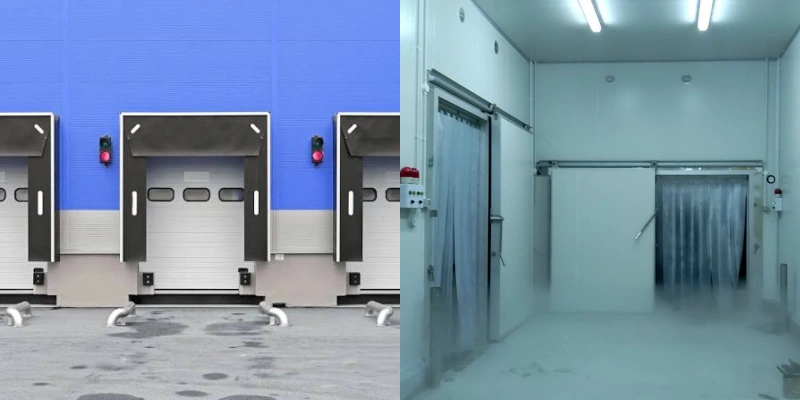
Dock areas and cold room entrances are transition zones where outdoor air, warm air, cold surfaces, traffic, and door operation affect humidity stability.
These zones should not always be controlled by the same sensor or served by the same airflow path as the main storage area.
Loading Dock Moisture
During loading and unloading, roll-up doors open, trucks move in and out, and humid outdoor air can enter quickly. This can lead to wet floors near dock doors, damp packaging in staging areas, and unstable readings around the dock zone.
If condensation is already visible around dock slabs, door frames, or staging areas, the issue may involve door operation, surface temperature, or local airflow—not only the main warehouse layout. In that case, dock-specific causes should be checked with a focused loading dock condensation control approach.
| Warehouse Zone | Common Symptom | Placement Priority |
|---|---|---|
| Loading dock | Wet floor near dock doors | Place coverage near the dock return path, not in forklift lanes |
| Roll-up door area | RH spikes during loading | Treat as a high-disturbance zone |
| Pallet staging area | Damp cartons before storage | Intercept moisture before goods move deeper |
| Dock-to-storage path | Moist air spreads into main aisles | Prevent dock air from entering storage untreated |
| Dock side walls or corners | Local condensation or musty odor | Add verification monitoring and improve circulation |
If dock humidity spikes are short and do not affect stored goods, monitoring may be enough. If the spikes spread into staging or storage aisles, treat the dock as a separate control zone.
Cold Room Transition Areas
In cold storage facilities, the moisture problem often starts before humid air reaches the cold room interior.
When warm, humid warehouse air moves toward a cold room door, condensation can appear around door frames, strip curtains, sliding doors, ante-room ceilings, staging areas, evaporator coil areas, and cold bridge surfaces.
For this reason, the best dehumidifier placement may be in the ante-room, staging area, or warm-side transition zone rather than deep inside the cold room.
The placement goal is simple: reduce the moisture load before it enters the low-temperature area.
If condensation keeps returning on door frames, panels, or cold-side surfaces, the root cause may include insulation, door operation, air leakage, or temperature transition—not only dehumidifier location. Check these causes before relocating equipment.
Separate Zone Readings
One humidity sensor should not be expected to represent every warehouse condition.
A dock sensor may react to outdoor air. A cold room door sensor may react to local condensation. A main storage sensor may hide spikes near the loading area. A high rack sensor may reveal stratification that floor-level control misses.
This does not always mean every zone needs a separate dehumidifier. It means the placement plan should not rely on one averaged reading when the warehouse has clearly different moisture behaviors.
Example Warehouse Placement Layouts
The examples below are simplified, but they show how equipment location, airflow direction, and sensor zoning work together.
| Scenario | Recommended Placement Logic |
|---|---|
| Single-zone ambient warehouse with dock doors on one side | Place the main unit near the dock influence path but outside forklift lanes. Aim discharge air along the main aisle. Use the main control sensor in a representative storage-zone return area. Add a verification sensor near the dock-side staging area if RH spikes affect packaging. |
| Dense rack warehouse with damp cartons in deep storage positions | Align discharge air with main aisles. Avoid blowing directly into rack faces. Place verification sensors in deep rack positions, not only open aisles. Consider distributed units or ducted outlets if one unit cannot reach the full rack depth. |
| Cold room ante-room connected to an ambient warehouse | Treat the ante-room as a transition zone. Place dehumidification coverage on the warm side before humid air enters the cold zone. Use an alarm sensor near the door frame or repeated condensation point. Review door operation, insulation, and air leakage if condensation keeps returning. |
If the aisle air is dry but rack-depth readings remain high, the next step is not automatically a larger unit. The airflow path needs to reach the storage depth.
If the cold-room entrance is the only unstable area, avoid redesigning the whole warehouse layout before checking the transition zone.
Choose the Right Layout Type
In some warehouses, the main decision is not one location versus another. The facility first needs to decide whether the system should be centralized or distributed, then choose whether units should be floor-mounted, suspended, or ducted.
First Decide: Centralized or Distributed Layout
| Layout Decision | Best For | Main Risk |
|---|---|---|
| Centralized layout | Open warehouse, low racking, simple airflow, few dock doors | Far-zone coverage may be weak if racks, doors, or partitions interrupt airflow |
| Distributed layout | Multiple dock doors, divided bays, dense racks, cold-room transitions, irregular layouts | Units and sensors must be coordinated to avoid false dry readings or uneven control |
A centralized unit can work well in an open warehouse with low racking, few partitions, and a clear air path. It becomes less reliable when the warehouse has multiple dock doors, internal walls, deep pallet racks, cold rooms, long aisles, or high-value goods stored in separate zones.
The value of distributed placement is shorter airflow paths, less dead space, better redundancy, and more practical zone control. When using multiple units, avoid placing one unit’s discharge air directly into another unit’s intake or sensor area.
Then Decide: Floor-Mounted, Suspended, or Ducted
| Installation Form | Best For | What to Check Before Use |
|---|---|---|
| Floor-mounted unit | Retrofit projects, smaller warehouses, easy maintenance access | Forklift traffic, pallet movement, floor drain route, service clearance |
| Suspended unit | High-bay warehouses, limited floor space, heavy traffic zones | Structural support, vibration isolation, safe service access, leak protection |
| Ducted system | Multi-zone warehouses, dense racks, noise-sensitive areas, cold-chain transitions | Supply path, return path, duct resistance, access panels, sensor locations |
| Portable or temporary unit | Seasonal hotspots or emergency drying | Should not be treated as a permanent main system for large warehouses |
Floor-mounted units are often easier to install, inspect, and drain. Suspended units can keep the warehouse floor clear and reduce forklift impact risk. For projects where floor space is limited or high-level air coverage matters, a ceiling-mounted dehumidifier configuration may be more practical than a floor-standing unit.
Ducted systems are often better when dry air must reach specific warehouse zones. A ducted warehouse dehumidifier should not only deliver dry air; it also needs a planned return path. Without return air design, dry air may not circulate through the intended storage zone.
When fresh air and return air are part of the same design, the dehumidifier layout should be reviewed together with the facility’s ventilation requirements rather than treated as a stand-alone machine location.
Place Humidity Sensors by Zone
Humidity sensor placement is as important as dehumidifier placement.
A dehumidifier can only respond to what the sensor reads. If the sensor is in the wrong place, the system may stop too early, run too long, or control the wrong zone.
Avoid False Readings
Avoid placing the main control sensor near direct discharge air, loading dock doors, cold room door frames, direct sunlight, heating equipment, cold surfaces, short-circuit return air, or roof-level stratified air unless that point is used for high-level monitoring.
A sensor near discharge air may read artificially dry conditions. A sensor near a dock door may overreact to every opening. A sensor near a cold surface may reflect local condensation risk rather than the whole zone.
For stable control, the main humidistat should represent the zone being controlled, not the machine outlet or the worst local spike.
Use Control, Verification, and Alarm Sensors
| Sensor Type | Best Location | Main Purpose | Avoid Placing It Near |
|---|---|---|---|
| Control sensor | Representative return-air or mixed-air location | Controls normal unit operation | Discharge air, dock doors, cold surfaces |
| Verification sensor | Rack depth, far aisle, high-value storage area, or dock influence zone | Confirms whether the target zone is covered | Locations that only show one extreme condition |
| Alarm sensor | Cold room door frame, known condensation point, ante-room corner, cold bridge | Warns before local condensation becomes a problem | Main control location unless the whole zone behaves the same |
A simple single-zone warehouse may work with one well-placed sensor. A warehouse with multiple dock doors, dense racks, cold rooms, high-bay storage, or different product zones usually needs separate monitoring points.
The goal is not to add sensors everywhere, but to avoid controlling the whole warehouse from a location that only represents one condition.
Check Drainage, Clearance, and Service Access
A location that looks good for airflow may still fail during installation if drainage, clearance, or service access is ignored.
Intake and Discharge Clearance
Do not place the unit tight against a wall unless the equipment is specifically designed for that installation. Blocked intake or discharge reduces airflow and can make the unit work harder while treating less warehouse air.
Check whether the intake is blocked by pallets, the discharge air hits a wall or rack face, packaging may be stacked too close later, and maintenance staff can access the unit.
The clearance requirement should always follow the equipment manual. In industrial warehouses, the practical requirement is often larger than the minimum because pallets, forklifts, and temporary storage can change the space around the machine.
Plan Condensate Drainage Together With Placement
For refrigerant dehumidifiers, confirm the condensate route together with the unit location. Desiccant equipment requires a different review of process and regeneration-air paths. Follow the selected model’s installation requirements rather than applying one drainage arrangement to every technology.
Condensate drainage is not a detail to solve after installation. If the unit removes water continuously, that water needs a safe and reliable path to a drain or collection system.
| Installation Item | What to Confirm |
|---|---|
| Floor drain location | Is the drain close enough for safe routing? |
| Gravity drainage | Does the hose slope downward without kinks? |
| Dehumidifier drain hose | Is it protected from forklift damage and foot traffic? |
| Condensate pump | Does the pump rating match lift height and discharge distance? |
| Suspended unit drainage | Is there leak protection or secondary drain planning? |
| Service access | Can the drain line, filters, coils, pump, and controls be inspected? |
A condensate pump can make placement more flexible, including cases where water must be lifted to a higher drain line. If the project requires continuous drainage in a large warehouse, an industrial dehumidifier with pump can be considered during the equipment configuration stage.
If drainage fails, the unit may stop even while the warehouse still needs dehumidification. If a running unit is not removing water as expected, the problem may involve drainage, coil temperature, filter blockage, or operating conditions. Check equipment operation separately from the layout review.
Routine access should also be checked against an industrial dehumidifier maintenance checklist, because a location that is easy to install may still be difficult to service.
Final Placement Check
Before the installation location is confirmed, use the following checks to catch layout problems that are easy to miss on a floor plan.
Common Warehouse Dehumidifier Placement Mistakes
- Placing the unit tight against a wall
- Blocking intake or discharge with pallets or packaging
- Choosing the geometric center without checking airflow
- Ignoring loading docks and roll-up doors
- Using one large unit for a partitioned warehouse
- Blowing dry discharge air into another sensor
- Ignoring rack dead zones
- Forgetting high-bay stratification
- Planning drainage after installation
- Using one sensor for every warehouse zone
- Treating portable units as a permanent main system for a large warehouse
Warehouse Placement Checklist
| Checklist Item | What to Confirm |
|---|---|
| Warehouse floor plan | Overall dimensions, internal partitions, storage zones |
| Ceiling height | Standard height, high-bay zones, roof structure |
| Rack layout | Rack height, aisle direction, storage depth |
| Dock door locations | Number of dock doors and roll-up doors |
| Door opening frequency | Normal operating hours and peak loading periods |
| Cold rooms or ante-rooms | Door locations, transition zones, condensation points |
| Existing HVAC supply and return | Airflow direction, return paths, pressure strategy |
| Floor drains or condensate pump route | Drainage point, lift height, hose protection |
| Power supply and forklift paths | Cable protection, turning radius, staging lanes |
| Maintenance access | Filter, coil, pump, and control panel access |
| Sensor locations | Control, verification, and alarm monitoring points |
| Sensitive storage zones | Food, paper, textile, electronics, metal, or pharmaceutical goods |
For a useful manufacturer review, a floor plan alone is not enough. Door locations, rack height, dock activity, airflow paths, drain points, and sensor zones all affect the final placement.
FAQ
Where is the best place to put a dehumidifier?
Place it where humid air can reach the intake and dry air can circulate freely. In warehouses, this is often near a moisture path, not automatically the geometric center.
How many dehumidifiers do I need?
The number depends on layout, moisture load, airflow barriers, and zone separation. A large warehouse with racks, dock doors, or cold rooms may need distributed units, not one central unit.
How long should a dehumidifier run per day?
It depends on humidity load and controls. In warehouses, units often run by humidistat or BMS signal rather than a fixed daily schedule.
What is a humidistat and do you need one?
A humidistat monitors humidity and controls when the dehumidifier runs. In warehouses, remote or zoned sensors are often more reliable than only using the onboard humidistat.
Can a dehumidifier drain through a hose or pump?
Yes. Many dehumidifiers can drain by hose, and a condensate pump is used when gravity drainage is not possible or water must be lifted.
Request a Warehouse Layout Review
Planning a new installation or correcting uneven humidity? Send the warehouse layout, rack arrangement, dock door locations, cold room interfaces, drainage points, power locations, and photos of the affected areas.
Through our warehouse dehumidification solution, Rinwang can review the equipment options alongside airflow paths, access, and sensor zoning. The final layout should be checked against the selected model and the site’s installation requirements.
Start with the information available. If you do not have a drawing, describe the zones and provide photos by email to [email protected].