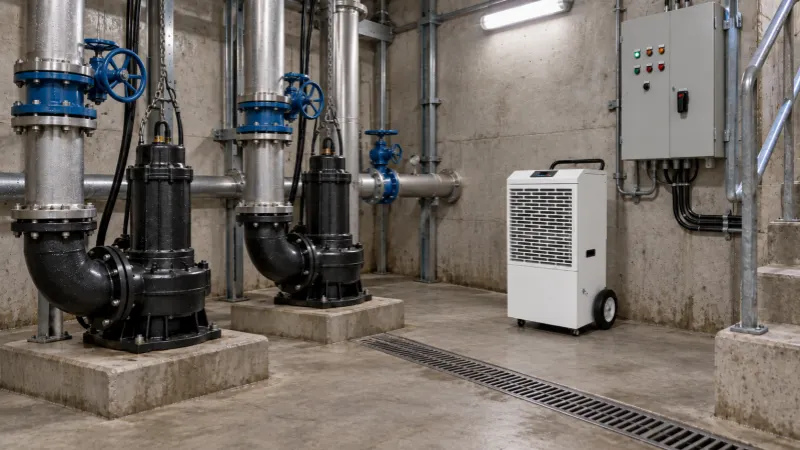
Water and wastewater treatment plants are not single humidity environments. A wet well, dry well, chlorine feed room, blower building and MCC room may all experience moisture-related problems, but the causes and risks can be completely different. Some areas are dominated by outdoor ventilation and below-grade moisture, others by corrosive chemical exposure, while wastewater process […]
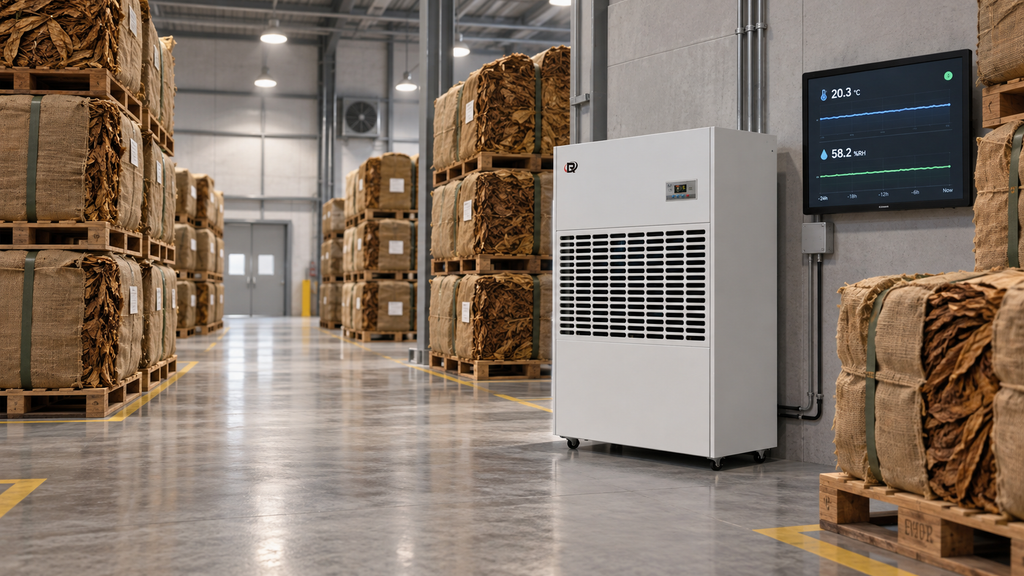
Tobacco does not remain at one moisture level from harvest to manufacturing. It is dried, reconditioned, processed, dried again, and then stored under controlled conditions. Some stages intentionally add moisture because tobacco that becomes too dry is brittle and difficult to handle, while other stages deliberately remove moisture to reach a required finished specification. That […]
Commercial kitchen humidity problems rarely appear in just one place. A dish room may stay wet after service, dry storage may develop caking or packaging problems, and condensation may form around walk-in cooler doors even when the dining area feels comfortable. The reason is that these spaces operate under very different conditions. Cooking, warewashing, outdoor […]
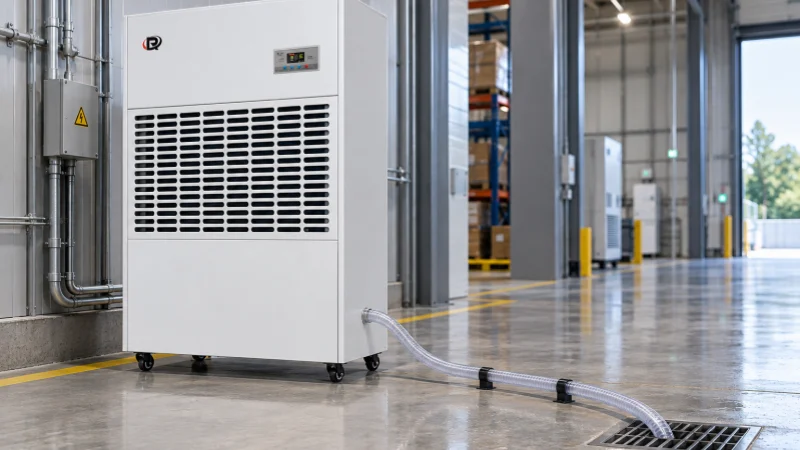
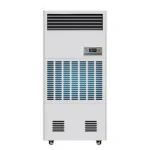
An industrial dehumidifier can remove tens or even hundreds of litres of water per day. That water has to leave the unit continuously. If the nearest drain is below the unit and the pipe can maintain a downward slope, gravity drainage may be enough. If the discharge point is higher, the route cannot maintain continuous […]
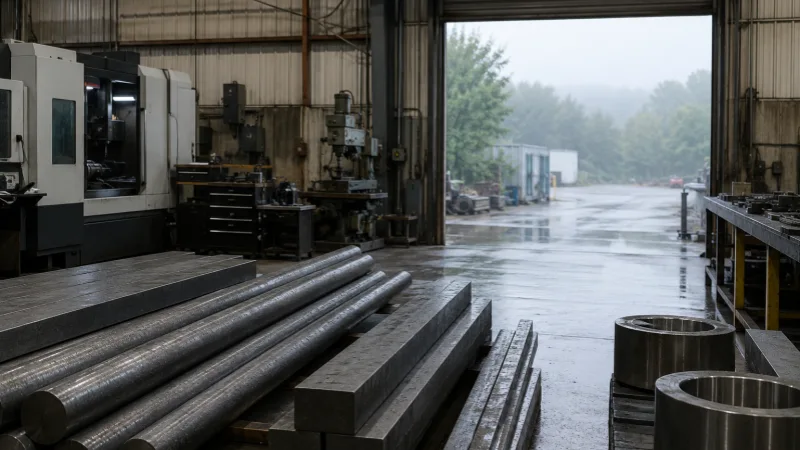
A production floor does not behave like a storage building. Doors open throughout the shift, coolant and wash water evaporate into the room, process exhaust draws in outside air, and cold steel may arrive directly from the yard. That is why a workshop can show rust, coating defects, or a wet floor even when the […]
Choosing the right electrical configuration is essential for an industrial dehumidifier. Matching voltage alone is not enough; phase, frequency, current, and connection requirements also need to match the actual site supply. This guide explains the common voltage and frequency combinations by market, when single-phase or three-phase power is used, how to check the nameplate and […]
Museum dehumidifier selection starts with the collection, not the machine. A modern gallery, a historic museum, a temporary loan exhibition, and a sealed display case can require very different humidity-control strategies, even when the spaces are similar in size. The first question is therefore not how many litres per day a dehumidifier can remove, but […]
A process drying room is designed to remove moisture from a product as part of a manufacturing process. This is different from a warehouse or storage room, where the main objective is simply to keep the surrounding air below a target humidity. In a drying room, the main moisture load often comes from the product […]
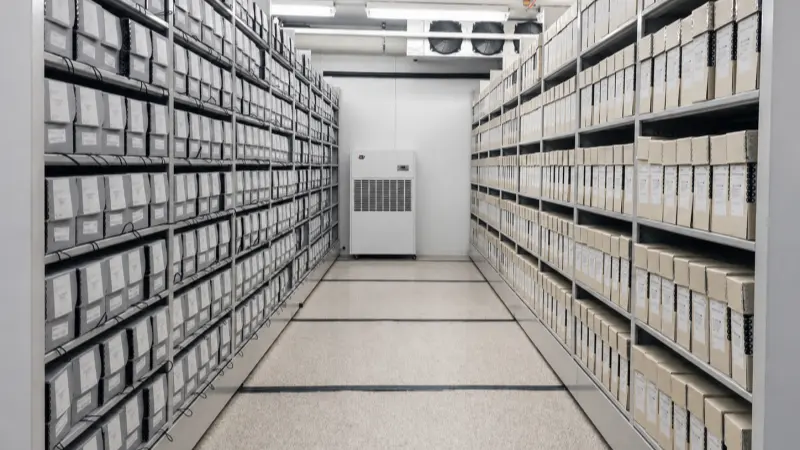
A records room fails quietly. Nobody reports a problem the week the relative humidity starts drifting up. The problem shows up months later as a musty smell near the back wall, foxing on the outer sheets of the boxes in the bottom row, corroded fasteners on a run of binders, and eventually a mould finding […]